
Picture this: you land in Jimbaran with your group, everyone’s tired, and you just want the rest of the day to feel easy. Someone wants a quick dip and downtime, another person is thinking about breakfast options, and one of you is quietly wondering whether it makes sense to book a private villa with its own pool and kitchen or just grab a hotel room and rely on the front desk to handle the rest.
That choice is really about the day-to-day vibe. A villa rental is closer to living in a private home, where you control your schedule and enjoy exclusive space. A hotel stay is built around convenience and structure, with shared facilities and a more standardized flow of services. In Jimbaran, where you’re likely to spend time beach-hopping, eating out, and exploring at your own pace, that difference becomes noticeable fast.
Here’s what this article will help you decide. We’ll compare privacy, space, and the “home routine” feel villas usually deliver. Then we’ll break down cost and value, because the nightly rate alone rarely tells the full story, especially for groups or longer stays. After that, we’ll look at service style and convenience, including how support works in a villa versus a hotel. Finally, we’ll show you how to apply all of it to your situation, then highlight booking pitfalls that can turn a good-looking option into a frustrating stay.
Next, we’ll make sure you’re comparing the right things by defining what “villa” and “hotel” mean in practice before you judge which one is better.
If you’re still unsure which villa setup matches your priorities, explore Villa options in Jimbaran to compare layouts, inclusions, and the day-to-day feel side by side.
Villa and hotel stays in Jimbaran, explained
Private villa
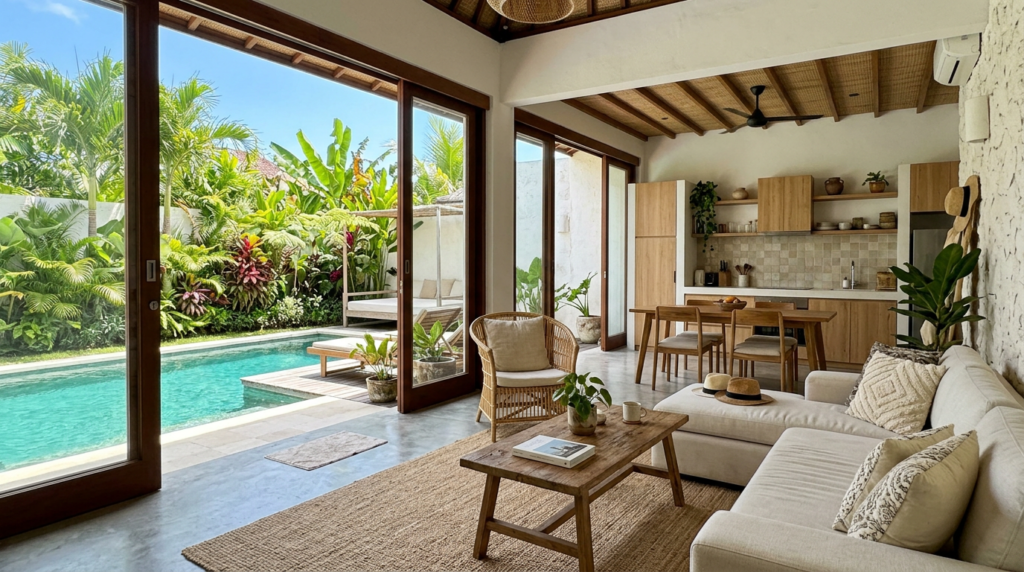
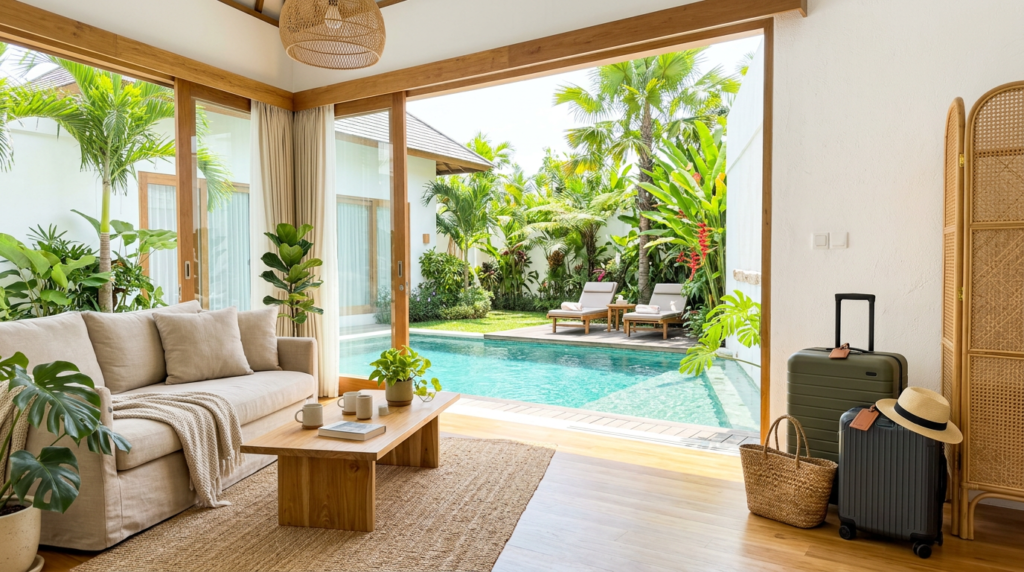
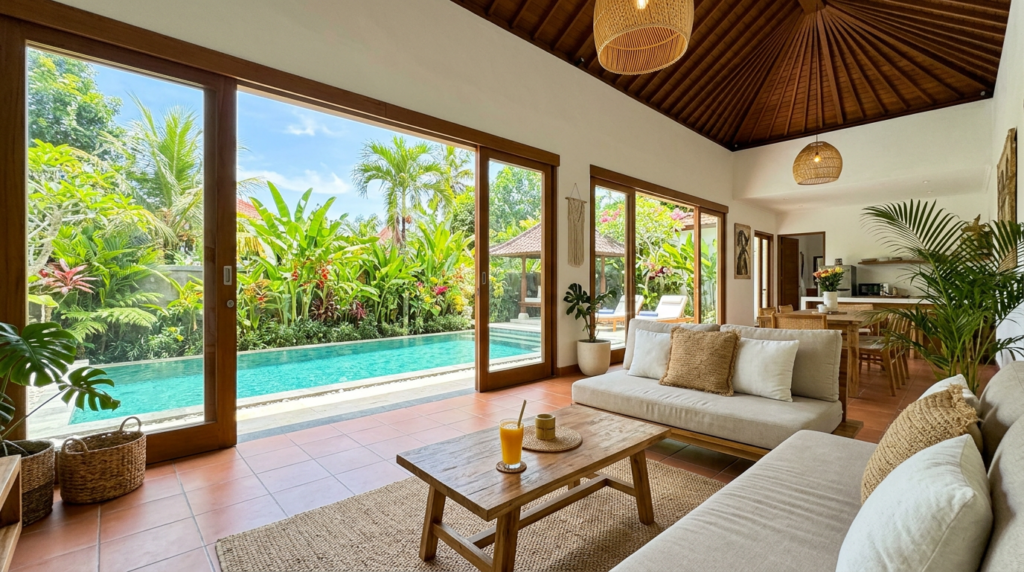
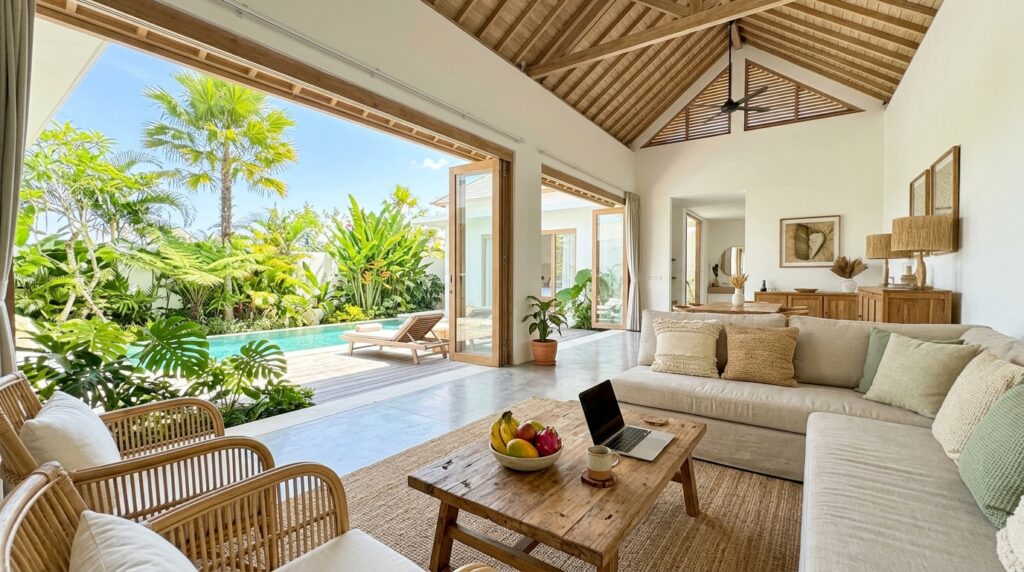
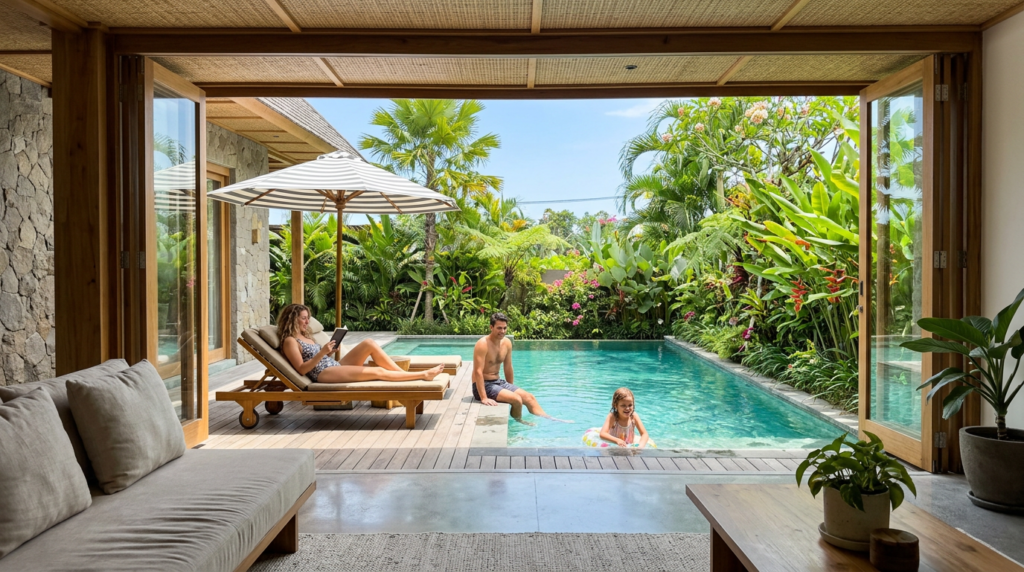
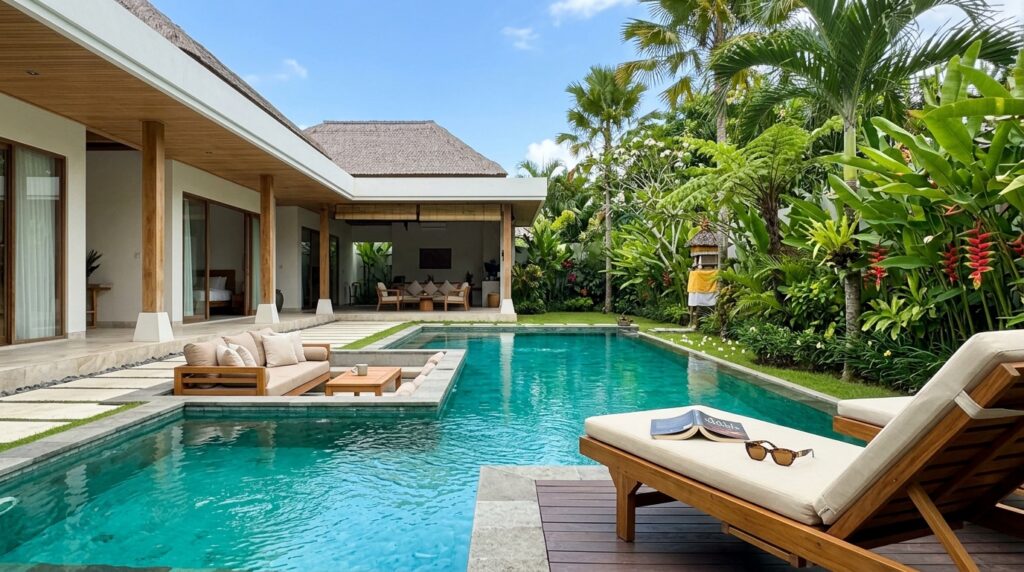
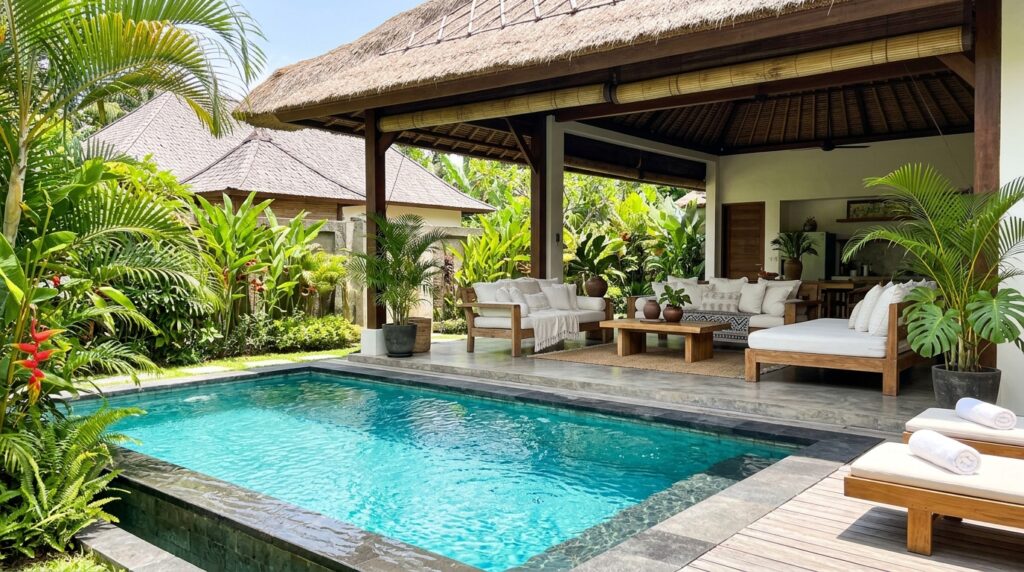
A private villa is an entire property you rent for exclusive use, usually with a pool and outdoor space meant for your group only. Many villas also include a kitchen, so your stay feels more like living in a home than just sleeping somewhere.
This setup changes daily routine fast. You can move at your own pace, keep common areas to yourselves, and enjoy quiet privacy that hotels often cannot replicate.
Hotel stay
A hotel stay means a room in a larger building or complex, with shared facilities and a front desk or concierge team. Service is more standardized, so you get predictable help, but you also share amenities with other guests.
In practice, this usually makes logistics easier. You lean on reception, daily housekeeping, and on-site dining, and your day follows the hotel’s more structured rhythm.
Jimbaran stay context
Jimbaran travelers typically balance beach time, restaurant meals, and exploring the wider area. Because of that, “convenience” isn’t just about being close to the lobby, it is about how easy it is to get food, transport, and support from your accommodation base.
One important nuance: a villa within a resort can be a hybrid, meaning you may get villa-style space but still operate under resort rules and shared facilities. That affects how private and autonomous the stay truly feels.
Now that you know what each option actually is, you can compare benefits fairly, not based on labels, but based on the experience they deliver. Next, the real question becomes why those differences matter to your trip.
Villa labels can mean different levels of “private”
Most people assume that any “villa” tag automatically guarantees full exclusivity, but that is not always true. A true standalone private villa is its own self-contained home with private outdoor space and no shared hotel-style flow. Meanwhile, a villa within a resort is a hybrid, so you may still get villa-style comfort, but you can be subject to resort rules and shared facilities that affect how independent your stay really feels.
Day to day, this difference shows up in small moments. You might notice more background activity near shared pools or restaurants, or you may feel guided by hotel schedules and policies rather than total autonomy. The practical takeaway is simple: always verify what’s actually private versus shared before booking.
Why this choice matters for how you travel
Privacy, space, and value in real life
Villas tend to win when you want your trip to feel calm, spacious, and truly yours. With a private villa, you get exclusive space to unwind, and groups often share one property rather than multiple hotel rooms. With longer stays, the “home routine” feel plus the ability to self-cater can make the overall experience better value than it looks on paper.
Hotels can still be great, but they’re built around shared areas and convenience-first service. If your biggest frustration is feeling boxed in, constantly sharing common spaces, or having your schedule shaped by a hotel’s rhythm, that’s where the villa advantage becomes obvious.
Convenience versus flexibility in daily routine
Hotels are optimized for ease. You have front-desk support, standardized housekeeping, and on-site dining options that reduce planning. That structure can be a lifesaver when you’re only in Jimbaran briefly or you’d rather not manage meals and daily logistics yourself.
A villa flips the routine. You usually operate on your own schedule, and a kitchen gives you flexibility for breakfast, snacks, or full meals. Over time, that freedom changes how your days feel, especially for families, groups, and remote workers who want stability while they rest and explore.
Here’s the simple decision philosophy: choose based on what you want to prioritize, not what sounds impressive. Next, we’ll go deeper into the first big trade-off, the privacy and space difference, so you can feel confident in your choice.
Privacy and space feel different, fast
Imagine this: the day ends after a beach day, kids are sandy and hungry, and your group is finally ready to relax. At a hotel, it often feels like everyone is still in the same “shared world,” even when you retreat to your rooms. In a private villa, you all settle into one exclusive space, and the rest of the property suddenly feels calm and predictable.
That’s the real trade-off. Exclusive use usually means less crowding and fewer moments where you feel like you’re sharing amenities with strangers. Once the day’s energy drops, the schedule feels more yours than the hotel’s.
Space is the next piece. With separate living areas and outdoor spots, you can spread out, unwind, and keep routines easier for groups and families. That includes simple things like letting someone rest while another person plans tomorrow, without everything happening in one tight room. And privacy doesn’t automatically mean you’ll be completely isolated, because a villa’s location and layout can still place you near local neighborhoods.
So choose a villa if quiet downtime and room to live matter most to your trip. Next, we’ll shift into cost and value, because the nightly rate is only part of the story.
Cost is more than the nightly rate
If you’re comparing prices, you’re probably doing it the hard way. For groups, one villa can replace multiple hotel rooms, so the cost is often spread across more people. For longer stays, the value can grow because you’re not paying for “nightly convenience” every single day.
That said, villas can still look pricey upfront, especially for solo travelers or couples on a short trip. The smart move is to compare what’s included in the rate, because villa standards and management quality vary, and staff coverage can be different from property to property. Also, having a kitchen can reduce how much you spend on meals and drinks when you self-cater instead of eating out every day.
A simple decision rule helps: look at per-person cost, then estimate your meal pattern. If you’ll cook or rely on flexible in-villa options often, the villa price usually makes more sense; if you’ll be out eating constantly, a hotel’s structure may feel easier.
How a villa stay works day to day
1. Pick the villa by bedrooms and amenities
“You book a place for peace, then realize peace depends on the details.” Start by choosing based on how many bedrooms you need, whether you want a private pool, and if you truly have the kitchen you expect. Location inside Jimbaran matters too, because it affects how easy it is to move around and how connected you feel to daily life.
Be specific about the vibe your group wants. A bigger layout helps for downtime, while the wrong setup can make simple routines feel cramped.
2. Book and confirm inclusions and support
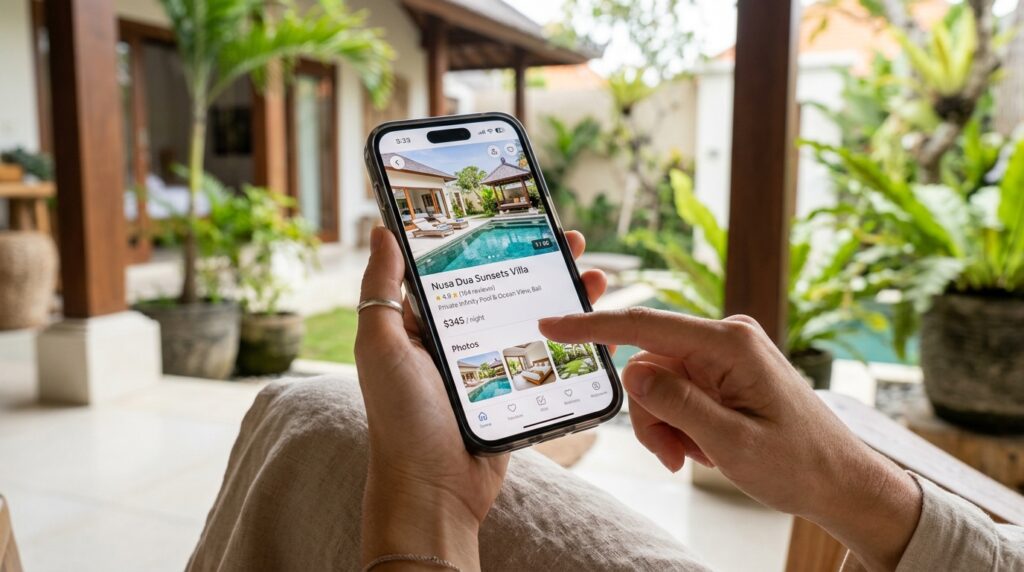
Before you finalize, treat the listing like a contract. Confirm what the rate includes and what support looks like in practice, since staffing scope can vary by property. Ask what services are handled by the villa team versus what needs to be requested.
This step prevents the common frustration of “we thought it was included.” Villas often feel effortless when expectations are clear.
3. Arrive and meet the villa manager or staff
Check-in for a villa is usually more personal than a hotel desk. When you arrive, you typically meet the villa manager or staff who will orient you to the property and explain how to get help during your stay.
Once that connection is in place, the rest of the trip runs smoother, because you know who handles what.
4. Live on your schedule, pool, rest, work
After a couple of hours, the villa starts acting like a home base. Your group can plan the day around naps, beach time, or remote work, without waiting for hotel schedules. A private pool also means you can use downtime on your terms.
If you’re working, the calm environment often makes it easier to set up routines that actually stick.
5. Use staff and cooking flexibly
Here’s the practical heart of villa living: meals and day-to-day support can be tailored. You can self-cater with the kitchen, and you can often arrange a private chef if it’s available at that villa. For many travelers, this is where the value starts to feel real.
Staff support commonly includes daily housekeeping, garden or pool upkeep, and general property care. Higher-end setups may include roles like a chef or driver, so you’re not juggling everything yourself.
Overall, a villa stay is about running a small private household, with staff support that varies by property. Next, we’ll zoom in on meals and staff, because those are the levers that turn a pretty villa into a truly comfortable trip.
Self-catering with the kitchen
Picture this: breakfast needs to happen quickly, but everyone’s schedule is different. In a villa with a real kitchen, you can cook when it suits you, grab snacks in between plans, and keep drinks ready without waiting for restaurant hours.
That small freedom also changes costs. When you can self-cater, you’re not paying for every meal out, so food and beverage spending becomes more controllable, especially for families and groups.
Hiring a private chef when available
If cooking isn’t what you want to spend your energy on, some villas can arrange a private chef. It’s a practical middle ground between full self-catering and always eating out, and it keeps dinner feeling special without turning your day into a logistics project.
Just be sure to confirm what’s possible and what’s included in the villa setup, since availability and scope can differ. The goal is simple: have help that matches how your group actually eats.
Delivery and shopping as a routine
On lighter days, you may prefer ordering food or doing quick market runs instead of planning every meal from scratch. That’s where villa life feels easy, because you can pivot based on appetite, weather, and energy.
In many cases, you won’t need to “commit” to dining plans far in advance. You choose what fits the moment, then handle it from your own space.
What staff typically do each day
One big reason villas feel like they run themselves is the daily support. Commonly, you’ll have housekeeping plus gardening or pool maintenance to keep the property comfortable and clean.
In more premium setups, additional roles may be available, like a chef or even a driver. What matters for you is scope, so you should confirm who does what and how you request help when needed.
How flexibility changes your day
This is the mechanism you feel most. In a villa, you’re not locked into hotel meal times or shared schedules, so your day can flex around naps, work blocks, and beach plans.
For longer stays and groups, that flexibility adds up quickly. It turns the villa from “a place to sleep” into a stable base that supports real routines, not just travel convenience.
To compare what support looks like in practice, check the services and staff options so you can match your villa booking to your group’s real routine.
How hotel stays run smoothly
Front desk and concierge support
“Convenience is built into the system,” and hotels deliver that with reception and concierge support. In a hotel stay, help is usually available through the front desk, while a villa relies more on the villa manager or staff process.
It matters when plans change fast. You want quick answers, easier booking support, and someone to coordinate help without a request process that feels too personal.
Housekeeping and shared facility access
Hotels run on standardized housekeeping and shared amenities, so your room is handled on a predictable rhythm. With villas, property care often focuses on your exclusive space, but the “shared facility access” experience is different because you’re not moving through hotel common areas all day.
That structure can feel relaxing for some travelers because everything is in one place. You don’t have to manage access rules or schedules across a larger private property.
Dining convenience without planning
Hotel dining is usually straightforward, with on-site restaurants and sometimes room service. In a villa, you might self-cater using the kitchen, or arrange options through the villa setup.
So if you prefer not to think about meals, hotels can feel effortless. You can decide dinner quickly, then let the hotel handle the logistics.
Why hotels fit short stays and solo travel
Because hotels offer a more predictable environment, they’re often a strong fit for short trips and solo travelers who want minimal friction. Villas can be amazing, but they’re more like running a small household, which feels best when you’re staying longer or traveling with people.
In Jimbaran, this often comes down to how you want your days structured. Hotels tend to match “easy mode,” while villas match “your schedule.”
Which is better for your situation?
Are you choosing a villa or a hotel just based on what sounds nicer, instead of what fits your actual trip?
Family trip with kids
The priority is simple: you need space, calm downtime, and meals that don’t feel like a whole production. In a villa, a private pool gives kids a safe place to play, and a kitchen makes everyday eating easier when schedules get messy. That usually means fewer “everyone needs to be ready right now” moments.
Hotels can work, but they often feel more like you are moving through shared areas and following a more structured rhythm. For families, the villa setup typically reduces stress because your accommodation supports routines rather than interrupting them.
Friends group planning downtime and dinners
For a group, the biggest friction is often coordinating everyone’s time. A villa gives you multiple bedrooms plus shared living space, so you can hang out together without constantly bumping into other guests. When dinner is involved, the kitchen and flexible meal options make it easier to do something casual in your own place.
If you stay in a hotel, your group might split up across rooms, and shared amenities come with other guests in the mix. That can be fine for short stays, but for groups who want “together time” plus privacy, villas usually feel more natural.
Digital nomad wanting a stable routine
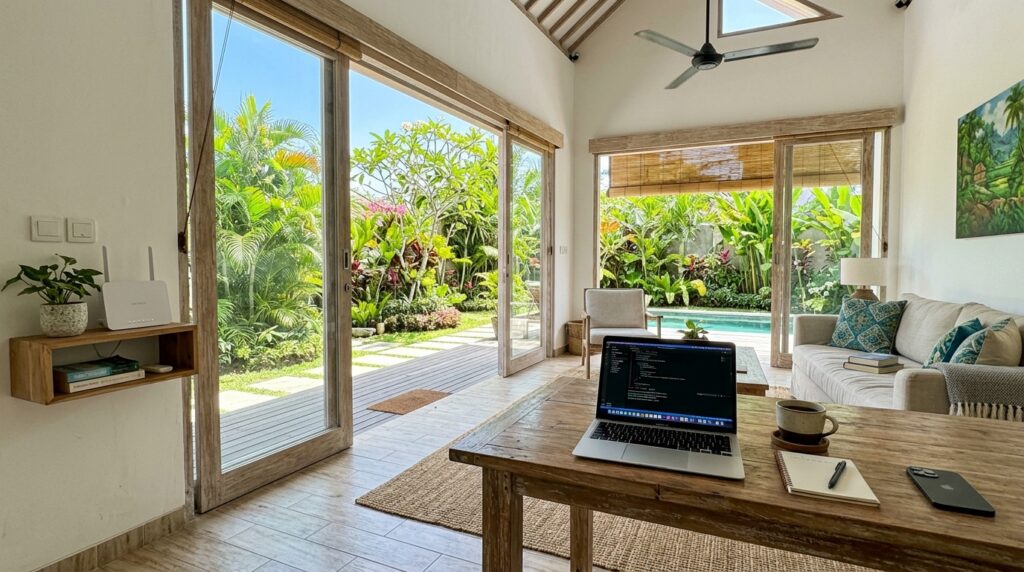
When work is part of the trip, the environment matters. A villa can offer a quieter, more consistent base, and the home-like setup makes it easier to plan the day around focus time, breaks, and workouts. You also get kitchen flexibility, which helps when you’re keeping a steady routine.
Hotels can be convenient, especially for quick resets, but the shared, structured flow may feel less supportive for long work blocks. If you want stability and control, a villa is typically the better fit.
Solo short stay
As a solo traveler on a shorter trip, you often want less responsibility and faster answers. A hotel delivers that through reception support, predictable housekeeping, and on-site dining, so you can keep things simple without managing meals at home base. For many people, it just feels frictionless.
A villa can still be great for privacy, but for a brief stay it may feel more “house management” than you need. If your priority is easy logistics over room-to-live, hotels often win.
Decision rule you can reuse: pick the accommodation that matches your priority most, whether that’s privacy and room to live or convenience and structured support. Next, we’ll turn this into quick rule-of-thumb guidance so you can apply it fast.
Choose a villa if privacy and space matter most
If you’re traveling with your own group and you want your day to feel unshared, a villa is the safer bet. Exclusive use usually means fewer “we’re all sharing the same space” moments and a calmer vibe when you want to reset.
You’ll likely notice it in small routines, like moving between rooms and outdoor areas without coordinating with strangers. If quiet downtime is a real priority, the villa layout supports it.
Choose a villa if you’re staying longer
If your plan includes weeks, not just days, villas tend to fit better because life becomes routine. A kitchen and private space make it easier to repeat what works, instead of constantly re-planning meals and schedules.
With time, that flexibility adds up. You stop feeling like you’re “on vacation mode” all the time and start living more normally inside your accommodation base.
Choose a villa if you like cooking flexibility
If you’re the kind of traveler who wants control over meals, choose a villa when cooking is part of the experience. Self-catering can reduce how often you eat out, and that can lower overall dining spend for many groups.
In real terms, you’ll notice it when plans change. You can grab a quick bite, cook at home, or arrange help, instead of waiting for restaurant timing.
Choose a hotel if you want convenience on demand
On the other hand, if your priority is easy logistics with minimal responsibility, a hotel usually works best. Reception support, standardized housekeeping, and shared on-site facilities reduce the need to manage daily details yourself.
You’ll likely feel it as “frictionless” days. When you decide dinner quickly or need assistance, the structure of a hotel makes it simpler.
Choose a hotel if you’re only there briefly
If you’re in Jimbaran for a short stay and you prefer predictable comfort, a hotel is often the smoothest option. Hotels are built for a structured rhythm that fits quick trips and solo travel.
For a brief timeline, you might not feel the villa’s biggest strengths as strongly. Privacy and space matter, but convenience may matter more when you’re only staying a few days.
Rule of thumb: match your stay type to your main priority, whether that’s privacy and room to live or convenience and structured support. Next, we’ll focus on how to avoid booking mistakes that can spoil either choice.
What to watch out for when booking
Villas are always more expensive
It’s easy to judge by the first price you see, but that’s not the full story. For groups and longer stays, a villa can spread costs across people, and the kitchen can reduce dining-out spending.
If you only compare nightly totals, you can miss the value. The practical mistake is skipping the “per-person” and “meal pattern” math.
Are villas less secure by default?
Many people assume a private villa is automatically less safe than a hotel. In reality, reputable villa setups commonly include security measures like guarded or gated access and safe storage for valuables.
The risk comes from unclear expectations, not the villa idea itself. If you don’t ask about security details, you may book with blind spots.
Villas always mean isolation and inconvenience
Some travelers picture villas as remote and cut off. While a villa can be secluded, it can also be located near local areas, depending on the property and layout.
Day to day, your “isolated” feeling depends on location. If you assume all villas are far away, you might over-plan transport or choose the wrong area.
Villas lack services compared to hotels
It’s a common belief that hotels offer all the service and villas only offer space. Many villas include dedicated support like housekeeping and maintenance, and some higher tiers can arrange extras like a chef or driver.
The issue is scope and availability. If you don’t confirm what’s included, you can feel disappointed instead of supported.
All villas are the same quality
A villa label can hide big differences in maintenance, design, and management quality. Two villas with similar pictures can feel totally different once you’re living in them.
The practical mistake is trusting the title alone. Expectation-setting requires reading recent feedback and confirming operational details.
Booking a villa is always riskier
Villa bookings can feel more uncertain because standards vary and the paperwork can look different from hotels. Still, the risk mostly drops when you verify inclusions, staff scope, and total cost transparency.
If you treat it like a “click and hope” booking, you’ll run into surprises. Due diligence is what makes villa stays smooth.
“Private villa” always means standalone exclusivity
People often interpret “private” as guaranteed standalone autonomy. But a villa within a resort is a hybrid, so you might still face resort rules and shared facilities access.
That affects how independent your routine feels. If you expect full exclusivity and don’t verify, you may notice shared activity sooner than you want.
Open-air villas are automatically worse
Some travelers avoid open-air designs because they assume it will always be uncomfortable. Open-air layouts can be a real advantage, but the downside depends on how the property is built and where it sits.
If you don’t check the specifics, you might be unprepared for humidity, insects, or noise patterns. Always confirm how “open-air” works in that particular villa.
Bottom line: treat booking like due diligence. Verify inclusions, understand staff scope, and confirm total cost transparency before you commit.
Final thoughts and next steps
There’s no universal “better” in Jimbaran, but the right choice is usually obvious once you match the stay to your priorities. Villas tend to win on privacy, space, and home-like routines, especially for longer trips and groups. Hotels tend to win on convenience and standardized logistics when you want everything handled for you.
To make the decision clean, confirm what kind of villa you’re getting and what’s included, including the real scope of support. Then think about your per-person situation and how often you’ll actually use the kitchen or self-cater. If your stay is short and you want maximum on-demand convenience, a hotel is often the smoother fit.
Choose intentionally, and your accommodation will feel like part of the trip, not just a place you pass through next.
If you want help aligning your preferences with the right villa setup, the team at Baliexpertvillas.com is ready to support you so you can book with confidence.