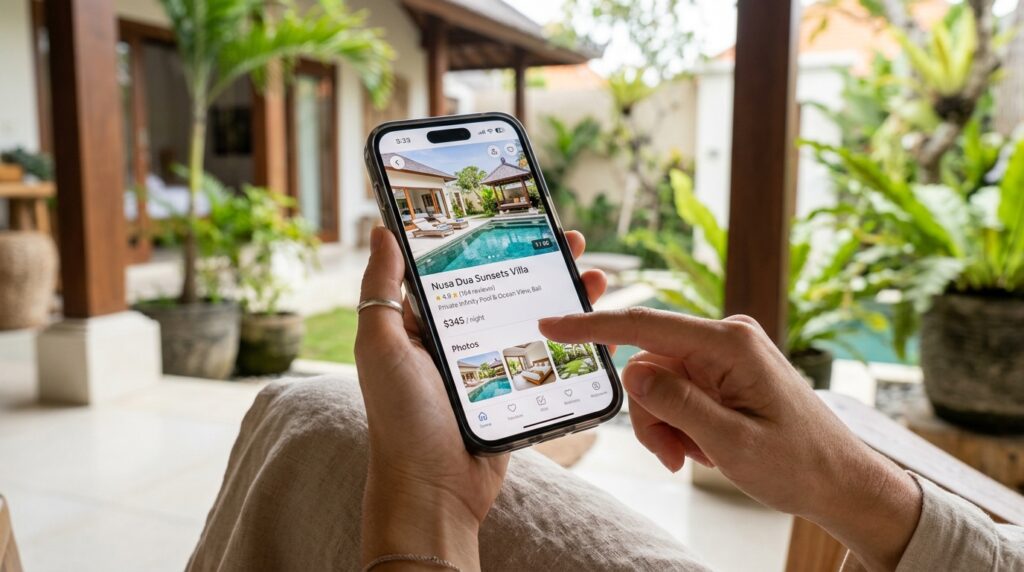

Booking a villa in Badung sounds easy until you find out the listing is outdated, the final price is higher than promised, or the payment request feels a little too risky. That’s the moment it stops being a fun trip plan and starts feeling like damage control.
In this article, safe booking means securing the right villa in Badung while reducing the big four problems: ghost listings, misrepresentation (the villa isn’t what the photos or description imply), hidden costs, and unsafe transaction practices. Safety is not just about where you stay, it is about how you get there, how you pay, and how you prove what was agreed.
Badung villa bookings often require due diligence, not blind trust. In a market with high demand, especially during popular travel windows, the same villa can be shown differently across platforms, and costs can shift once you factor in what is included versus what is added later.
Here is the workflow you will follow throughout the guide: verify the listing and details, clarify costs and inclusions, book with documentation and secure payment, then prepare for arrival so you are not guessing once you land. If you are staying longer or the stakes are higher, you will also learn when physical checks matter.
Want a smoother, safer booking path in Badung? Explore options and guidance through Baliexpertvillas.com while you plan your stay.
Timing makes a real difference in Bali. Peak season can push prices up dramatically, which is why planning ahead (often 6 to 12 months for peak and 4 to 6 months for shoulder) helps you get better options and avoid unpleasant budget surprises.
Next, the article will define what “safe villa booking” really means in clear, practical terms, so you know exactly what to verify.
What safe villa booking in Badung really means
Safe booking in plain terms
Safe villa booking means you secure the right place to stay in Badung without betting your trip on hope. It focuses on avoiding ghost listings, preventing misrepresentation, stopping budget blow-ups from hidden costs, and steering clear of unsafe payment practices.
It also keeps your expectations aligned with reality. When a villa is advertised clearly and confirmed properly, you are less likely to arrive and feel like you bought a different experience than what was promised.
Badung villa booking risk
Risk here is what can go wrong between the first inquiry and your actual arrival. In practice, it often shows up as an operator who cannot be verified, unclear pricing, or a listing that looks perfect in photos but fails on basics like cleanliness, comfort, or promised services.
Safe booking reduces that risk by forcing the right questions early, then confirming details in writing. You are not trying to be suspicious. You are just acting like a careful customer.
Ghost villa and misrepresentation
A ghost villa is a listing for a property that does not truly exist or cannot be reliably accessed as advertised. Misrepresentation is similar, but it usually means the villa exists, yet the description, photos, or amenities do not match the real stay you get.
This is why verification matters. When you cross-check listings, confirm the address context, and validate key details before payment, you cut down the chances of booking a place that disappears or behaves differently than expected.
Licensing signals (NIB/PBG)
NIB and PBG are licensing-related identifiers that legitimate operators should be able to explain and provide when asked. They are not magic guarantees, but they are strong signals of legitimacy and accountability compared to vague claims without supporting details.
If an operator cannot provide licensing signals when you ask, it should raise your caution level. Safe booking prioritizes operators who can be clear and consistent about how the villa is run.
Hidden fees that change the total
Hidden fees are costs that are not fully visible upfront, or that get added after you think the price is final. In Badung villa rentals, common examples include cleaning charges, security deposit terms, and utilities such as electricity and water, which can matter a lot with A/C use.
The safety move is simple: demand an itemized breakdown of what you will actually pay and what is included. If something costs extra, it should be clear before you commit.
Secure payment that protects you
Secure payment is about using traceable, fraud-resistant payment paths and avoiding untraceable transfers that are difficult to dispute. When scammers want money routed in ways that leave you with little proof, the booking stops being “a reservation” and starts being “a gamble.”
Safe booking means paying through methods that leave a record, and keeping your communication consistent so your agreement is documentable.
Written documentation you can rely on
Written documentation is what turns a verbal promise into something you can reference. It includes clear booking terms, total costs, inclusions, cancellation or refund rules, and responsibilities for damage or maintenance.
In a dispute, memory fades fast. Documentation keeps the conversation factual, which is exactly what safe booking is meant to protect.
Once you have these definitions straight, the next section makes sense: errors get expensive because they usually start with these gaps, like missing verification, unclear totals, or agreements that never make it into writing.
Why it matters: the real costs of getting it wrong
Booking fast vs booking safely
Booking fast can feel efficient, but it often trades control for speed. When something is wrong, you have less time to fix it, and availability can evaporate while you scramble.
Booking safely slows you down just enough to prevent money loss, wasted days, and messy disputes. The takeaway is simple: safety gives you control when plans change.
Peak season convenience vs price risk
Peak season feels exciting, but demand drives real pressure on rates. In Badung, peak periods like July, August, and late December can push prices up substantially, with rates rising around the reported 45-60% range compared to lower-demand periods.
If you book late, you might not just pay more. You also reduce your ability to compare options and secure the right fit. Planning ahead protects both your budget and your choices.
Looks great vs verifies great
Great photos are persuasive, but they are not a guarantee of what you will actually experience. Misrepresentation and outdated listings can show up as cleanliness problems, different amenities, or a villa that does not match what was promised.
When you verify details, you reduce the risk of arriving disappointed. The takeaway is that “verified” beats “looks good” every time.
Protected payments vs untraceable transfers
Some payment methods make it easier to trace, challenge, or resolve issues if something goes wrong. Others can leave you with fewer options, especially if you are asked to send money in ways that are hard to dispute.
Choosing secure, traceable payment practices is one of the most direct ways to protect yourself. Think of it as lowering fraud risk through better transaction habits.
Clear costs vs hidden costs
When costs are not itemized, the final bill can surprise you. Hidden add-ons such as cleaning charges, security deposit terms, and utilities like electricity and water are common and can shift your real budget fast, especially for stays where A/C use is frequent.
The takeaway is to confirm the full cost picture before you commit. You will budget with confidence instead of guesswork.
Now that you see what is at stake, it becomes easier to follow a proper process. Next, we will turn this into a clear, end-to-end safety workflow you can actually follow.
How the safe booking process works end to end
1. Define your needs and budget
Imagine this: you finally pick a villa you like, but the price, Wi-Fi quality, and A/C reality do not match your plan once you zoom out. That is why Step one is about your “must-haves” before you even compare listings.
Decide your budget and what matters most, like reliable Wi-Fi, good A/C comfort, and how many bedrooms you need. Also plan your timing early because peak periods (like July, August, and December) can create strong price pressure, and booking 6 to 12 months ahead for peak or 4 to 6 months for shoulder is usually smarter for both availability and value.
2. Shortlist and cross-check listings
Next, build a shortlist and verify consistency across sources. Do not rely on one set of photos or one price tag, because the same villa can be presented differently and sometimes dated badly.
Compare details across platforms, and use photo and map/address context to sanity-check the location and what you are actually booking. If communication feels vague about identity or exact details, treat that as an early warning sign.
3. Verify legitimacy and the full cost picture
Before you pay, ask for legitimacy signals and a complete price breakdown. When an operator can share licensing-related identifiers like NIB and PBG, it is a stronger sign you are dealing with a real, accountable operation rather than a floating listing.
Then confirm the full costs item by item, including potential hidden extras like cleaning, security deposit terms, and utilities such as electricity and water. This step directly reduces both budget shock and fraud risk, because legitimate bookings are usually clearer about what you will pay and why.
4. Book with documentation and secure payment
Now you lock it in with written confirmation. You want dates, total cost, what is included, cancellation or refund rules, and responsibilities for damage or maintenance documented so there is no “we thought” later.
Pay using secure, traceable methods and avoid untraceable transfers to personal accounts. If someone pushes you toward an unclear payment route or refuses written terms, that is a major red flag tied to warnings about unsafe transaction practices.
Prefer a safer approach to verifying cost breakdowns and booking terms? Work with the team at Baliexpertvillas.com for support that helps you avoid uncertainty.
5. Plan a soft landing and verify on arrival if needed
For longer stays, use the expert “soft landing” approach: book a solid short-term base on arrival and then physically inspect the villa before fully committing. This prevents a frustrating scenario where photos look great, but the real condition or immediate surroundings are not what you expected.
When you do the on-site check, focus on livability essentials like cleanliness, A/C performance, and practical comfort. If the rainy season is in play, pay extra attention to drainage and dampness, and ask how pool maintenance and utilities handling are managed day to day.
6. Record and communicate during arrival and stay
Once you are in, keep a documentation trail. Confirm the inclusions you were promised, and if anything feels off, message the villa manager early with time-stamped details based on your agreement.
This is what makes the difference if you ever need clarification or resolution. You already have the written baseline, so your communication stays factual and easy to act on.
With the workflow clear, the next section will give you the hands-on ways to check a villa before you commit, so you can spot issues early and confidently.
Shortlist without blind trust
- Cross-check the same villa details across multiple platforms
- Compare price and what is included, not just the headline rate
- Read reviews for patterns in accuracy, cleanliness, and responsiveness
- Treat vague location or identity details as a red flag
- Run reverse image search on the villa photos
- Verify the address and surroundings on maps
- Judge whether communication is professional and clear
This checklist keeps you from “falling in love with marketing.” When the listing is consistent across places, and the photos and location make sense, the chance of a ghost villa or misrepresentation drops fast.
It also gives you early signals before you spend real money. If multiple reviews complain about the same issues or the listing cannot be verified, that is your cue to slow down and move to a safer option. Next, you will focus on legitimacy and a full, itemized cost breakdown.
Ask for NIB and PBG signals
Misconception: if a villa looks legit online, it must be operating legally. The safer approach is to ask directly for legitimacy signals like NIB and PBG, then see whether the operator can explain them clearly.
If they cannot provide licensing-related identifiers when requested, treat it as elevated risk. Clear answers make it harder for a “ghost villa” or unreliable listing to slip through.
Confirm every fee up front
What should you ask for? An itemized breakdown of the total cost, not just the headline rate. Include expected cleaning charges, security deposit terms, and any other add-ons the stay might trigger.
This is where hidden costs usually hide. When electricity, water, and other utilities are not clearly included, your real budget can shift fast, especially for stays where A/C use is frequent.
Clarify inclusions vs utilities
Before you agree, confirm what is included in the rental and what is paid separately. Utilities are the most common “surprise” category, because some villas include basic utilities for certain stays, while others treat them as additional charges.
Also ask how pool maintenance and housekeeping are handled, so you know what to expect day to day. Once you have these details in writing, you reduce both budget shock and payment-related uncertainty.
With legitimacy and the full cost picture clarified, the next safety layer is simple and crucial: documentation plus secure payment.
Written agreement vs chat-only
“A verbal promise is not protection when something goes sideways.” Written agreements matter because they create a clear record of dates, the total cost, what is included, and how refunds or cancellations work.
Before you pay, confirm the contract covers damage or security deposit terms, plus who is responsible for maintenance and damage. If responsibilities are fuzzy, disputes become harder because nobody can point to the exact wording.
Secure payment vs untraceable transfer
Secure payment is about traceability. When you pay through methods that are easy to track and dispute, you reduce fraud risk compared to paying via untraceable transfers to personal accounts.
Documentation and cost clarity still matter, because you need evidence of what was agreed and what you paid for.
Clear responsibilities vs vague terms
Vague terms sound convenient in the moment, until you need clarity about utilities, cleaning, or pool maintenance. A safe booking makes responsibilities explicit so you know what the villa team handles versus what falls on you.
Keep communication in a trail and align it with the written agreement. When questions or issues happen later, your notes stay factual and easier to resolve.
Even after booking, you still want to check what you’re getting, especially if you’re staying longer.
Picture this: you arrive in Badung for a longer stay, your bags are already down, and you feel ready to settle in. Then you realize you still need confirmation before you fully commit.
That is exactly why the “soft landing” approach is recommended. Instead of gambling on photos, you give yourself a short window to verify what the villa feels like in real life.
Do a soft landing inspection
Book a solid short-term base when you land, then inspect the villa in person before you finalize the long-stay commitment. This is especially helpful if you are spending more time there than a typical vacation.
When you do see it yourself, you can check cleanliness, the actual layout, and whether the immediate surroundings match the promise. It turns uncertainty into evidence.
Test real-world comfort
Do not just look around. Test what you will rely on daily. Focus on Wi-Fi stability and A/C performance, since those are often the deal-breakers when you live somewhere, not just sleep there.
Ask about what happens if utilities struggle, and whether there is backup power. In some areas, power hiccups and infrastructure limitations can happen, so it helps to plan around that possibility.
Check water, drainage, and dampness risk
In rainy periods, drainage and moisture management can make a big difference. Check how water moves around the villa and whether outdoor areas feel damp instead of comfortable.
If you notice pooling or musty smells, treat it as a real livability signal, not a small inconvenience. Better to catch it early than adjust your whole routine later.
Confirm pool and housekeeping routines
Ask how pool maintenance and housekeeping work in practice, then observe it when possible. A private pool is a major selling point, but its upkeep should be consistent and clearly handled.
You also want clarity on cleaning schedules so the villa does not drift into “good on arrival, not good later.” This is where missed details often become daily annoyances.
Assess location noise and access
Finally, verify the “day-to-day” side of location. Spend a few minutes noticing noise levels at different times and check how easy it is to reach the places you plan to use most.
When access is inconvenient or the area feels louder than expected, your villa experience changes fast. A quick on-the-ground check helps you avoid that mismatch.
If you’re wondering what to avoid, here are the most common traps people fall into.
What to watch out for: common mistakes
“Big platform” does not equal full safety
It is tempting to assume that if you book through a popular platform, everything is protected. The reality is that these systems help with the transaction, but they do not guarantee the villa matches photos, nor that you will never face misrepresentation.
Safe booking still requires verification and written clarity, because the villa itself can be inaccurate or operationally risky even when the booking channel is reputable.
Safer move: verify details, confirm costs, and keep everything documented before you pay.
Cheapest always wins
When you see a surprisingly low rate, your brain wants to call it a deal. In high-demand areas, too-good-to-be-true pricing can be a red flag for a ghost listing, outdated photos, or unclear terms.
Legitimate villas have real operating costs, including service and compliance overheads. When pricing is dramatically lower, you often end up paying later through hidden add-ons or complications.
Safer move: compare price and inclusions across listings, then question any big gaps.
Text messages are enough
Quick chats feel convenient, but they are weak when things go wrong. Without a written agreement, you may struggle to prove what was promised, especially around cancellation terms or deposits.
Written documentation is what anchors the booking in reality. It also makes disputes clearer because both sides can point to the same wording.
Safer move: request written confirmation that covers dates, total cost, inclusions, and deposit terms.
Deposits are always refundable
People often treat deposits like a guaranteed refund. Unfortunately, refund conditions vary and some contracts make it harder to get the full amount back.
If you do not read the fine print, deposit disputes become common. Safety means understanding the rules before you hand over any money.
Safer move: confirm deposit amount, conditions, and refund timing in writing.
Photos reflect the current villa
Photos are persuasive, and they can be close to reality. But listings can use outdated images or selective angles, so “looks perfect” might not match what you actually get.
That is why pairing photo checking with cross-referencing and, for longer stays, the “soft landing” verification approach works well.
Safer move: run reverse image search and verify map/address context before you commit.
Peak season last-minute will be cheaper
Some travelers wait for cancellations thinking peak demand means bargains appear. In reality, peak periods like July, August, and late December create strong demand, and rates can rise substantially.
Delaying often reduces your options, and the “cheap” outcome becomes less likely when availability is tight.
Safer move: plan ahead and book earlier for peak season to protect both price and availability.
Avoiding fees by paying personally
It can sound smart to “avoid fees” by paying directly in an unusual way. But this is exactly where payment safety matters, because untraceable personal transfers are difficult to dispute if things go wrong.
Untraceable payment practices are a serious risk factor. Your goal is a clear paper trail and a safe payment method.
Safer move: use secure, traceable payment methods and keep communication documented.
Once you know these traps, the next step becomes easier. The next section shows what to do after you book so the safety work continues.
Your next step after booking confidently
Okay, you booked. Now what?
Start by preparing before you arrive. Save the villa manager or staff contact details, confirm check-in and check-out steps, and note emergency contacts so you are not searching while you are already tired from travel.
During your stay, keep your communication organized. Record anything important, and if something feels off right away, message with time-stamped details and refer back to what was agreed in the written terms.
If a real problem happens, contact the villa manager first using the documentation you already have. If you suspect fraud, escalate through the same payment channel and the booking route you used, so your case is tied to proof, not guesswork.
That is the pattern: safety does not end at payment. It stays with you as a habit.
Conclusion: safe booking is a habit, not luck
Pros of doing due diligence
Here’s the tradeoff that pays off: you verify legitimacy (using NIB/PBG signals when possible), confirm the full costs including utilities and fees, and book with documentation plus secure payment.
For longer stays, you also apply physical checks through the “soft landing” idea, which prevents unpleasant surprises before you commit.
Cons of skipping verification
Skipping safety steps usually feels faster in the moment, but it increases the chance of hidden-cost budget shocks, misrepresented villas, and disputes that are hard to resolve without proof.
It also becomes riskier when you wait too long for high-demand periods, because peak season pricing pressure can push costs up significantly.
Your best next mindset
Think of timing as part of the safety habit: book about 6 to 12 months ahead for peak (like July, August, and December) and 4 to 6 months ahead for shoulder season.
Do the checks, document the agreement, and keep your payment traceable, and you will arrive with confidence, ready to enjoy your Badung stay.
Ready to book with confidence? The team at Baliexpertvillas.com is here to guide you through every step of finding and securing your perfect Badung villa.