Choosing where to spend your time in Bali can feel like a full-time job, and you worry the “relaxing” part won’t actually happen.
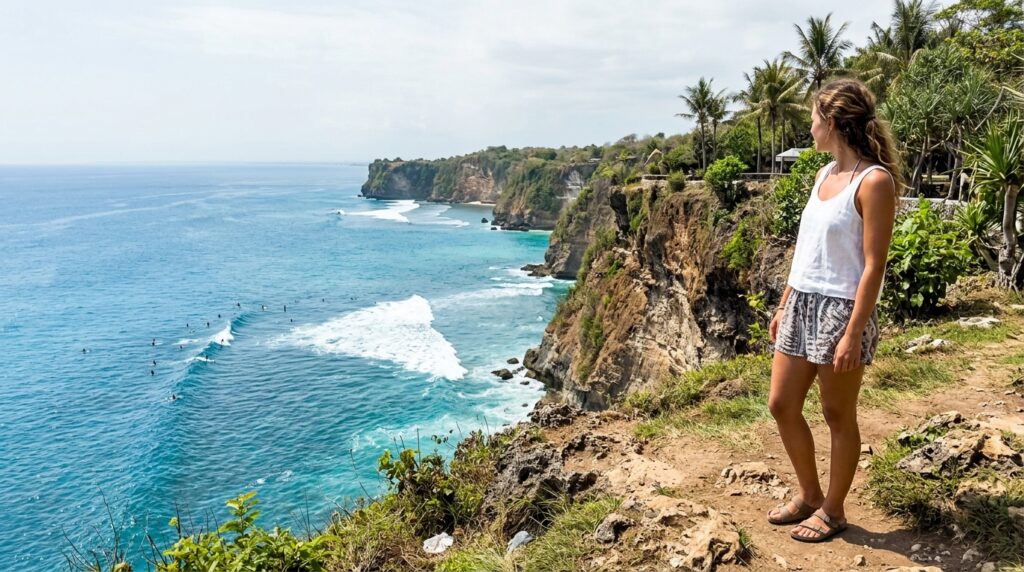
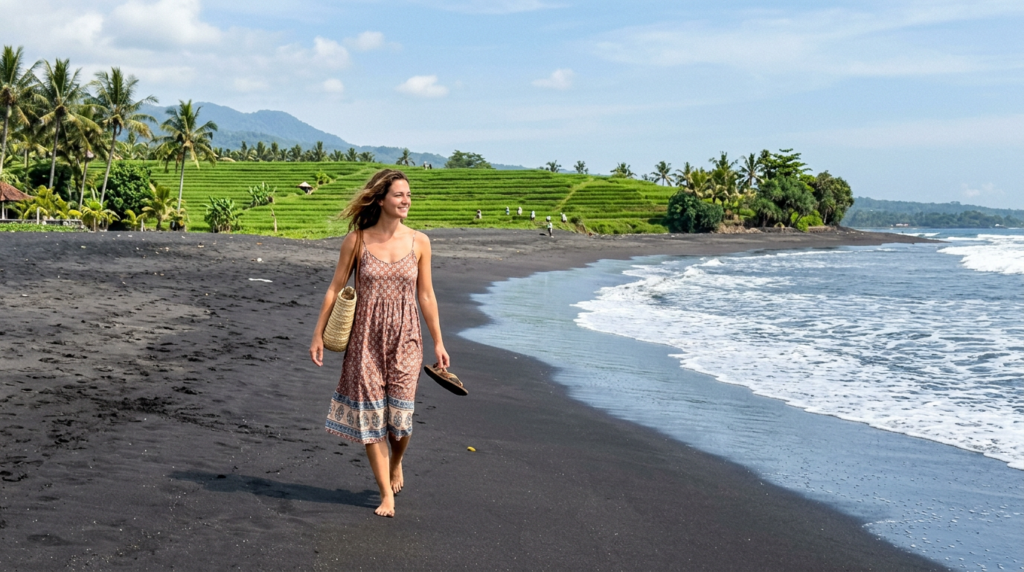
That’s where Seseh comes in. Instead of the constant buzz of nearby hotspots, you get a calmer coastal rhythm. Picture wide, dark black sand stretching out in front of you, rice fields sitting quietly behind it, and the kind of evening where the day doesn’t feel rushed at all.
This is the appeal of decompression over doing. In Seseh, the experience is built around slower mornings, shaded afternoons, and sunset moments that feel almost communal and reflective. You’re not coming to check off attractions. You’re coming to settle into a place where the village life still has room to breathe.
How many days you should spend here depends on what you want to feel when you leave. A short reset needs enough time to stop, breathe, and repeat the core rhythm. Deeper immersion takes longer, so the calm actually becomes your default. And if you’re balancing work with wellbeing, you’ll want a stay long enough for focus days and restorative routines to fit together.
Next, we’ll break down what “spending days in Seseh” really means in practice, so you can choose a duration tier that matches your goal and fits cleanly into your itinerary.
Not sure where Seseh fits in your plan? Share your dates and travel style with the team at Baliexpertvillas.com, and we’ll help you set the right expectations for a calmer stay.
What “spending days in Seseh” actually means
Seseh as your quiet village base
Spending days in Seseh is not about stacking attractions. It’s about using the village as your base while you absorb the atmosphere: black sand mornings, rice-field views, and everyday life that still follows local rhythms.
That definition changes your duration choice because the value is in settling. If you stay longer, you get repeated moments instead of one-off highlights. One practical takeaway: plan for your time to repeat the same calm routine, not for it to constantly change.
The “decompression zone” effect
Seseh serves as a decompression zone, especially when you’ve been in busier areas. This means the stay is meant to help your brain unclench, so you return feeling lighter rather than just “having seen” something new.
Because decompression takes time, the length matters. A shorter visit can start the process, but the effect becomes more noticeable when you stop rushing and let the days slow down. Practical takeaway: place Seseh later in your itinerary so it can do the most work for your mood.
How the day rhythm guides your stay
Seseh runs on a simple daily rhythm. Mornings lean toward the beach and early wellness, afternoons move inward toward shade and gentle activities, and evenings focus on quiet sunset reflection.
When you plan your days around this structure, you naturally understand why 2–3 days can feel like a reset and why 4–6 days feels like real immersion. You’re not just seeing the rhythm once, you’re learning it. Practical takeaway: treat the morning and sunset as anchors, then build your stay around repeating them.
Access to Canggu, without losing identity
One reason Seseh works for many travelers is proximity. It’s about 15 to 20 minutes from central Canggu, so you still have convenient access if you need something specific, while Seseh keeps its own calmer village character.
This affects how many days you should spend because it reduces the pressure to cram everything into Seseh itself. If you know you can step out when necessary, you can stay longer to enjoy the quiet consistently. Practical takeaway: use Canggu as a flexible option, not as the reason your Seseh days stop feeling slow.
Once you understand these definitions, choosing your duration gets easier, because the “best number of days” depends on which part of the rhythm you want to experience deeply. Next, we’ll dive into that rhythm so you can estimate your days with confidence.
Seseh’s daily rhythm: morning, afternoon, sunset
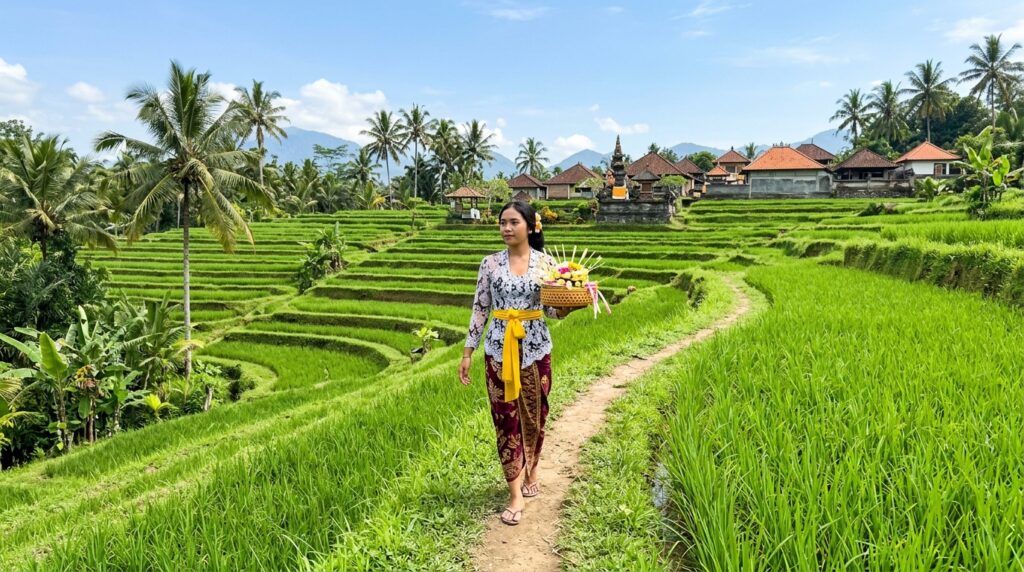
Imagine waking up with misty rice fields outside your window and a wide, quiet black-sand beach waiting just beyond the village. The whole day already feels slower, like you can finally breathe.
In the morning, lean into that calm with sunrise yoga or a gentle walk or run along the beach. Because the beach is expansive and usually less crowded, repeating this ritual across multiple days is what turns a nice morning into a real shift in your pace, which is a big reason 2–3 days can feel like a reset and 4–6 days can feel like immersion.
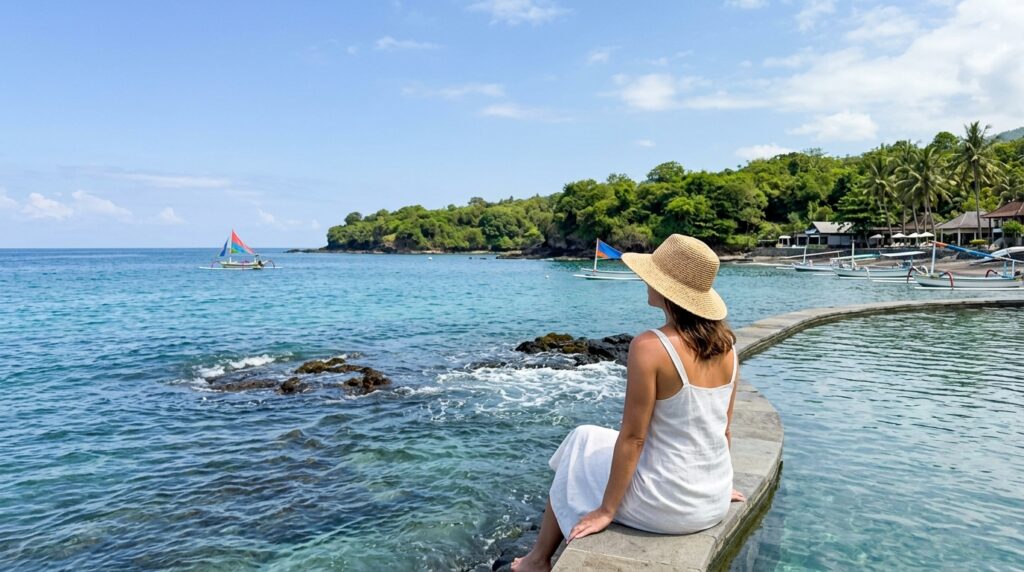
Then the afternoon heat nudges you inward, toward shade, rice-field views, coconut groves, small cafés, and optional wellness sessions. At sunset, the mood softens again with reflective quiet on the sea walls or sand, often without loud entertainment, so you just sit with the moment. The “arc” from morning to evening is what makes longer stays feel complete, especially when you get to experience it more than once.
Once you understand this rhythm, the cultural immersion side becomes easier to grasp, because you start noticing how the village’s everyday life shapes what the days feel like.
Culture is village life, not performances
Most people think “culture” means staged performances and busy tourist crowds. In Seseh, it feels more like real daily life, where the village’s rhythm is shaped by the Subak irrigation cycles and the holy temple calendar.
Picture a slow walk down the main village street. You notice stone carvings, small offerings, artisans at work, and even kids playing in courtyards, all while the place moves at its own pace. When you stay longer, you have time to slow down enough to really notice these details instead of rushing past them.
Now imagine watching how farming and ceremonies shape the day. You’re not just looking at “something cultural.” You’re seeing how the whole community keeps time, day by day, with the water system and temple rhythms. That kind of immersion usually needs a few extra days, because respecting the pace is what makes the experience feel authentic.
If you want the stay to deepen, use simple etiquette: dress modestly when you walk through residential areas and be mindful during local ceremonies. People who get that right tend to enjoy the experience more over multiple days.
Once you understand what immersion feels like, the next question becomes how your time changes the whole experience, not just what you see.
“The best part of Seseh is the calm you feel after you stop trying to do everything.”
Staying too briefly makes you miss the point
If you rush, Seseh can start to feel like just another stop. You might enjoy one sunrise or one sunset, but the larger effect never fully clicks because you never give your body time to settle into the slower rhythm.
That’s why staying too short can make it seem less special. The decompression value depends on slow repetition, and when your schedule is tight, you spend more time moving than absorbing the quiet.
Giving it enough time lets the calm deepen
When you stay long enough, the day rhythm becomes familiar. Morning beach time turns into a ritual. Afternoon shade and wellness create breathing room. Evenings shift into reflective stillness, not just a pretty view.
That’s the big tradeoff. Longer stays help you actually benefit from the “decompression zone” approach, especially when Seseh is placed toward the end of your itinerary. The more time you allow, the deeper the calm effect becomes, with 4–6 days often feeling like the point where it’s really unfolding.
You can now pick a duration tier with clearer expectations, starting with the short reset option.
2–3 days for a reset
Think of it like a quick download: 2–3 days is enough time to start feeling the shift away from noise and into Seseh’s calmer rhythm. You’ll usually get one solid morning routine and one reflective evening, which is why a short stay can feel complete if the rest of your trip already had plenty of “things to do.”
For example, you might do a sunrise yoga session or a slow walk/run on the wide black-sand beach, then spend afternoons in shade with relaxed cafés or wellness sessions. This works best when you keep side trips minimal, so your limited days go toward repeating calm, not chasing new stops.
4–6 days for immersion
4–6 days is where Seseh stops being a “nice interlude” and becomes your default pace. Instead of just sampling the day, you settle into the rhythm of morning beach time, shaded afternoons, and sunset reflection without feeling rushed. That’s also why the deeper calm effect is often linked to this range.
Picture multiple mornings that feel familiar, plus a couple of wellness moments spread out across the stay, so you’re not squeezing everything into one or two days. You’ll also notice village life more easily because you have time to slow down and actually absorb it, not just pass by.
Next, we’ll look at longer stays for work and wellbeing, where comfort and logistics matter even more.
Longer stays help work and wellbeing click
Imagine this: you arrive in Seseh for a “quick reset,” then reality hits. Your focus improves when the mornings are quiet, your afternoons are calmer, and your evenings stop feeling rushed, so you extend the stay.
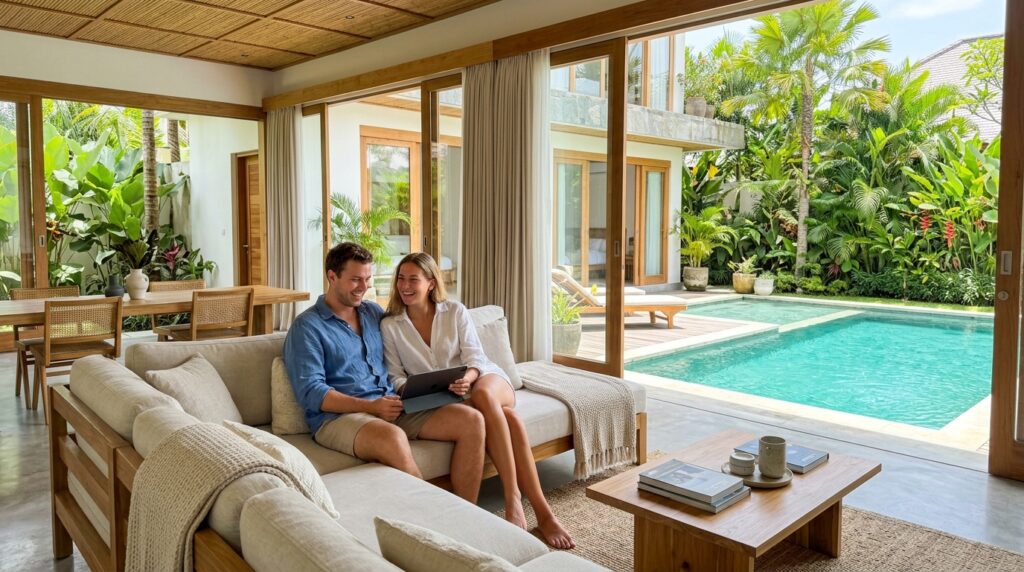
In your upgraded routine, work happens during the calmer hours while the environment stays low-distraction. Your villa and nearby cafés support it because many places offer high-speed fiber-optic internet, so you can plan deep work sessions without fighting the connection.
Flexibility seals it. You use a scooter or arrange a private driver when you want to move efficiently, and then you return to shaded afternoons, optional wellness sessions, and that reflective sunset moment on the sea walls or sand. Over enough days, the stay no longer feels like a vacation layered on top of life. It reduces friction between work, rest, and everyday village culture.
How many days should you plan for?
How long for quiet luxury?
If your goal is that “quiet luxury” feeling, aim for 4–6 days. This is when you stop rushing and start letting the morning beach rhythm, shaded afternoons, and sunset calm become familiar, not just memorable.
When Seseh is placed toward the end of your itinerary as a decompression zone, the stay works harder for you. More days generally means deeper appreciation of the village atmosphere and the wellness options without stress.
If you’re coming from Canggu, how many nights?
For many travelers coming from Canggu, 2–3 days is a solid choice. You get enough time to feel the reset, because Seseh’s vibe is a calmer contrast to the busier coast.
Use Canggu as a helpful option for specific needs, not the main purpose of your trip. Practical planning helps too, since Seseh is around 15 to 20 minutes from central Canggu, and the calmer Seseh mornings and evenings still get the spotlight.
How long for families with kids?
Families usually do best with 4–6 days so the stay can be comfortable and not too tightly scheduled. The calm environment and uncrowded beach time matter more when you aren’t trying to squeeze everything into one or two days.
With a slower pace, you can settle into shaded breaks, flexible meals, and the kind of everyday village moments kids can enjoy without constant pressure. This also makes it easier to respect local ceremonies, which keeps the experience smooth for everyone.
Is Seseh good for remote work stays?
Yes, especially if you can stay longer. For remote work and wellbeing balance, 4–6 days is often where you can create a routine: focused work during calmer hours, then unwind with wellness and shaded afternoons.
Many villas and cafés offer high-speed fiber-optic internet, so staying connected doesn’t have to break the calm. Practical travel planning also helps since getting around is easier with a scooter or private driver when you need flexibility.
With these duration choices in mind, the next step is translating the idea into a simple itinerary approach you can apply right away.
If you’re planning for 4–6 days and want the calm to be part of your daily routine, explore options with the team at Baliexpertvillas.com so your stay matches the rhythm you came for.
Quiet luxury isn’t just expensive stuff
Quiet luxury gets misunderstood as “expensive stuff” or “just amenities.” In Seseh, it’s really about intentionality, choosing calm over noise, and letting the day unfold at a slower pace.
And no, you usually can’t feel the full shift in just 1–2 days. The decompression effect needs time, especially when the magic is tied to repeated mornings and reflective evenings, not one perfect highlight.
When you stay within 4–6 days, those moments turn from interesting to familiar. That’s how you get the real rhythm of quiet black-sand mornings, shaded afternoons, and sunset stillness, without trying to force the experience to happen faster.
Imagine you’ve already soaked up Canggu’s energy, and now you want your last Bali days to feel quiet, not busy.
Seseh is the calm contrast for that landing. It’s roughly 15–20 minutes north of central Canggu, so you can keep access without turning every day into a rush back and forth.
Because Seseh works best when it’s placed toward the end of your itinerary as a decompression zone, 2–3 days is often enough to reset when the rest of your trip already includes plenty of activities. The main rule is simple: don’t overload with extra day trips, let mornings and sunsets do the work instead.
Next up, we’ll look at how this changes for families and remote workers, where comfort and logistics matter even more.
Pros of staying longer
If you’re traveling with kids, a longer stay usually feels easier. You get calm, uncrowded beach time and a slower pace, so your days don’t revolve around squeezing activities between chaos.
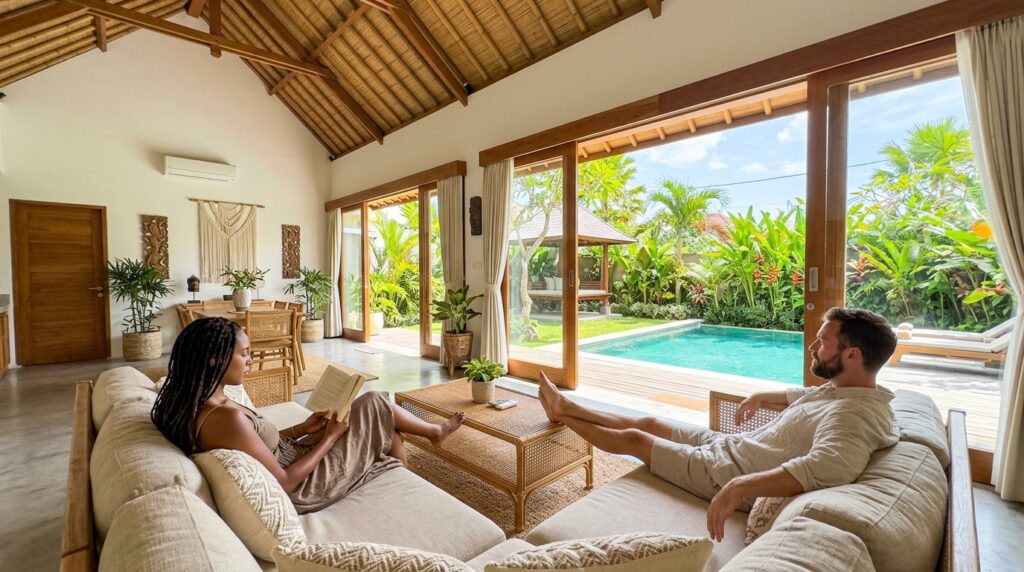
For remote work, staying longer is about balance. With high-speed fiber-optic internet in many boutique villas and cafés, you can separate focus blocks from wellness rituals, then decompress without forcing everything into one or two rushed days.
Cons of staying too short
When the stay is too short, it tends to feel stressful. You may only catch one side of the day rhythm, so the calm doesn’t settle in the way it’s supposed to.
Also, settling takes time. Families and nomads benefit from repeat routines and breathing room, so a brief visit often reduces the chance to build comfort, stick to wellness, and enjoy village life without constantly “starting over.”
For these two groups, the practical recommendation is simple: choose at least the tier that gives you time to settle, and if you can, lean longer within your chosen range.
Next, we’ll shift into an itinerary-minded planning view so you can apply the duration logic day by day.
Getting it right on your itinerary
1. Place Seseh as a decompression zone
Placement is everything for how long your stay feels. If Seseh is toward the end of your itinerary, it has time to do the “decompression zone” work instead of just being another stop you rush through.
This is one reason duration recommendations matter. When Seseh is last, even shorter stays feel smoother because you’re naturally transitioning into calm, not trying to squeeze calm into a chaotic trip.
2. Plan the daily rhythm first
Before you think about extras, build your day around Seseh’s rhythm. Mornings lean toward the wide black-sand beach and early wellness, while afternoons move into shade and relaxed cafés or similar restorative time.
Once that rhythm is fixed, your “how many days” decision becomes practical. More days simply means more repeated mornings and evenings, which is where the experience deepens instead of staying surface-level.
3. Add only one optional extra per day
Optional extras are fine, but keep them light. The idea is that day trips can exist, yet they should be intentional rather than constant, so you don’t break the calm arc you planned around mornings and sunsets.
If you’re there for 2–3 days, one extra can help variety without stealing the decompression focus. For 4–6 days, you can still include an extra, but the real upgrade is how much you can repeat the core rhythm without stress.
4. Use logistics smartly for comfort
Seseh is peaceful, but it’s not always walkable like a city. A scooter or a private driver helps you move efficiently, especially if you want flexibility or you’re traveling with family needs.
Timing matters too. Seseh is about 15–20 minutes from central Canggu, and transfers from the airport often take around 60–90 minutes, so plan arrival and departure days with less pressure.
5. Keep a slow exit plan for departure
When you leave, don’t schedule your last day like an emergency. Build in quiet time so your departure doesn’t undo the calm you worked to create.
A slower exit helps your stay feel complete, which is especially important for families and remote workers who benefit from routine. Next, we’ll make this concrete with short and long sample day flows.
Here’s how it can look in real life when you only have 2–3 days
Day 1 is all about settling in. Start with a slow morning beach walk or sunrise yoga, then let the day cool off in the shade. Finish with a quiet sunset, the kind where you don’t need to talk yourself into relaxing.
Day 2 repeats the key rhythm, because repetition is the whole point. Do the morning routine again, then add just one extra experience, like a wellness session or a calmer café meal. With limited time, this “one add-on” approach keeps you from turning the trip into a checklist.
On Day 3, you keep it simple. Take a final unhurried village walk and add a small moment of reflection before you go. If you include a gentle day trip, make it optional and secondary, so the mornings and evenings still feel like the main story.
Next, you’ll see what changes when you choose 4–6 days and let the rhythm deepen even more.
Planning for 4–6 days can feel like a big upgrade, because you finally get multiple chances to live the rhythm instead of sampling it.
- Repeat morning beach time 3–4 times so the calm becomes familiar, not a one-off moment
- Plan shaded afternoons for wellness sessions, relaxed café time, and rice-field wandering
- Add one sound healing, yoga, or meditation moment to deepen decompression without rushing
- Do 1–2 village immersion walks to notice stone carvings, offerings, artisans, and everyday life
- Protect sunset reflection every few days so evenings stay quiet and meditative
- Keep day trips minimal and intentional so mornings and evenings still lead the experience
- Schedule at least one no-plan block to embody the slower pace that makes Seseh work
With this kind of structure, 4–6 days stops being “more time” and becomes less effort for your mind to switch into calm. Next, let’s talk about what commonly derails people, especially when expectations don’t match the pace.
Common mistakes that shorten your stay
These aren’t “bad choices,” they just shrink the calm effect you came for. Duration gets wasted when your expectations fight Seseh’s slower rhythm.
Rushing turns your trip into a checklist
When you treat Seseh like a set of quick stops, you lose the decompression value. You can still enjoy the scenery, but the day rhythm never gets the chance to settle into you.
That’s why short stays can feel flat if they’re packed. The fix is simple: protect repetition of the morning and sunset moments, and keep “extras” light.
Thinking black sand means easy swimming
People often assume any beach setting will feel swim-friendly. In Seseh, the black-sand coastline is known for more powerful, hollow waves, so it’s better suited to low-pressure beach time and surfing rather than casual swimming.
If you build your days around the wrong expectation, you end up disappointed and spend energy searching for what the beach doesn’t promise. Once your plan matches the reality, even 4–6 days feels worthwhile because the calm becomes the focus, not the water.
Next, we’ll wrap this up by making the duration decision feel clear and doable for your own itinerary.
Mistake: treating Seseh like a checklist
You feel like you’re wasting time when you’re not stacking activities. The truth is that Seseh’s real value is being and letting the calm do its job through decompression.
When you over-schedule or stay too briefly, you never fully settle. You move through the days instead of letting the morning beach rhythm and evening quiet sink in.
So keep the day rhythm as your main plan, then choose only one extra per day. If you want the effect, you need enough days to repeat the rhythm instead of cramming it in once.
Most people assume black sand means calm water
Black-sand beaches can look like they should be easy for swimming, but in Seseh the coastline is known for more powerful, hollow waves. That generally makes it a better match for experienced surfing, while also being perfectly fine for low-pressure walks and relaxed beach time.
If you plan a swim-focused vacation, you’ll likely feel disappointed and waste time looking for the wrong conditions. Instead, build your stay around walks, relaxation, and sunset reflection, and if you want surfing, match it to your skill level so your days feel satisfying no matter how many you booked.
Conclusion: pick your days with intent
“When you stop rushing, Seseh starts doing the calming for you.”
Choose your duration based on what you want to feel. 2–3 days works for a short reset. 4–6 days is where full immersion kicks in and the benefits unfold more clearly. For work and wellbeing balance, longer stays help you create routine without squeezing it into chaos.
The key is simple: place Seseh so it can act as a decompression zone, protect time for the daily rhythm, and avoid turning the trip into a checklist. When you give Seseh the time it deserves, Bali feels lighter when you leave.
If you want your stay to match the right duration and rhythm, the Baliexpertvillas.com team is ready to help you plan the perfect strategy – contact us for a free consultation.