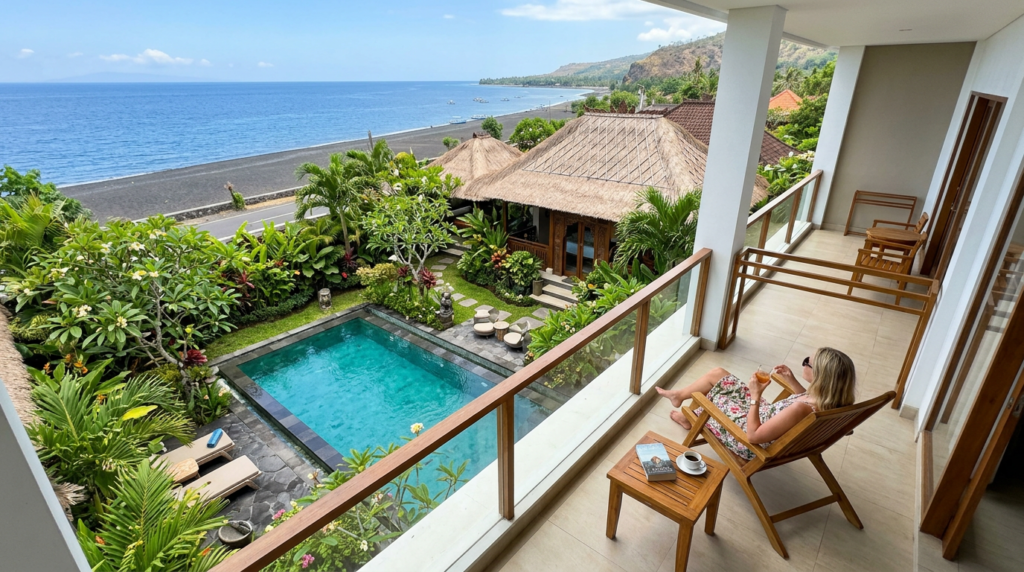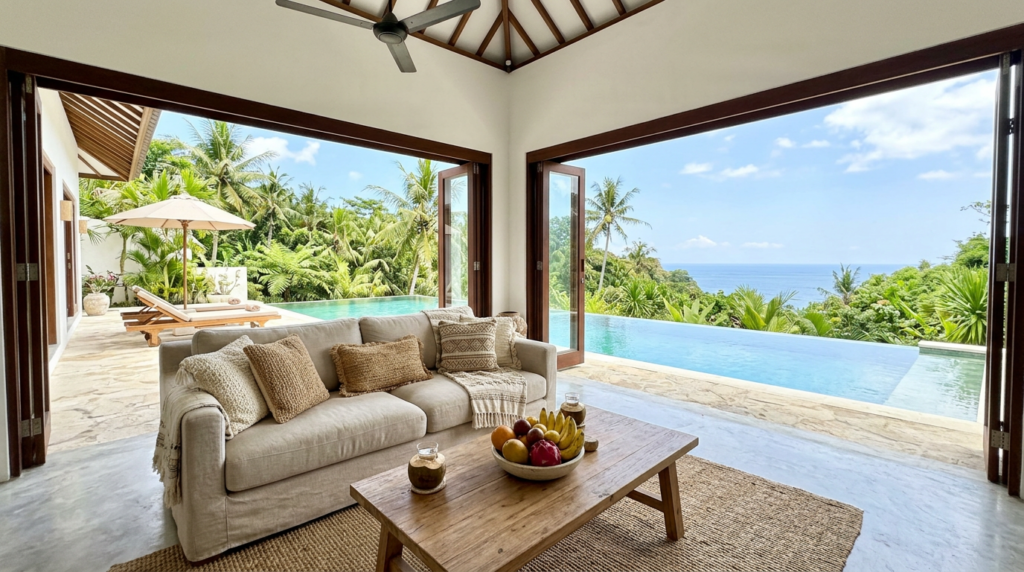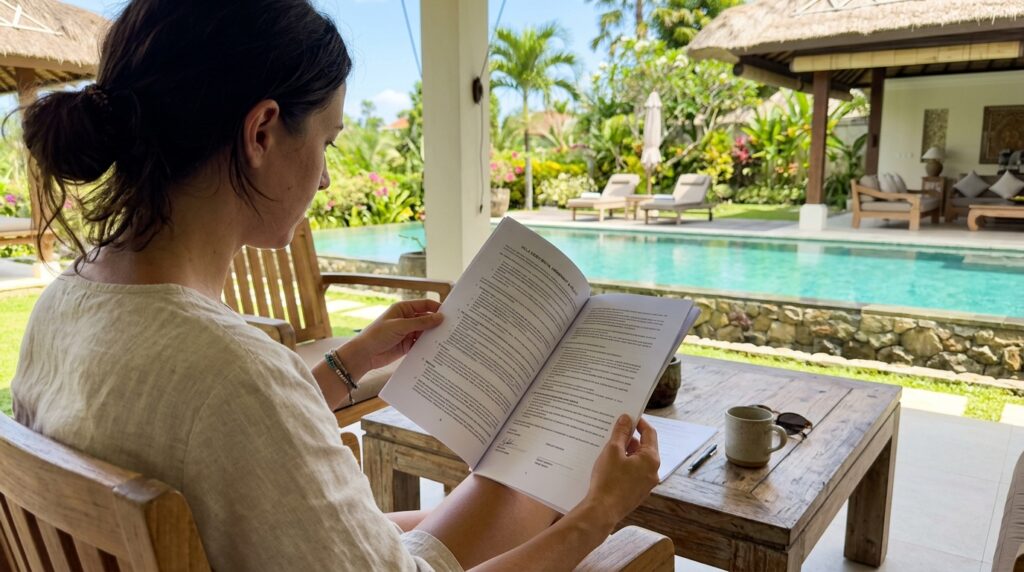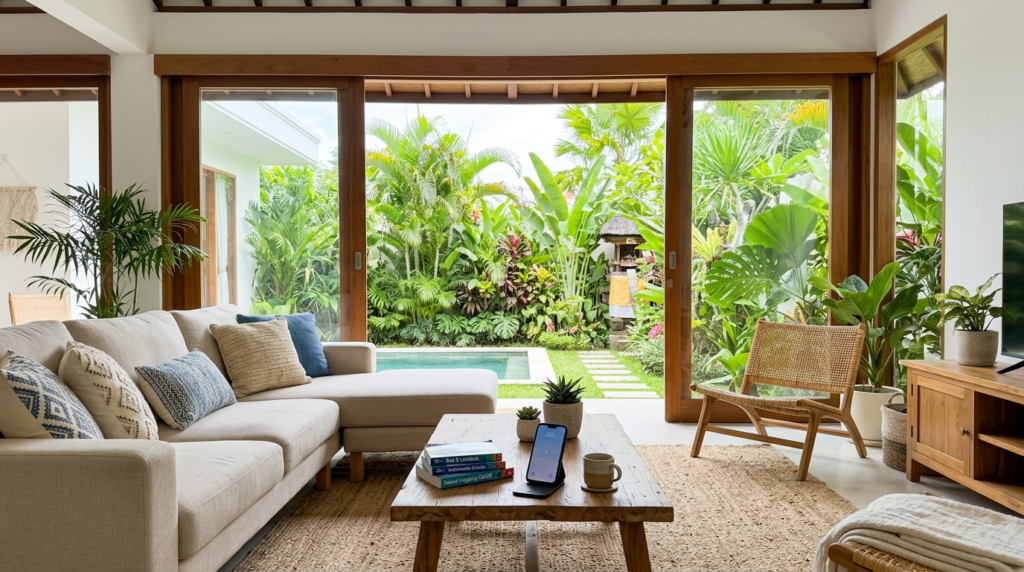
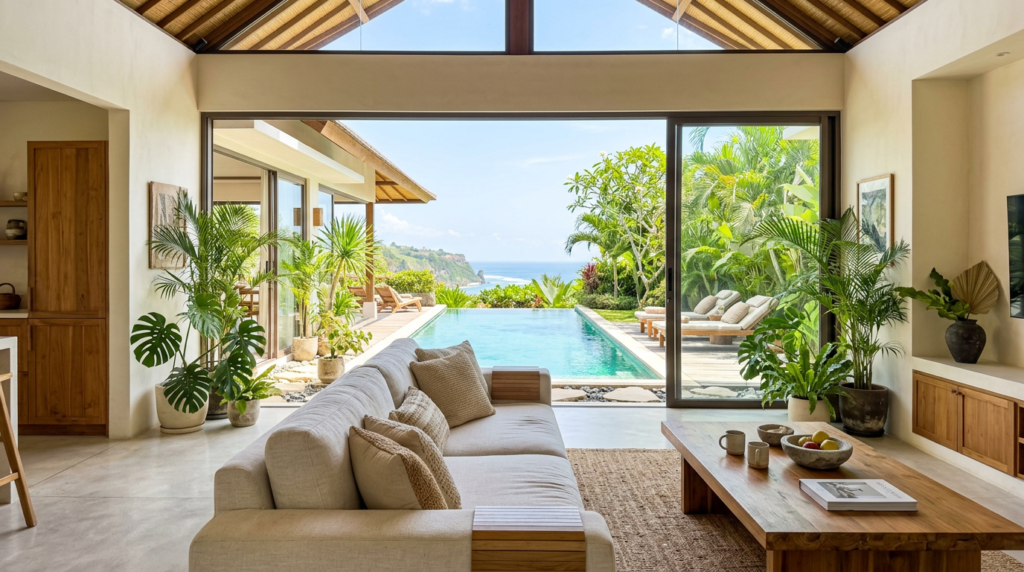
Picture late afternoon in Uluwatu: the wind cools down, the view looks unreal, and you still have to decide where you’ll “come home” after beach time. On one side is a quiet private villa where you can slip into your own space, and on the other is a hotel where everything is organized for you, but you are sharing the atmosphere with other guests.
That tug-of-war is the real point. A villa often feels more like living, with privacy and extra space that help you actually unwind. A hotel tends to feel easier and more straightforward, with staff nearby, standardized routines, and less day-to-day coordination. So the question is not “which one is best” in general, but “which one fits your trip” once you weigh what matters most to you.
In this article, “better” simply means the option that gives you the best overall experience for your situation. That usually comes down to group size, how long you stay, your priorities, and how comfortable you are with a bit more planning when you choose a villa. If you’re comparing based on nightly rates alone, you can miss the bigger picture, especially for longer stays or groups where value can shift.
To make it practical, we’ll compare villa vs hotel using the key factors that shape your day in Uluwatu: privacy and space, the service model, flexibility in your routine, logistics like location and support, and the true cost-value for groups and longer stays. Next, we’ll clarify what each option really means in day-to-day life.
Not sure which setup fits your plans? Explore villa options in Uluwatu and compare the day-to-day differences that matter most.
Photos and nightly prices only tell half the story. When you’re choosing between a villa and a hotel in Uluwatu, the real difference shows up in your day-to-day life: who you share space with, how your routines feel, and how much control you have over the pace of your stay.
Private villa
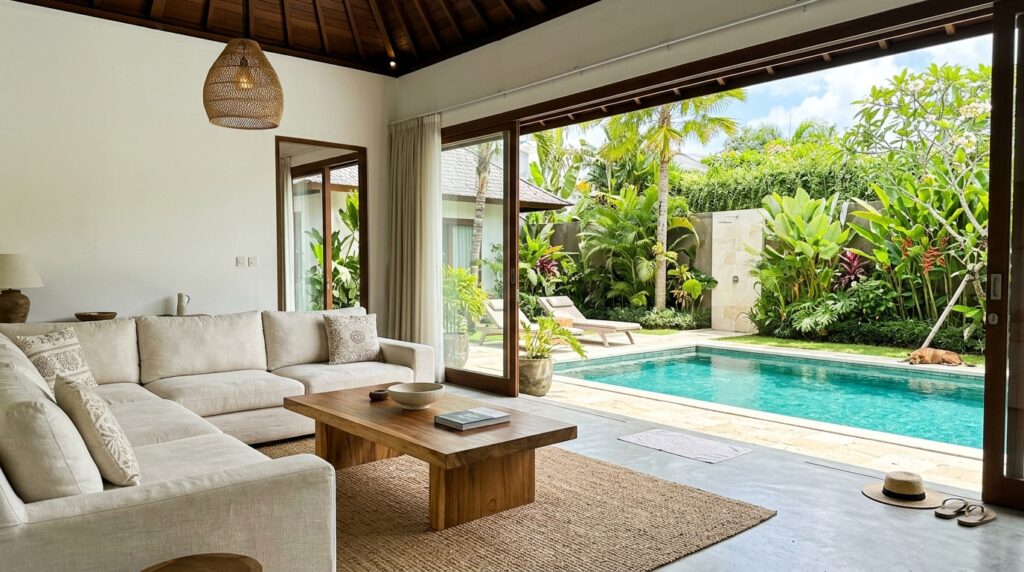
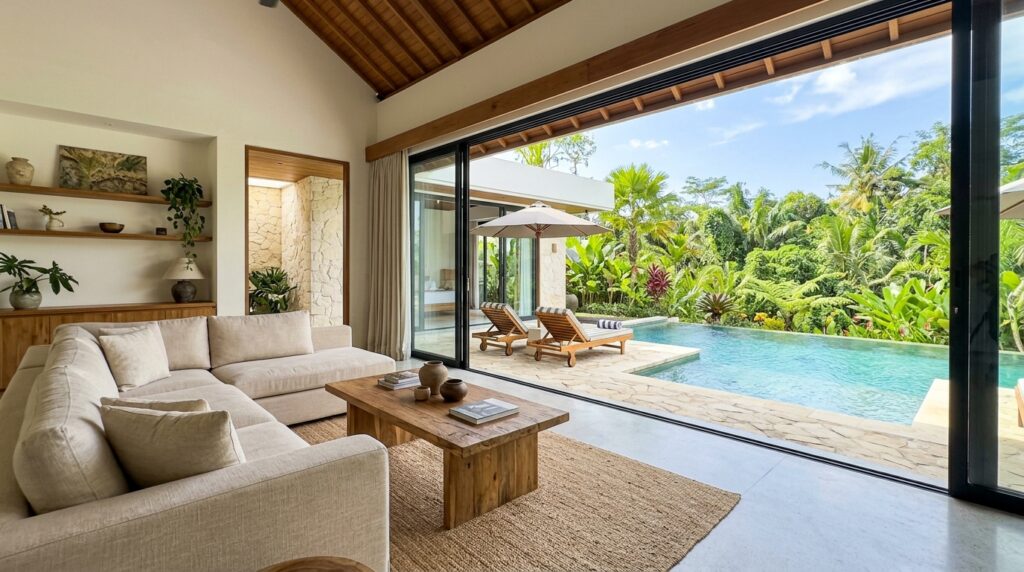
A private villa is a rented property you use exclusively, so the living areas and facilities inside it belong to your group during your stay. In Uluwatu, that often means more than just a bed. You get a home-like setup with space to relax, unwind, and keep your schedule without constantly running into other guests.
Hotel stay
A hotel stay is lodging inside a commercial property where rooms sit alongside shared services and shared guest spaces. You still have your own room, but day-to-day comfort often depends on the hotel’s standardized rhythm: when breakfast happens, how housekeeping operates, and where you go for meals and downtime.
Privacy
Privacy is the difference between being surrounded by other travelers and feeling like you’re off on your own. Hotels usually involve shared pools, lobbies, and dining areas. Villas, because they’re exclusive, let you enjoy a quieter environment and calmer routines, especially when you want to switch between work, rest, and leisure without interruptions.
Space
Space is what you feel when you can spread out instead of living out of one room. Villas commonly offer more room to move around, including separate indoor areas and outdoor space. In Uluwatu, that matters because your stay isn’t only about sleeping. It’s also about having a place for conversations, downtime, and even a comfortable setup for families or longer relaxing days.
Personalized service
Personalized service means support that adapts to your needs rather than running on one fixed routine. Villas often come with dedicated staff as part of the villa experience, such as a villa manager or housekeeper, and sometimes additional services like a cook or driver. Instead of requesting help through a general hotel flow, you usually coordinate around your group’s preferences and schedule.
Amenities
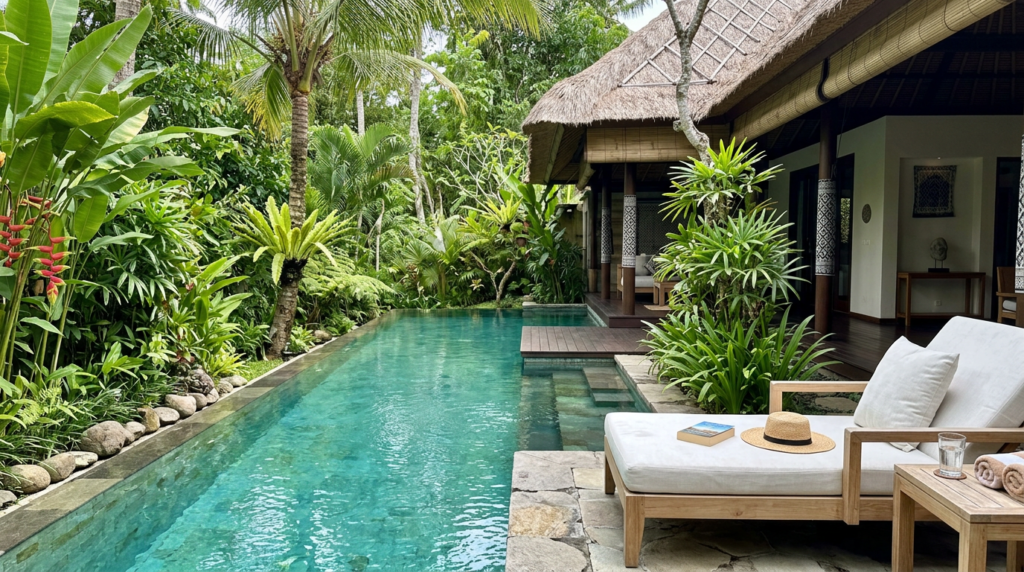
Amenities are the features that make a stay comfortable. Hotels often provide a menu of shared conveniences like restaurants, gyms, or other on-site facilities. Villas tend to focus on private, in-villa amenities, such as a private pool and a kitchen. That difference changes how you spend your time, because you’re either stepping out to shared spaces or staying within your own environment.
Staffing model
The staffing model is how people and services are organized to support guests. Hotels usually run with a broader team and reception or concierge-style support that many guests can access. Villas usually operate around a more direct connection to the villa’s support staff, which can feel smoother when managed well, but may require more proactive coordination from you.
These differences exist because villas are built around autonomy and exclusive comfort, while hotels are built around standardized convenience and predictable operations. Once you understand that, it’s easier to spot when villas genuinely outperform hotels and when a hotel is the simpler win.
Next, we’ll apply these differences to real traveler situations and see where villas tend to shine in Uluwatu.
What “privacy” means day to day
Most people think privacy is just not having someone else in your room. In reality, it’s about having exclusive access to the spaces you’ll actually use, so you don’t feel like you’re sharing your downtime with strangers. In a hotel, that usually means you pass through shared areas like a lobby, and you might swim in a shared pool with other guests around. In a private villa, your pool and living areas are yours during your stay, so the environment stays calm and predictable.
Once that exclusive access is real, your behavior changes without you noticing. Mornings feel quieter because you can move at your own pace without bumping into other people’s schedules. Later, you can set up a work session, take a nap, or plan dinner without worrying whether your plans overlap with what other guests are doing. Privacy becomes the feeling that your day is yours, not a shared itinerary.
That’s why privacy ties directly to the bigger villa question: when space and interruption-free comfort matter, villas tend to fit better than hotels.
Imagine a Uluwatu trip where the real win is not “nicer accommodation,” but a stay that fits your day. That’s when a villa often beats a hotel. This section is for you if you want to know when renting a villa is truly the better call, not just when it looks more appealing in photos.
Families and friends who need space
If you’re traveling with family or friends, a villa fits because you don’t have to split your time into separate hotel rooms and schedules. You get space to hang out together, plus private corners when someone needs quiet or a recharge. In a place like Uluwatu, that translates into calmer mornings, easier downtime, and less “where is everyone?” energy.
The villa model also matches the way families actually live. A shared home base with exclusive areas helps privacy feel real, and extra space supports routines like separate naps, family meals, or just having a place to regroup after beach time. Many villas also come with a full kitchen, which makes feeding the group feel simpler and more comfortable.
People working from their stay
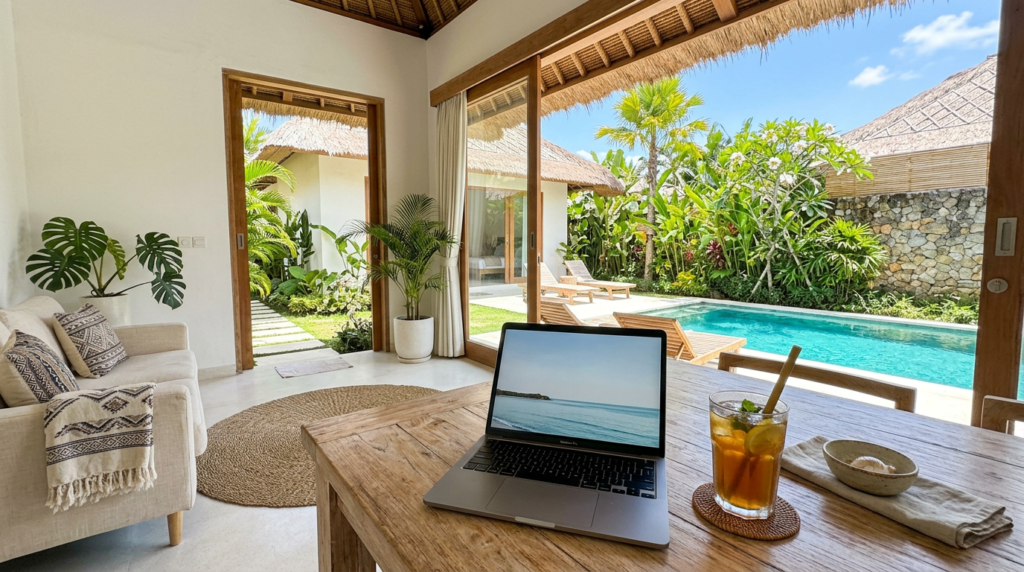
If your trip includes remote work, the advantage is comfort you can build around your schedule. A villa gives you an environment where you can set up a home-office routine without constantly switching back and forth between shared hotel spaces. That matters when focus and quiet timing are part of your success, not just a nice bonus.
Because villas are private, your day can shift naturally between work, rest, and leisure. With more space and a flexible living setup, you can create a workflow that feels “in your own place” rather than borrowed time. Plus, villa staffing tends to be more directly connected to your group, so requests can feel more personalized when something changes.
Longer trips where value shifts
When you stay longer, the comparison starts to tilt because you stop thinking in nightly rates and start thinking in total daily life cost. Hotels can look competitive early on, but villas often become more cost-effective as time goes on, especially when weekly discounts come into play. Weekly discounts often follow a common trend in the general 10-20% range, which can make a big difference on month-long or multi-week plans.
Here’s the key value shift: with a villa, you can reduce recurring dining-out spending by cooking at home. Per-person cost can swing depending on group size, and that aligns with how longer stays feel in real life. When you’re not constantly paying for meals out, the villa’s home setup starts to pay you back.
Flexible routines and tailored services
If you hate rigid schedules, a villa is usually a better fit. Hotels run on standardized rhythms, so your day often bends toward breakfast times, housekeeping patterns, and shared amenity availability. A villa lets you shape your routine around your group, including when you want to relax, host a casual dinner, or plan a slower day after surfing.
That flexibility can become a form of comfort, especially when combined with the possibility of tailored services. Many villa stays include dedicated staff like a villa manager or housekeeper, and sometimes added help such as a chef or driver, depending on the property. The “tailored” part matters because your stay can adapt to what you actually need, not what the hotel timetable assumes.
Still, villas aren’t always the right move. Next we’ll look at when a hotel is the better choice, especially for travelers who value convenience and predictable service over private space.
Families, friends, and remote work needs
If you’ve ever tried to plan a group trip and felt like schedules fight each other, you already know the pain point. Villas solve it by giving everyone room to exist in the same place without crowding each other. Multiple bedrooms help group members keep personal space, and a kitchen makes daily meals easier when kids are picky or adults want simple breakfast routines. When you can spread out, family time and friend time both happen naturally, with fewer awkward breaks to “reset.”
For remote work, the pain is different but the need is the same: consistency. A villa offers a quieter, more private environment where you can set up a stable workspace and keep your productivity rhythm. You’re not constantly adapting to shared hotel activity or switching locations during calls. With that privacy and flexibility, it becomes easier to build a home-office routine that works with your day, then smoothly transition into relaxation without waiting for hotel schedules.
Next, we’ll connect this same logic to longer trips, where cost and value start behaving differently than they do for short stays.
Longer stays can change the math
Weekly discounts can flip the price conversation. If you only compare nightly rates, it’s easy to assume hotels always win. But when you look at a full stay, you start thinking in per-person, per-total-stay value instead. That shift matters because hotel costs keep stacking day after day, especially once you add the everyday spending that comes with “eat out every meal” convenience.
For villas, the value logic tends to get stronger the longer you stay. Many villa stays offer weekly discounts in the general 10-20% trend range, and total cost beats nightly-rate thinking for longer trips. When you have a kitchen and can cook at home, you also reduce recurring dining-out expenses, so the savings repeat every day instead of being a one-time difference. A simple way to remember the tradeoff is this: for smaller groups or very short trips, hotels may still be cheaper per person, but for longer stays and groups, villas often close the gap and can even reverse it.
That said, hotels still bring real strengths, and next we’ll see why they can be the better fit in certain Uluwatu situations.
“Hotels are built for predictable comfort, while villas are built for privacy.”
This isn’t a villas-always-win story. If your priorities are convenience, on-site options, and easy support, a hotel in Uluwatu can be the smoother choice, especially when your stay is short.
Short stays and instant convenience
For 1 to 3 nights, you may not get enough time to fully enjoy the villa benefits, like cooking at home or settling into a flexible routine. Hotels take care of many basics for you, from simple breakfast plans to dining without extra coordination, so the trip feels effortless from day one.
Standard service you can predict
When you want stability, hotels deliver a consistent day-to-day flow. Reception and concierge-style support make it easier to request help, and housekeeping tends to follow familiar patterns. If you like knowing what to expect each morning, a hotel’s standardized operations reduce decision fatigue.
Resort-style shared amenities
If you’re expecting more traditional amenities, hotels often make that easier. You may have access to on-site dining and other shared facilities without leaving the property. That can matter if you want your downtime to feel complete without planning meals or managing logistics around a private space.
Now that you can see when hotels fit better, the next step is avoiding common booking traps and misconceptions before you commit.
Less planning, more immediate comfort
Trying to relax while constantly coordinating requests is exhausting. In a hotel, that friction is usually lower because the staffing model is built around reception or concierge-style support. You get predictable service rhythms and easier staff access, so small needs like help, timing, or basic requests feel straightforward and fast.
With a villa, the experience can be just as smooth, but it often depends on the management quality. When a villa is well-run, your villa manager and on-site team can handle things directly for your group. If you didn’t plan ahead, though, you may feel the extra coordination load, like arranging arrivals, stocking up essentials, and managing requests through your villa contact instead of a central desk.
After understanding the effort difference, the next thing is making sure you don’t get surprised by booking traps that come from common misconceptions.
What to watch out for before booking
Most booking problems come from misunderstandings, not from bad luck. If you correct a few common assumptions early, you avoid the expensive “why didn’t I think of that” feeling later.
Villas are always more expensive than hotels
This belief comes from comparing only nightly rates and ignoring that value changes with group size and stay length. Total per-person cost and what you can do inside the villa matter more than the first number you see.
If you stay longer or travel as a group, weekly discount patterns and self-catering can shrink the gap. For short trips or small groups, hotels may still be cheaper per person.
Are hotels inherently safer
It’s easy to assume hotels feel safer because security staff and routines are more visible. But private villas can still be properly secured, especially when they’re in guarded or gated setups.
The real mistake is skipping safety details. Confirm villa security arrangements and take normal precautions with valuables and access.
Hotels always offer better service and amenities
Hotels often look like the “better” option because they list more shared facilities and run on standardized service. What gets overlooked is that this service is standardized, not always personal to your group’s schedule.
A well-managed villa can feel more tailored, especially with dedicated staff support. The downside of this misconception is expecting hotel-style convenience in a villa and feeling disappointed when it’s different, not worse.
Villas are too isolated to be practical
Some people imagine a villa stay means being far from everything, but Uluwatu villas can vary a lot. Some are secluded, while others are positioned to keep daily access manageable.
If you don’t check the micro-location, you may end up spending more time on transport and logistics than you planned. The practical fix is verifying location and arrival realities for the specific property.
Hotels are better for cultural immersion
Hotels can offer organized cultural experiences, so it’s tempting to assume staying in one automatically makes your trip more “local.” Villa stays often create more day-to-day contact through local staff and a more residential feel.
The mistake is thinking immersion only happens through tours. If your goal is authentic daily rhythms, privacy and staff interaction can actually help more than packaged activities.
Is booking a villa complicated or unreliable
Villa booking can look unfamiliar compared with hotels, so people assume it’s riskier. In practice, reliability depends heavily on management quality and how responsive the villa support team is.
If you choose a professionally managed setup and clarify key details upfront, a villa can be just as smooth. When you don’t, you may run into coordination friction like stocking up, requests, or arrival logistics.
Once you’ve removed these misconceptions, the next step is choosing the option that fits your trip style, group needs, and comfort level with coordination.
How to choose the right option for you
Which details should you verify so your villa or hotel choice actually matches your trip?
Match your priorities to the model
Start by deciding what matters most: privacy, space, flexibility, standardized convenience, or on-site shared amenities. If your priority is privacy and interruption-free downtime, a private villa usually aligns better with privacy-and-autonomy logic. If your priority is predictable flow and low coordination, a hotel model fits more naturally.
When you’re honest about your top two priorities, you’ll stop comparing the wrong features. The “right” option becomes the one that supports your daily reality, not the one with the prettiest promise.
Calculate total per-person value
Next, shift from nightly pricing to a per-person, per-total-stay view. For longer trips and groups, villas can become more cost-effective because weekly discounts in the general 10-20% trend range and the ability to cook can reduce recurring spending. Hotels may still be cheaper for very short stays or smaller groups, where fewer “home base” benefits get to pay back.
If the numbers still feel unclear, compute the full daily spending you expect. That’s where the real difference shows up: what you pay for comfort, meals, and convenience across the entire stay.
Want help matching your priorities to the right fit? Check villa availability and compare options based on privacy, space, and how the stay supports your daily routine.
Decide if cooking matters
Be practical about meals. If you want breakfast at your own pace, have dietary needs, or prefer saving by cooking some days, villas with a kitchen fit value logic. If you’d rather dine out every day and rely on on-site options, hotels may feel simpler.
This check isn’t about “having a kitchen is good.” It’s about whether you’ll actually use it often enough to matter to your budget and routine.
Confirm remote-work practicality
If you’ll work from the accommodation, check for the kind of quiet you can rely on and whether the space supports a stable routine. Logic points out that villas often work well for remote professionals because privacy helps you maintain focus, then switch into downtime without waiting for hotel schedules.
If your calls and deep work are frequent, treat remote-work setup like a requirement, not a bonus. You’re looking for comfort that stays consistent across the week.
Verify security and support
Safety should be a confirmed detail, not an assumption. Well-managed villas can include security measures such as guarded or gated setups, CCTV, and safe storage options, but you still need to confirm what your specific property offers. For hotels, support access is typically easier through reception or concierge, which can be reassuring for day-to-day questions.
When support feels uncertain, that’s when small issues turn into stress. Your goal is to understand who helps, how quickly they respond, and what to do if something goes wrong.
Assess location and access
Don’t judge location by a big view alone. Uluwatu villas vary a lot in micro-location, and the need to consider logistics like noise or construction nearby and how convenient daily movement really is stands out. A villa can be well-positioned for daily access, or it can be more secluded than you expected.
Ask yourself how much time you’re willing to spend on transport and planning each day. If you’re energy-sensitive, this check can make or break the stay experience.
Clarify included costs and scope
Finally, validate what’s actually included and what isn’t. The importance of verifying included services and costs stands out, because the “total landed price” can differ from what you see first. With villas, scope differences can be significant based on management quality and how services are delivered.
If you’re comparing two options, compare the full package you’ll experience, not just the base rate. When scope is clear, you avoid the most common booking disappointment.
Once you’ve run these checks, the rest becomes simpler because the decision is tied to your trip shape, not guesswork.
In the wrap-up, you’ll see how these factors come together into a confident final choice for Uluwatu.
Conclusion: the “better” choice depends on your priorities
The “right” accommodation in Uluwatu is the one that matches your priorities, not the one that looks better on paper. If you’re traveling as a group, bringing family, working remotely, or staying longer where weekly value matters, a villa often shines because privacy, space, and flexibility are built into the experience. If your trip is short and you want things handled with predictable convenience, a hotel often fits better, especially when you prefer standardized service and broader shared amenities.
Before you decide, keep it simple: align your top priorities, compare total per-person value across the whole stay, and don’t ignore logistics like location access and day-to-day support. When you check those boxes, you stop guessing and start choosing with confidence. Once you match the stay type to your trip, Uluwatu feels simpler and more yours.
If you want a clear recommendation for your exact trip plan, Baliexpertvillas.com is ready to help you shortlist the best villa fit with your priorities and stay length in mind.