Imagine you’ve just arrived in Ubud, suitcase in hand, and you’re staring at the options: a cozy hotel room or a private villa. Instantly, you feel the trade-off. Do you want the easy, familiar setup of a hotel, or the calm, private “I can breathe” feeling that comes with your own space?
In plain terms, a villa is usually a self-contained place with its own private areas, often including a private pool and a kitchen, so you live more like you would at home. A hotel is a property where you’re staying in rooms within a shared setup, with services and amenities handled more centrally. That difference matters because Ubud attracts travelers who want a slower pace, more quiet, and a sense of escape from crowds.
In the sections ahead, you’ll compare what really changes in real life: value and cost logic, service, food flexibility (including the practical benefits of eating in), how well each option fits families, and the real-world logistics like location and getting around. By the end, you’ll have a simple decision rule for your trip.
Before that, it helps to get clear on what “villa” and “hotel” mean in Ubud day to day.
In Ubud, choosing a villa or a hotel changes your whole daily rhythm, not just where you sleep.
If you want help narrowing options that match your privacy, space, and budget needs, explore villa options on Baliexpertvillas.com and compare what fits best.
Villa stays feel private and “home-like”
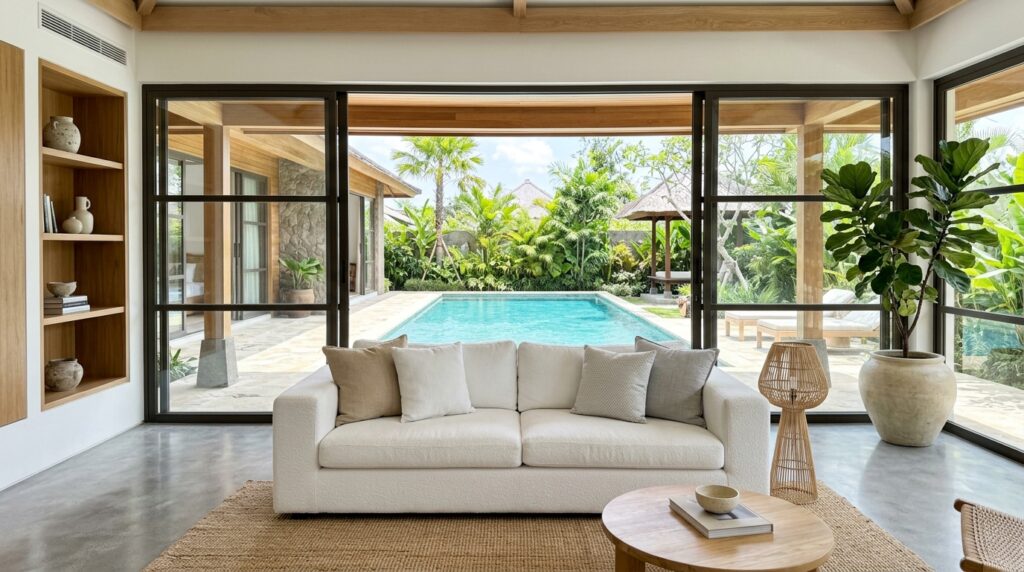
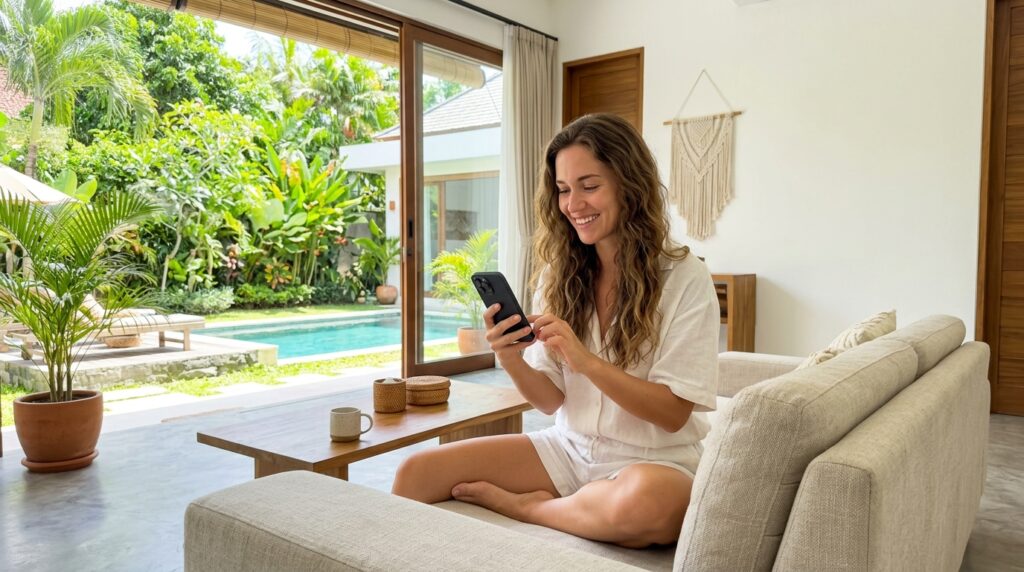
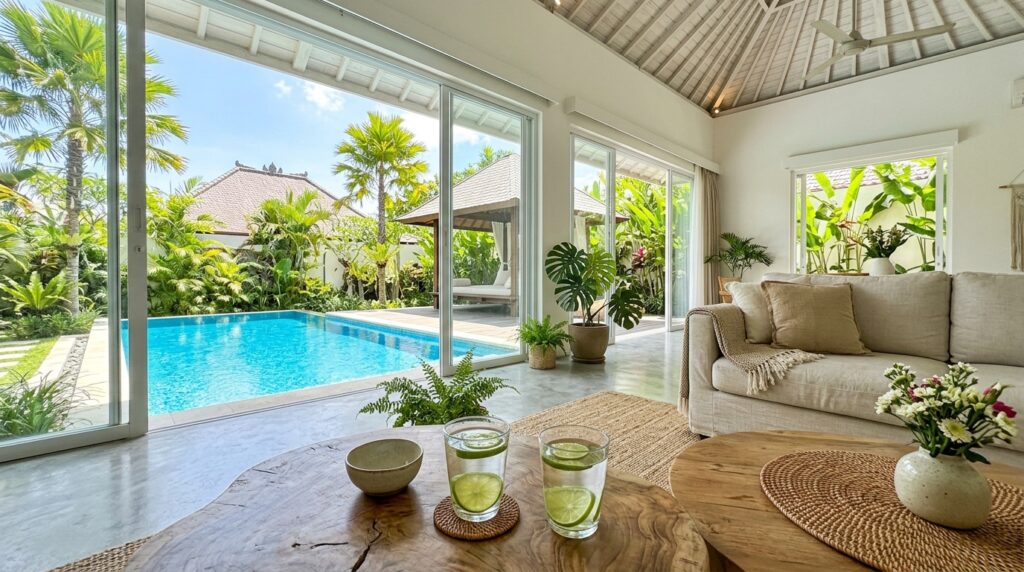
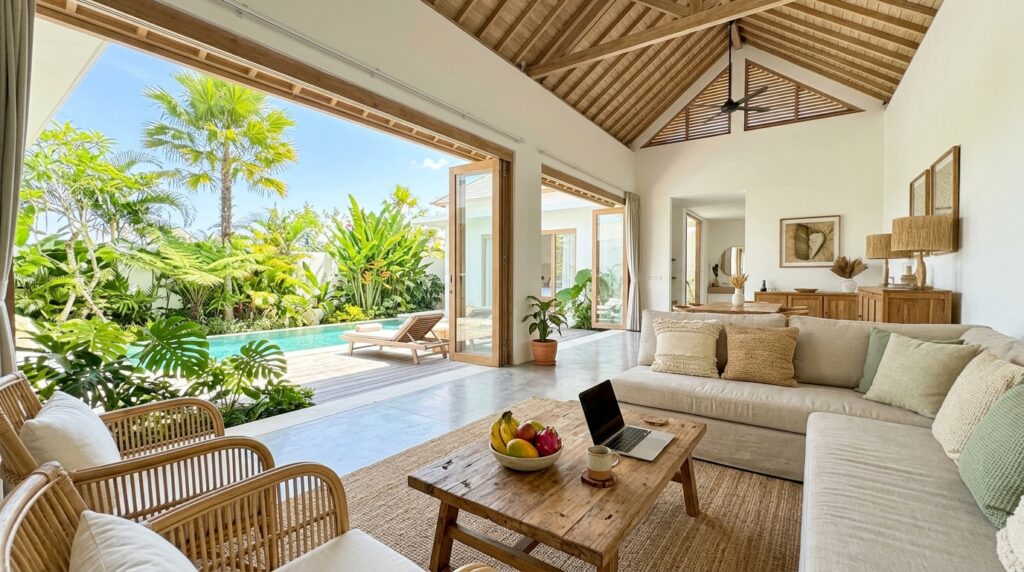
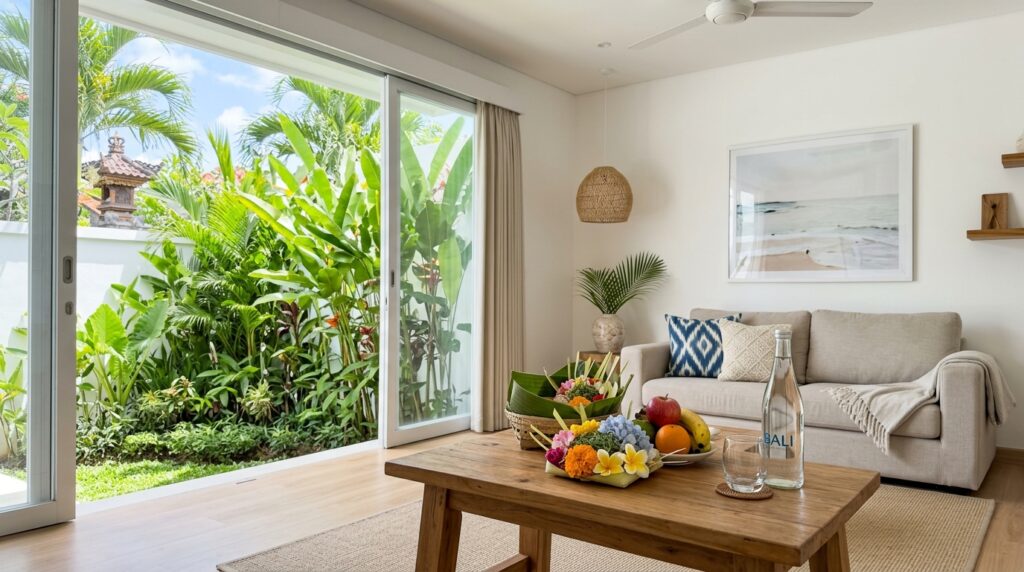
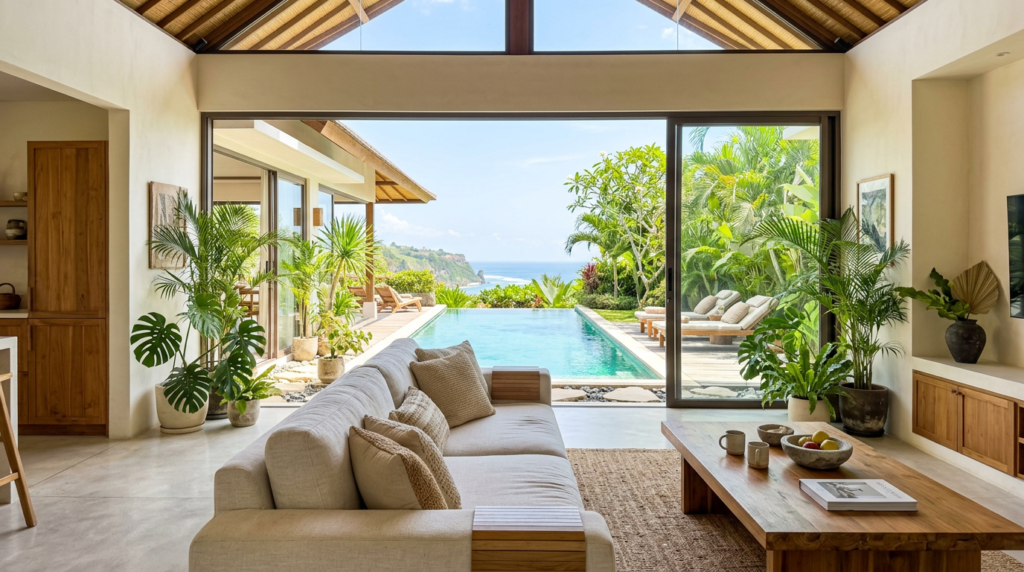
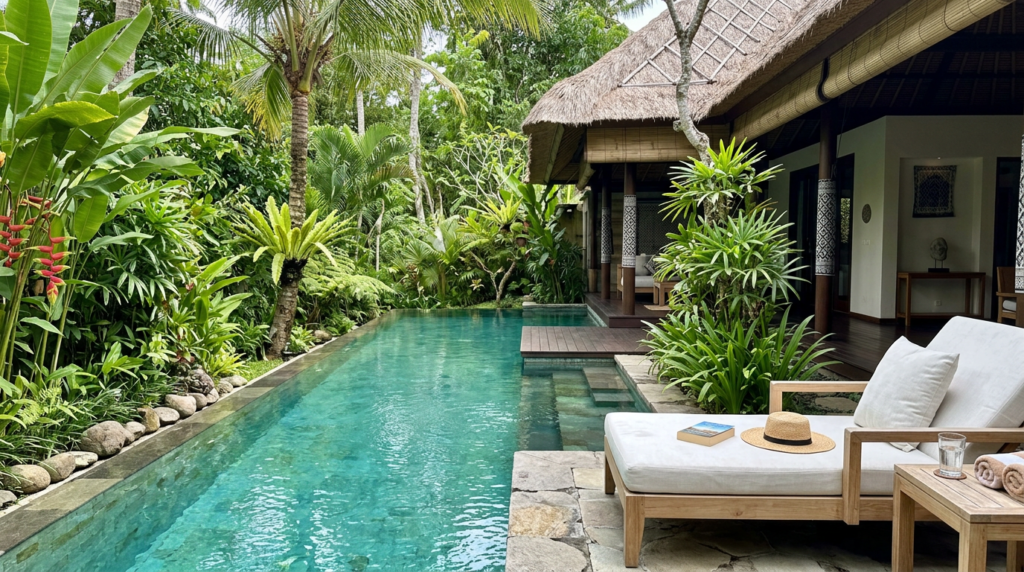
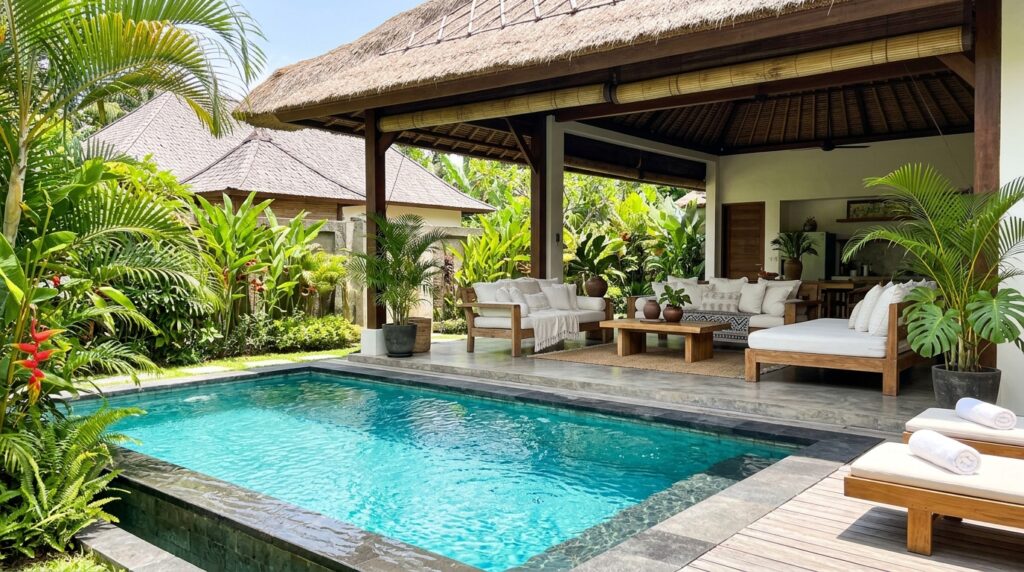
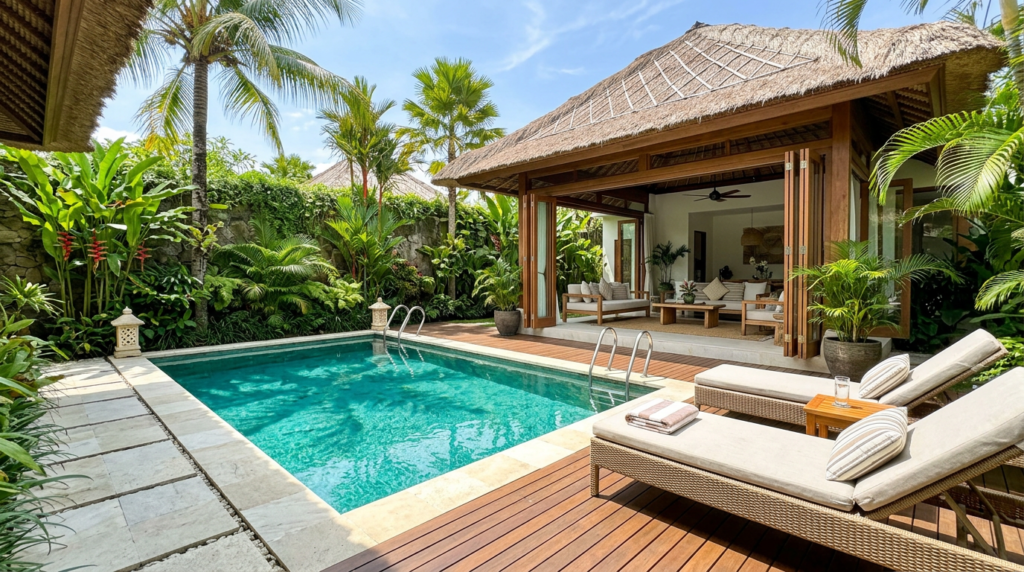
Most villas are self-contained spaces with their own private areas, often including a private pool, a living room, and frequently a kitchen. Because you are not sharing those grounds with other guests, you can actually relax without constantly adjusting to other people’s schedules. One clear takeaway: your downtime feels more like your own space, so the day is easier to slow down.
Hotel stays feel shared and more standardized
Hotels in Ubud typically mean you’re staying in rooms inside a larger property, with shared facilities like reception, dining spaces, and common amenities. That setup can be convenient, since services and schedules are handled more centrally, but it also means your comfort depends more on what’s happening around you. In practice, the takeaway is simple: hotels trade some privacy for straightforward convenience, so your “relax time” often has more outside noise built in.
Now that you’ve seen what changes day to day, the next question is why many travelers still prefer villas, especially when they’re trying to get strong value out of their trip.
What a private villa stay feels like
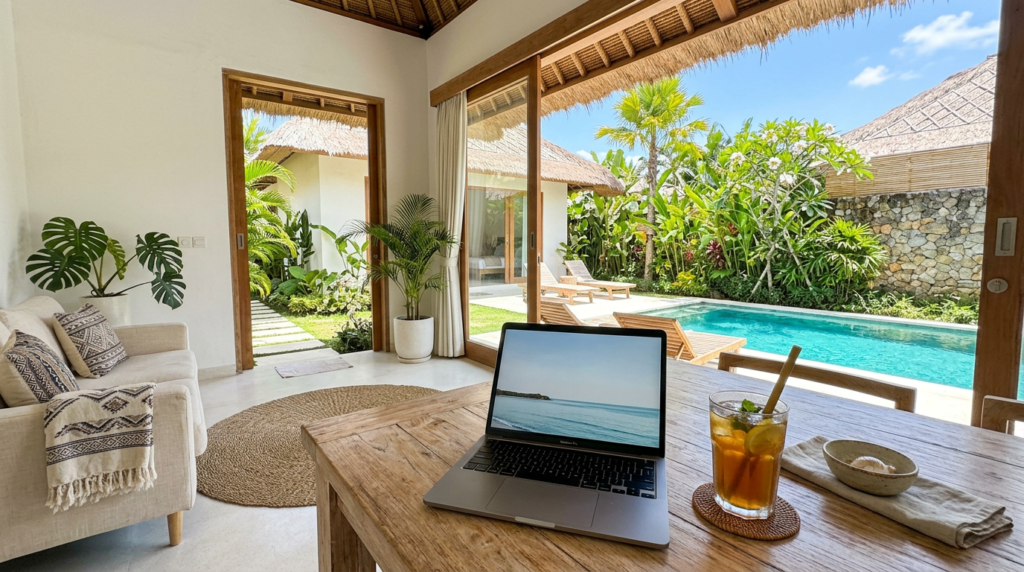
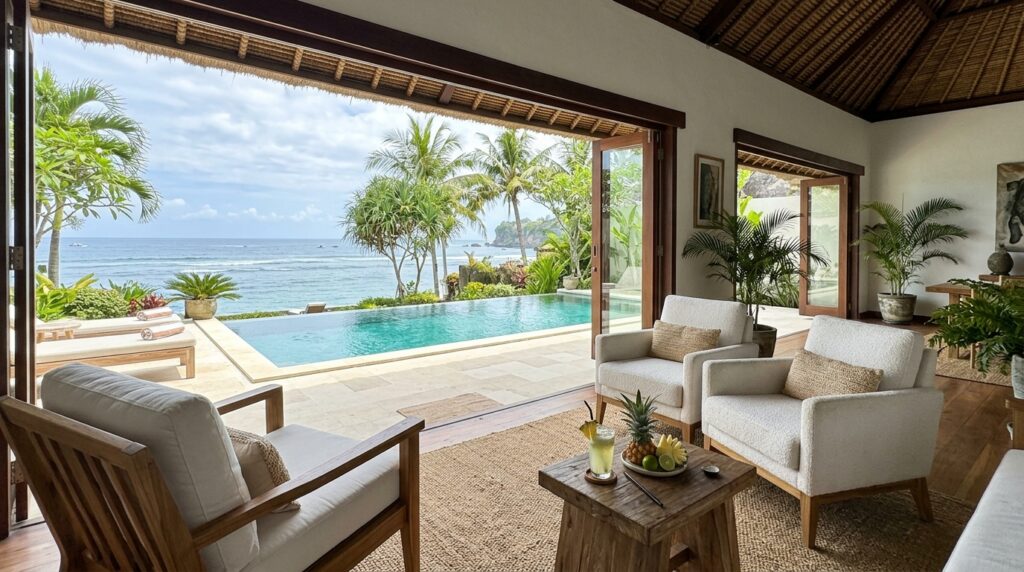
Picture this: you open your bedroom door, step outside, and you’re already in your own private pool space
That small moment sums up why villas feel different. Everything is yours, so you can move at your own pace without sharing space with other guests.
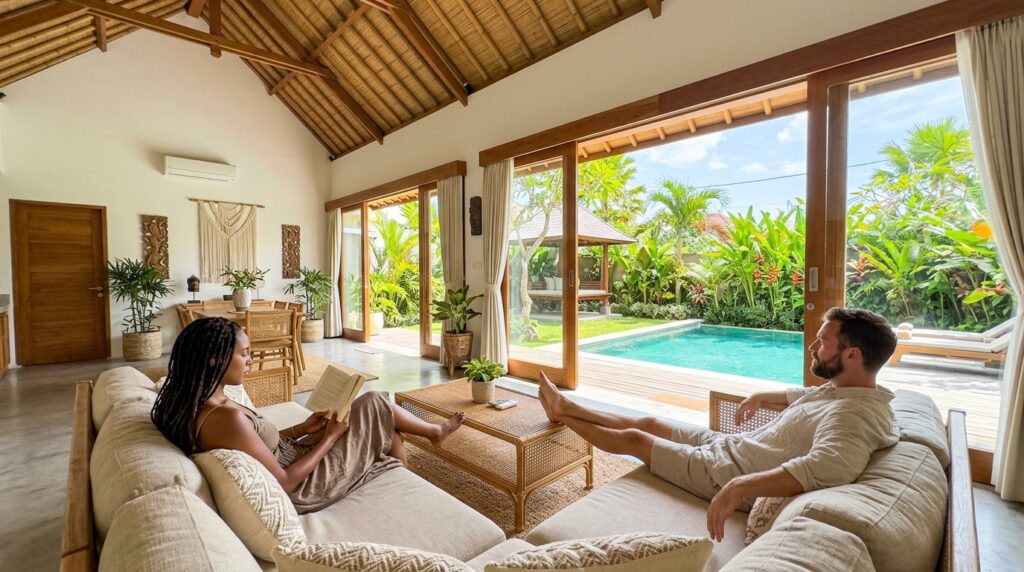
Back inside, the layout helps the routine too. You can spread out across the living room, sleep in separate bedrooms, and use the kitchen when you want, while the outdoor area stays part of your private bubble. Next, it’s worth seeing how that private setup often comes with flexible services and easier meal options.
What a hotel stay in Ubud feels like
Most people picture a hotel as rigid and basic, but in Ubud it can feel surprisingly convenient. You check in, and the basics run on a predictable rhythm with a front desk, housekeeping, and often security in place.
Because amenities like pools and dining areas are shared, you’re not living inside your own bubble. Meals are typically handled on-site, and room service may be available, which reduces coordination, even if your downtime has more “around you” happening.
Why villa stays often win on value
In Ubud, a villa can end up being a smarter deal because you buy privacy, space, and flexibility in one package.
Privacy, space, and a calmer pace
When your private space includes private grounds and often a private pool, relaxation stops feeling shared. You spend less time adjusting to other guests and more time settling into your own routine, which matters a lot in a place where many travelers come specifically to unwind.
That extra room also pays off for families and groups. Multiple bedrooms, a living room, and outdoor space make mornings and downtime smoother because everyone has somewhere to be without crowding. Not every villa layout is identical, but the overall “spread out” advantage is usually what you feel first.
Service that feels personal, not standardized
Villas often come with staff that work for your group, such as a villa manager and housekeeping. Depending on the property, you might also have options like a butler, nanny, or a chef arranged for your stay. That changes the vacation from “ask the desk” to “requests get handled for you.”
Hotels can be great too, but villa service tends to feel more tailored to your day. Even simple things like timing breakfast or arranging transportation can become easier because support is oriented around your villa, not a big flow of guests. The end result is less friction, not just more comfort.
Food flexibility with a kitchen
A kitchen is one of the biggest value engines. With a kitchen available, you can stock up on groceries you actually like, eat when it suits your schedule, and keep meals aligned with kids’ routines. You’re not locked into restaurant times or repeatedly planning “where to eat next.”
For budgeting, this can matter more than people expect. Many travelers can save by doing some self-catering, and if the villa offers things like a BBQ, you can turn a casual meal into a whole event without feeling like every dinner is an expense. On the flip side, hotels typically revolve around on-site dining or room service, which can be convenient but less flexible. Next, it’s only fair to talk about when a hotel is the smarter fit for your trip style.
Privacy that cuts crowding and distractions
Ever have a day you planned to relax, then the shared pool area feels too busy? A villa’s private grounds and private pool setup means you’re not constantly adjusting to other guests, so your downtime actually feels quiet.
Space that makes family life run smoother
Next, the space changes how the household works. With multiple bedrooms and a separate living room, families can spread out, kids can have their own zone, and groups can keep a calmer routine without everyone crowding into the same spot.
Villa manager and housekeeping
“Good service should feel like it’s already part of your day,” and in many villas that starts with a dedicated villa manager plus housekeeping. Instead of generic support for a whole building, your villa team focuses on keeping your specific space running smoothly.
Along the way, you may also have extra roles available depending on the villa, like a butler, a chef, or even a nanny. That matters because it turns routine tasks into something handled with less effort on your side.
Personalized requests for real flexibility
Personalized requests usually mean you can shape the timing and details of your stay. Want breakfast prepared when it suits you, or need help arranging transportation or activities? Many villas also work like a villa concierge for coordinating those plans.
This leads to a key difference in how you spend your time, and it connects directly to the next advantage: cooking and dining flexibility with a kitchen.
If you’re aiming for the best fit, use Baliexpertvillas.com’s villa guidance to compare what’s included, the service style, and what feels truly convenient for your group.
Meal planning on vacation can feel like a chore, but a villa kitchen makes it much easier.
First, you can eat when you like, not when a dining schedule allows it. Next, you can handle kids’ schedules since meals can be adjusted for when they’re hungry, and you can also stock groceries to match your preferences (and avoid repeated “where should we eat?” stops).
Then check if the villa offers an optional BBQ setup, because that can turn one simple meal into a relaxed backyard moment. If you’re comparing this to hotel life, remember that hotels usually center on eating out or room service, since kitchens are often not part of the room setup.
When hotels are the smarter choice
“A villa always means fewer hassles”
It sounds true, but it’s not always the full story. Villas can be more private, yet you may still need to coordinate details based on location and what the property includes.
If you’re on a short trip or you simply want things handled for you in one place, a hotel can feel easier. With a front desk, housekeeping, and shared on-site options, you get a more streamlined setup for dining and everyday needs.
“Hotels only deliver basic, standardized stays”
Hotels aren’t just cookie-cutter rooms. Many offer shared amenities and on-site dining in a more centralized way, so you spend less time planning meals and less time arranging day-to-day logistics.
So if your priority is convenience-first travel, hotels can be a great match. The trade-off is usually less privacy, but for certain travelers that trade matters less than how effortless the stay feels.
“If you’re only staying a few nights, a villa means extra hassle”
That assumption is common, but for short trips the hassle you’re worried about may not be the main issue. Hotels often handle breakfast, dining, and daily amenities in one place, so there’s less coordination on your end.
Villa flexibility shines most when you’re there longer. For a quick Ubud break, convenience can outweigh the “home” benefits of a kitchen and private setup, so a hotel can feel more efficient when you want everything simple and on-site.
“Hotel staff handles everything, so you never need to coordinate”
There’s a kernel of truth here, but the real difference is how support gets delivered. A hotel’s front desk and on-site setup mean you can get help fast with last-minute questions, dining, and simple logistics.
In a villa, you can still get help, but the flow may go through your villa team like a villa manager, and it depends on what’s included in your stay. If you like decisions minimized and things answered quickly, a hotel often fits that style well.
How to choose in Ubud without regrets
Step 1, Match your group size to the space
Start with your people. If you’re traveling as a family or group, a villa’s multiple bedrooms and shared indoor space usually feel more comfortable than cramming into separate hotel rooms.
Cost value often flips when you have more guests because you’re paying for one place with room to live, not just one room per person. For solo travelers or very short stays, a hotel can still be the easier fit.
Step 2, Check location and transport feasibility
Next, zoom in on where you’ll actually be in Ubud. Even if a listing sounds “central,” check whether you’ll realistically need transport for daily plans.
Look for clues like walkability promises, noise, and the practicality of getting around. If your villa feels secluded, plan for scooters or a private driver because comfort depends on access, not just the view.
Step 3, Verify services, costs, and security
Before you book, confirm what’s included and what’s optional. In a villa, check who’s responsible day to day, like villa manager and housekeeping, and whether perks such as a chef or butler are available.
Also verify basic security expectations, including whether the property uses a gated compound and whether there are safes. Next, the article will cover the most common mistakes that cause disappointment after you arrive.
1. Match your group size to the space
Here’s the rule of thumb: the value equation often flips once you travel with a group. A villa with multiple bedrooms and outdoor space can be cost-effective per person because you’re buying one comfortable setup for everyone to live in, not just separate rooms to sleep in.
Hotels can still be the better move for solo travelers, couples, or very short stays, especially when you want less “settling in.” Next up, you’ll want to think about where you’ll be in Ubud and how you’ll get around day to day.
You book a “close to everything” place, then realize you need rides all day.
- Check real distance to attractions you’ll use, not just the label
- Decide how much noise you can tolerate, central or quieter areas
- Test walkability for steep roads, no sidewalks, and traffic
- Plan transport: scooters or a private driver
- Be honest about who in your group can handle scooters
That micro-location choice usually matters more than the broad area name. If it feels hard to get around on foot, expect to use a driver or scooter daily.
Next, you’ll finish the workflow by checking services, costs, and security details.
Villa personalization vs what you truly get
Wondering what’s actually included in your villa stay? The upside is flexibility, but the trade-off is that inclusions can vary, so you should confirm details before you arrive.
Check who’s handling daily support like a villa manager and housekeeping. If available, ask about options such as a chef, butler, or nanny, and how breakfast requests work. Also verify security basics like 24-hour security, whether there’s a gated compound, and if safes are provided. Hotels are more predictable with centralized services and on-site dining, but room setup expectations still need checking.
What to watch out for when booking
Most villas aren’t automatically more expensive or less served
People often assume villas cost way more and always deliver worse value or service than hotels. In reality, villa pricing can become cost-effective for groups because space, privacy, and in-villa setups are bundled together, and many villas have strong support from staff like a villa manager and housekeeping.
Here’s the part to do instead: compare apples to apples. Check what’s included, whether the villa has help like a chef, butler, or nanny if offered, and confirm that suites and “suite space” expectations match what you’re actually booking. So check the inclusions list and service roles before you pay.
Privacy surprises usually come from a few specific details
Here’s the part people miss: “private villa” doesn’t always mean private in every way. Watch for infinity pool misdirection, where the view feels dramatic but the pool may face neighboring properties or shared sightlines. Also verify walkability honestly, since steep roads, no sidewalks, and traffic can make a “close by” stay feel far in practice.
Do the safer expectation check by reading recent reviews for noise or construction mentions, then confirm security basics like 24-hour security, gated compounds, and whether there are safes. So check privacy sightlines, walkability reality, and security details.
Booking disappointment usually comes from cost myths
First, the idea that villas are always pricier can mislead you. For families and groups, the value can be cost-effective because you’re paying for one space with room to live, not separate hotel rooms.
Second, remember that villas can also include strong support and even security measures, so “less service” and “less safe” are not automatic truths. Hotels are convenient, but hotel pricing and villa inclusions vary, so your expectations should match the specific listing.
Suites don’t equal villa space
Here’s the part people miss: a hotel suite can feel roomy, but it rarely replicates a villa’s full home-style layout with separate bedrooms, a living room, and private outdoor areas. The result is often a different kind of comfort, especially for families.
Third, don’t assume safety works only one way. Many reputable villas include security like hotels, while the biggest discomforts can actually come from location, service gaps, or a mismatch between what photos promise and what you get. Before booking, verify space expectations, included services, and security details.
“Private villa” doesn’t always mean private pool view
Just because it says private villa doesn’t guarantee you’ll get the isolated feeling you imagined. First, verify whether the infinity pool view is truly private or just looks dramatic in photos.
Then check neighboring visibility, and look closely at walkability and noise expectations like traffic, steep roads, and the lack of sidewalks. Also scan reviews for mentions of noise or construction, and confirm security basics such as a gated compound and safes. If you do these checks, you can cut disappointment before you arrive.
So, is it better for you?
So here’s the decision rule: if you want privacy, space, personalized service, and easier meal flexibility, a villa usually fits best. If you prefer convenience, predictable on-site dining, and less coordination, a hotel often delivers that smoother, centralized experience.
Picture two different trips. A family with kids often values a villa because the layout supports downtime and a kitchen helps with routine meals. A couple who wants effortless dining might choose a hotel because everything is handled in one place with less self-management. You can enjoy Ubud either way, as long as your stay matches your priorities.
Once you shortlist options, keep moving forward by verifying inclusions, services, security basics, and whether transport is realistic for the location. With that in place, you can book confidently and enjoy Ubud at your own pace.
Ready to make your choice with clarity, Baliexpertvillas.com siap membantu Anda menyusun strategi yang tepat – hubungi kami untuk konsultasi gratis.