Imagine planning your Bali escape and thinking, “It’s tropical, so it can’t be that hard,” then realizing Seseh can feel very different depending on rain, humidity, and what you actually want to do that day.
That’s why choosing the right dates matters. For Seseh, “best time to visit” is not just about warm temperatures. It’s about how much rain you might deal with, how sticky the air feels, how many sunny hours you get, and how the ocean behaves for surfing or simple beach time. Temperature stays fairly steady, but the day-to-day experience changes with the seasons.
Here’s the simple structure this article will follow. First, you’ll get a year-round baseline so you understand what stays consistent in Seseh. Next, you’ll see the dry versus wet season split, including which months tend to be driest and which months are the wettest and most humid. After that, we’ll narrow it down by traveler type, so beach lovers, families, and surfers all get date guidance that actually fits their plans. Finally, you’ll get practical timing tips (like using early mornings or late afternoons) and common mistakes to avoid.
With that groundwork, the next section will give you exact month guidance and the key climate anchors, so you can choose dates with confidence instead of guessing.
If you want to make sure your dates match the kind of trip you’re dreaming of, use this guidance as your quick filter, then take your next step with Baliexpertvillas.com to find the right stay style for the season.
What Seseh is like year-round
Dry season window concept
In Seseh, “dry season” is mainly about getting more reliable outdoor time. The planning logic points to May through October as the window when drier days are more likely, which makes beach routines easier.
Once you know that baseline, the decision gets simpler. You’re basically choosing how much uncertainty you want to trade for fewer crowd-pressure days and more flexible plans.
Temperature range stays warm
Daytime temperatures stay very consistent, averaging between 27°C (81°F) and 29°C (84°F) year-round. Nighttime also remains warm, ranging roughly from 23°C (73°F) to 26°C (79°F).
This matters because you are not traveling to chase “cooler weather.” In Seseh, the bigger shifts come from rain, humidity, and sunshine, not from major temperature changes.
Annual rainfall is high
Seseh sees about 1884 mm (74 in) of rainfall per year. The key point is that the rainfall is seasonal, not evenly spread, so some months feel dramatically wetter than others.
That’s why “best time” often comes down to your tolerance for rain-heavy days and how you like to structure your schedule when the sky changes fast.
Rainfall peaks in January
January is the wettest month, with an average of around 300 mm (12 in) of precipitation. It is also associated with around 19 rainy days in that month, so plans can get more interruptions.
Still, the warmth stays. You’re not dealing with cold or snow season, just more frequent wet conditions and higher humidity.
Sunshine peaks in August
Sunshine hours vary too. August tops out at about 8.7 hours of sunshine per day, which makes outdoor sightseeing feel steady and easier to time.
Even the least sunny month still delivers daylight. January still averages around 5.7 hours of sun, so it’s not “no sun” travel, it’s just a sunnier rhythm in drier months.
Humidity is highest in January
Humidity tracks with the wet months. January reaches about 85%, while April can drop to around 80%.
In practical terms, higher humidity can make you feel warmer even when temperatures do not change much. That influences when you’ll enjoy the beach and when you’ll want a break indoors.
Sea water stays swimmable for most trips
Sea temperatures range from roughly 26°C (79°F) in August up to about 29°C (84°F) in January. So the ocean remains comfortable enough for water time across the year.
The catch is not temperature. It’s how strong waves and currents can be, especially when rainy-season conditions ramp up.
With these anchors in mind, the best time to visit Seseh becomes easy to choose based on your tolerance for rain and your desire for beach hours. Next, you can use this to apply a simple dry versus wet season split for planning.
Dry season for easier outdoor plans
Pick May to October if your priority is being outside more often. This stretch is considered the drier part of the year in Seseh, so your beach time usually feels more predictable.
Even with warm temperatures year-round, comfort tends to improve because the air is generally less humid and evenings can feel cooler. That makes morning beach walks and late-afternoon lounging much more enjoyable.
Wet season for lush scenery and trade-offs
Plan around November to March if you do not mind rain being a bigger part of the daily rhythm. This is the rainy season period, with January as the wettest month.
In January, rainfall averages about 300 mm (12 in) and comes with more rainy days, so some beach plans need flexibility. On top of that, humidity is higher, and water conditions can become tougher for surfing when tide and waves ramp up.
Anchor months that make it easy to choose
Use two reference points to guide your decision. August is the driest and sunniest option, with about 40 mm (1.6 in) of rainfall in that month and roughly 8.7 hours of sunshine per day.
January is the opposite end of the spectrum, with the highest humidity at about 85%, plus about 5.7 hours of sun even in the least sunny month. With these ranges in mind, you can treat them as the foundation for the “best time” recommendations in the next section.
So when is the best time to visit Seseh?
Best months for beach days and sunsets
Want the simplest answer? For most people, the best time to visit Seseh is generally May to October, especially May, June, July, August, September, and October, when days are drier and beach plans feel more dependable.
Within that window, aim your main outdoor time for early morning and late afternoon. You’ll also feel the difference in sunshine, since August is the peak month with about 8.7 hours of sunshine per day, which makes sunsets and relaxed beach pacing easier to plan.
Best time for a quieter, flexible trip
Not everyone wants the “most perfect weather” trade. If you’re after a calmer vibe and you can handle some rainy-season rhythm, Seseh can still be a great choice in other months, because the area works year-round.
A smart approach is to lean toward transition periods instead of the busiest dry stretch, and remember that rainy-season conditions can still include sunny windows. Even January, the wettest and most humid month, still gets around 5.7 hours of sun, so your trip won’t automatically turn into a total washout. Just match your expectations to the possibility of higher humidity and more weather shifts, especially if water activities are part of your plan.
In the end, the “best time” comes down to your tolerance for rain unpredictability versus your desire for uninterrupted beach hours. Once you pick your months, the next step is understanding how those seasons affect what you can actually do on and near the water.
Ready to match your dates with the right seasonal villa setup? Explore options with Baliexpertvillas.com so your stay supports the kind of Seseh plan you want.
How weather changes what you can do
“Warm weather means everything is easy,” right? In Seseh, that assumption breaks down fast, because the real driver is rain, humidity, and how the ocean behaves when conditions shift.
Think of the weather like a remote control. Move one direction, and your “comfortable hours” shift toward the beach. Push it another way, and the day becomes better for indoor resets, while the water turns less forgiving.
Beach time stays relaxed, but the ocean sets the rules
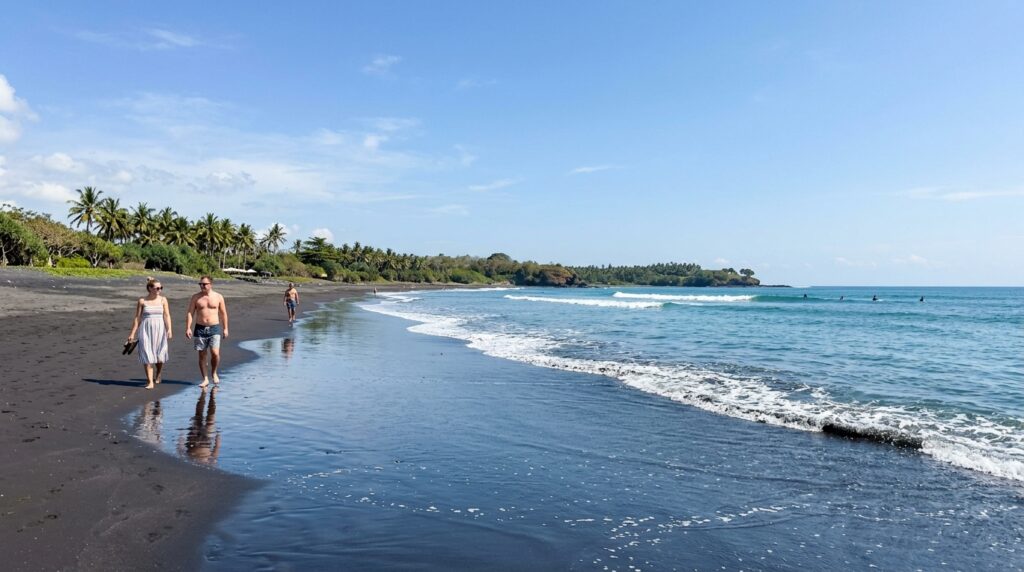
Seseh Beach is ideal for slow walks, watching surfers, and that calm, wide shoreline vibe. Even when the temperature is comfortable, the sea conditions still matter for what you should expect from swimming or snorkeling.
Translation: you can enjoy the beach in most months, but treat the water like a separate experience. The weather does not only affect comfort, it changes the “how” of the ocean.
Surf gets harder in the rainy months
During the rainy season, tide and waves can become more powerful. That means the surf challenge can ramp up, especially if you are expecting the same conditions as the drier period.
Seseh is known for strong surf and turbulent currents, and rainy-season conditions can make that reality feel even more intense. For many travelers, that is the difference between watching from the sand and actually choosing to surf.
Dry season makes outdoor comfort easier
In the dry season, evenings tend to feel cooler and humidity is generally lower. That makes outdoor time more enjoyable, especially when you plan your beach moments for early morning or late afternoon.
Sunshine also supports this rhythm, with August reaching about 8.7 hours of sunshine per day. So even though the ocean rules still apply, the rest of your day usually feels smoother.
Next, you’ll get a focused breakdown of surfing and swimming expectations, so you know how to plan your water time without guessing.
Pros for surfers in Seseh
Surfing is a real highlight here, and it’s easy to plug in because there are plenty of surf schools nearby. The downside is that Seseh Beach is not a “beginner playground.” Waves are strong, and conditions can be challenging, including turbulent currents.
During the rainy months, the ocean can get even more intense because tide and waves become more powerful. That often means a surf trip goes from “fun session” to “serious conditions,” depending on your experience level.
Cons for non-surfers and swimmers
If your plan is more about swimming or snorkeling, the season matters a lot. Seseh Beach is generally a bad beach for swimming and snorkeling due to strong waves and unpredictable currents.
You might still choose limited options at marked swimming spots, but only if you’re a strong, experienced swimmer. For most visitors, rainy season can raise the challenge further because the tide and waves ramp up.
Now that you know what the water can do, it’s also worth addressing the mistakes people commonly make when choosing dates, so you do not end up fighting conditions that were avoidable.
Common mistakes when picking dates
“Rainy season” must mean constant misery
Most people think the rainy months are a guaranteed all-day washout. It sounds logical when you hear “wet season,” especially if you’re picturing nonstop downpours.
In Seseh, the wettest month is January with about 300 mm and around 19 rainy days, but sunshine can still show up. Even January gets roughly 5.7 hours of sun, so the trip can still work if your plan stays flexible.
Seseh is just Canggu with fewer people
Some travelers assume the experience will feel the same as Canggu, just quieter. The names get mixed up because Seseh sits near the busier stretch of the coast.
The reality is different. Seseh is calmer and more village-like, and the day-to-day rhythm changes with that quieter setting, even when the weather is similar.
Seseh Beach is for swimming and beginners
It’s tempting to assume a warm destination means “easy water fun.” But Seseh Beach has strong surf and currents that can be unpredictable.
Swimming and snorkeling are generally not a good match for the beach conditions. Surf is popular, yet it’s more suitable for intermediate and advanced surfers, and rainy-season tide and waves can make things more challenging.
Ride-hailing works like anywhere else
People often plan transport the same way they do in more developed Bali areas. That makes it easy to forget you still need a workable ride plan.
Seseh is more remote, and getting around can be less straightforward. Relying on apps without a backup plan can lead to delays or frustration.
Only July and August are worth booking
It sounds safe to aim only for the peak dry-season months. After all, dry weather feels like the “correct” choice.
May to October are generally the best window, but the idea is broader than just peak months. August is the driest with about 40 mm and about 8.7 hours of sunshine per day, while other months can still be enjoyable if you’re okay with different rhythms.
Black sand is just a visual detail
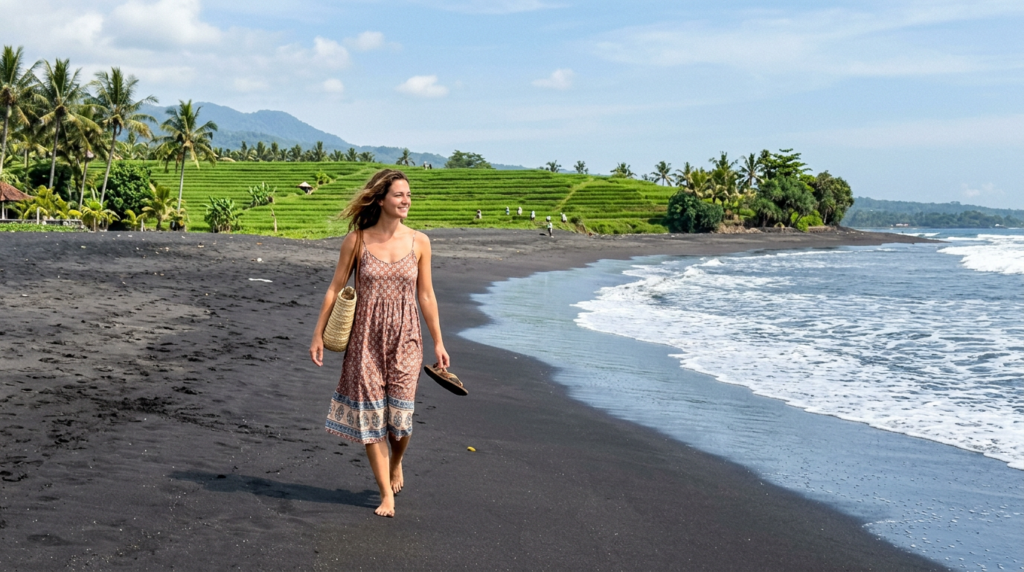
Black sand looks dramatic in photos, so it’s easy to treat it like a harmless backdrop. But it changes the day-to-day comfort underfoot.
It can get hotter than you expect, so comfortable beach footwear matters, especially when you’re walking around or hanging out during brighter parts of the day.
Warm means you can skip sun protection
Warm weather tricks you into thinking the sun is “gentle,” especially when clouds appear. It feels unnecessary to add sunscreen when it doesn’t look intense.
Still, you’ll be in a warm tropical climate with plenty of daylight. Use sun protection habits year-round because sunshine is strong even in less sunny months.
Avoiding these date-picking mistakes makes almost any month feel workable, even if it is not perfect.
Your Seseh itinerary by season
1. Choose your weather lane
Picture this: you’ve got your dates, but your plans feel “maybe.” Start by picking a weather lane based on season. May to October usually means drier days, so it suits an outdoor-heavy pace.
November to March is the rainy-season lane. That does not stop the trip, it just changes the balance toward indoor time and more flexible beach windows.
2. Plan your outdoors around comfort windows
Most of your day will be more enjoyable when you time it right. Use early morning and late afternoon for beach time, walking, and sightseeing, since the guidance highlights comfort improvements with this daily rhythm.
This approach is especially helpful because even in drier months, Seseh still stays warm year-round and sunlight can shape how you feel outside.
3. Weight the beach vs indoor time
In the dry season, lean into beach days and sunset plans more confidently. The drier months line up with being outdoors more often, since they generally deliver fewer rain interruptions.
In the rainy season, shift your day structure. Think more wellness, cafes, and indoor-friendly breaks while keeping beach time as a “when the weather allows it” option.
4. Match water expectations to surf and swimming reality
Here’s the key: Seseh Beach can be great for surfing, but it is not a typical swimming or snorkeling beach. Waves are strong and currents can be turbulent, and that reality does not disappear just because it is warm.
During rainy-season conditions, tide and waves can become more powerful. If you are not an intermediate or advanced surfer, keep your water plan conservative and treat the beach as a viewing-and-walking spot.
5. Pack for the season you picked
Dry-season packing is mostly about sun. Bring sunscreen and a hat for strong daylight, and comfortable footwear for black sand walks.
For rainy-season packing, add a light rain layer or umbrella and wear comfortable footwear that works when the ground is wet. Then keep your overall plans flexible, because Seseh works year-round, just with different rhythms.
Once you’ve built your plan around weather reality, the final step is to remember a simple rule of thumb that makes decision-making easy.
A simple rule for the best time to visit Seseh
Pro: May–October tends to win
Here’s the baseline rule that keeps things simple: May to October is the best time to visit Seseh for drier, more outdoor-friendly conditions, while the warm temperatures stay fairly consistent. August is the driest and sunniest, with about 8.7 hours of sunshine per day and around 40 mm of rainfall, whereas January is the wettest and most humid, with about 300 mm of rainfall and humidity around 85%.
Con: Any month works if you plan for weather
The nuance is reassuring. Seseh works year-round, and even in the rainy season you can still catch sunshine, including in January at roughly 5.7 hours of sun. If you pick dates that match your comfort level and your activity priorities, the trip will feel right because your plan fits the season, not against it.
If you want your stay to match your season plan, Tim at Baliexpertvillas.com is ready to help you choose dates and accommodation that fit your style.
With your dates matched to the weather reality, you’ll enjoy Seseh’s rhythm the way it is meant to be experienced.