
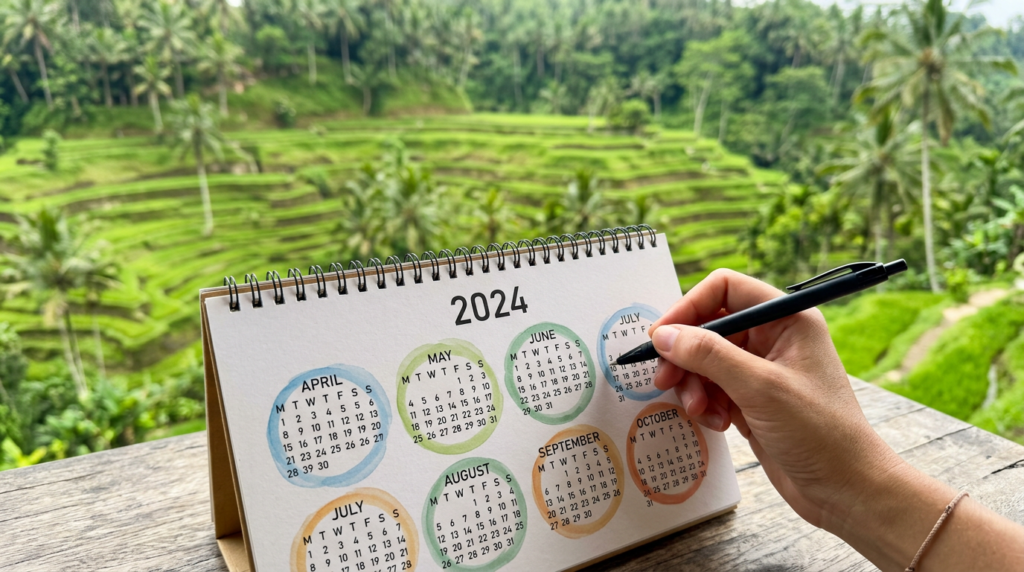
Imagine this… you are staring at a calendar and trying to pick dates for Bali, but Ubud is the part you cannot get wrong. On one hand, there’s “sunny season” promising clear days. On the other, “rainy season” feels like a gamble. So what is the best time to visit Ubud really?
The honest answer is that it depends on you. The weather is only one piece of the puzzle. Your crowd tolerance matters just as much. Your budget does too. Even your planned activities change the equation, because Ubud can feel completely different depending on whether you spend your day outdoors or indoors.
Ubud basically runs on two main seasonal patterns: a dry season and a wet season. The dry season is generally from April to October, and it usually means sunnier, more comfortable days for sightseeing. The wet season is November to March, which brings higher humidity and a higher chance of rain, often showing up as afternoon showers.
Then there are the shoulder months, which many people end up loving. These fall in April to May and September to October, when you often get a better balance of decent conditions and fewer crowds.
One more twist: Ubud sits inland and up in the highlands, so it has a distinct microclimate. In plain terms, it can feel slightly cooler and more humid than coastal Bali, which affects how comfortable you feel day to day.
Picture it like this: if your dream trip is sunrise walks, rice terraces, and long outdoor plans, the dry months usually feel easier. If you want quieter days, lush green scenery, and a schedule built around yoga, spa time, and cooking classes, the wet season can be an even better fit.
Once you know what “best” really means, choosing your month gets much easier. Next, we will define what best time to visit Ubud actually means and what you should use as your decision criteria.
Not sure which months match your plans? Learn the seasonal basics so you can plan with confidence, and then talk to Baliexpertvillas.com for help choosing the right fit.
What “best time” really means for Ubud
Best time
The phrase “best time to visit Ubud” does not mean there is one perfect month for everyone. It means the time that fits what you care about most.
If your priority is sunny outdoor days, you will choose differently than someone who wants quiet mornings and discounts. That is why “best” is personal, not universal.
Ubud microclimate
Ubud sits inland and up in the highlands, so it has a distinct microclimate. In everyday terms, it can feel slightly cooler and more humid than coastal Bali.
This affects comfort, especially when you are walking around for hours or when you are deciding how much rain gear you need.
Dry versus wet season
The dry season runs roughly from April to October, and it is generally the stretch people pick for clearer, drier-feeling sightseeing. The wet season runs from November to March, with higher humidity and a greater chance of rain, often showing up as afternoon showers.
Even in the dry season, rain can still happen, just less frequently. Even in the wet season, mornings and evenings can still be usable if you plan around showers.
Shoulder months and crowd trade-off
Shoulder months fall around April to May and September to October. They often land in the “sweet spot” zone, with more comfortable conditions and usually fewer crowds than the busiest dry-season months like July and August.
That trade-off matters because the peak months typically feel busier and cost more, since demand rises.
Decision criteria that actually matter
To pick your dates, focus on three things: whether your plans are mainly outdoor or mainly indoor, how much crowding you can tolerate, and whether you want to optimize for budget value.
Then layer in the seasonal fit: dry months for outdoor-heavy trips, wet months for indoor wellness and cultural time, and shoulder months when you want balance.
Once you combine these, the logic becomes simple: weather + crowd + budget + activities = your best time. Next, we will look at how the seasons change your day in real life, starting with why the dry season is so popular.
Dry season for easy outdoor days
Most people expect dry season to feel perfect, like sunshine all day. In reality, it is mainly about comfort and opportunity, because April to October is generally the stretch with sunnier conditions and fewer rain worries.
With lower humidity and more reliable daylight plans, outdoor activities feel smoother. You will be able to spend more time on rice terraces, temples, walks, and outdoor dining, without constantly checking the sky.
Wet season for lush breaks and flexible plans
It feels scary to plan around “rain,” but the wet season is not usually a nonstop washout. From November to March, humidity is higher and rain risk increases, and the common pattern is short, intense afternoon showers.
So the best strategy is to treat the afternoon as a natural pause, then shift your day toward indoor options like yoga, spa time, art visits, and cooking classes. You still get plenty of scenery, and the greenery looks especially vibrant after the rain.
Shoulder months for the balanced middle
Sometimes the “best time” is neither fully dry nor fully wet. Shoulder months, especially April to May and September to October, often feel more balanced for travelers who want comfortable sightseeing without the busiest crowd pressure.
Rain can still happen, and humidity is still part of Ubud life, but the overall experience often lands in a sweet spot. You get better flexibility and a smoother rhythm for both outdoor plans and indoor backups.
Once you see how these seasonal patterns affect your day, the next question becomes clear: why do so many travelers still choose the dry season, and what does that look like during the peak months?
Why the dry season is popular
Pros of dry season weather
Dry season is the easiest time to plan because the weather usually cooperates. From April to October, Ubud is generally sunnier and feels more comfortable for walking and exploring.
That makes it ideal for outdoor sightseeing like temple visits, rice terraces, trekking, cycling, and even just taking your time with coffee breaks outside. With less humidity and fewer rain interruptions, your day stays on track instead of constantly shifting.
Trade-offs of peak-season demand
The downside is crowd pressure. During the hottest peak months, especially July and August, Ubud tends to get busier, and accommodation and flights often cost more because demand rises.
Popular spots can feel packed, which is exactly where timing helps. If you go in peak dry season, plan to visit top attractions early in the morning or late in the afternoon to reduce how long you spend in the thick of it.
Best for:
Best for: travelers who want maximum outdoor time and are okay with crowds and higher prices during peak months.
Next, let’s zoom in on what specifically happens in July and August, and how you should prepare so the peak season still feels enjoyable.
July and August peak-season reality
Think about July and August as the peak months when tourism demand is at its highest, right in the middle of the dry season. That combination is why the experience can feel amazing, but also why it can get busy fast.
Now picture a traveler who books last minute, lands during this high-demand window, and tries to move between highlights. By midday, popular places like the Sacred Monkey Forest Sanctuary and Tegallalang Rice Terraces can feel crowded, and the best-looking time slots for tours or stays are harder to get.
In their day-to-day schedule, it becomes less about discovery and more about timing. Even travel time inside Ubud can stretch because everyone is trying to see the same views at the same moments.
Here’s the contrast: another traveler books earlier, then plans early morning or late afternoon visits for big attractions like Ubud Palace. They still enjoy the dry-season weather, but they spend less time fighting crowd energy, and the trip feels more relaxed overall.
If you are going in peak season, the action steps are simple. Book ahead where availability matters, and schedule your top sights early or late so you get the weather without the worst crowd pressure. If that sounds like too much effort, the wet season can actually feel calmer and better value.
When wet season becomes your advantage
Wet season equals ruining your trip
That fear makes total sense. “Wet season” sounds like your plans will get wiped out the moment you arrive. It also does not help that people often talk about rain like it is constant.
In reality, November to March comes with higher humidity and more rain risk. The key detail is the timing. Rain is often short and intense, usually showing up as afternoon showers, not all-day washouts. If you plan with that rhythm, the trip still flows.
It rains all day, every day
When travelers imagine “rainy,” they often picture gray skies from morning to night. But Ubud typically works differently.
During the wet season, you can still get workable mornings and evenings. You just shift your outdoor plans earlier in the day and treat afternoons as your backup window for indoor options. That flexibility is what turns the weather from a problem into a schedule tool.
Lush greenery is only for photos
Some people assume greenery is just scenery, not part of the enjoyable experience. Yet in the wet season, the landscape is lush for a reason.
With more rain, Ubud looks greener and fresher, and that can make sightseeing feel more rewarding. Plus, this season is a strong fit for indoor and wellness-focused activities like yoga, spa time, and cooking classes. Fewer tourists also usually means a calmer atmosphere and often lower accommodation and tour prices.
Bottom line, the wet season is not something to fear. Plan a rain-flexible schedule instead of avoiding the season altogether, and Ubud can feel even more magical.
Next, let’s make that rain-flex idea practical with rain-friendly itinerary ideas for wet season days.
Morning outdoors
Picture this: you wake up in Ubud during the wet season, and the morning air feels totally workable. This is the time to do your outdoor stuff, before afternoon showers have a chance to interrupt.
Plan scenic walks, rice-terrace time, and temple visits earlier in the day. You still get the Ubud atmosphere, and you reduce the stress of changing your schedule mid-route.
Afternoons indoors
When the afternoon arrives, treat it like a predictable routine instead of an emergency. The wet season often brings short, intense afternoon showers, so you want options ready indoors.
Swap outdoor sightseeing for yoga sessions, spa time, art visits, museums, or cooking classes. This turns “rain risk” into a built-in part of the day.
Use rain breaks for wellness
Rain can actually be a nice reset moment. After a shower, the air can feel refreshingly different, and the rest of the day becomes calmer and slower.
That makes wellness-focused plans especially satisfying during wet months. If you already want downtime, this is your chance to go deeper with yoga, spa treatments, or guided wellness activities.
Temple and culture timing
Culture is a big reason people come to Ubud, and wet season just changes the best timing. Aim to experience ceremonies, temples, and cultural spots when the weather is more stable.
Try scheduling these earlier in the day. If rain hits later, you will already have the “must-see” cultural moments covered.
Evening relaxed dining
Once the afternoon rain passes, evenings often feel comfortable for strolling and eating outside. Keep your end-of-day plans flexible so you can adjust if a shower lingers a bit.
Plan an easy dinner schedule and let the day end on a relaxed note, instead of rushing to fit everything in before dark.
Quick logistics note for wet-season comfort: bring a light waterproof layer or umbrella and pack quick-drying clothes so you can switch smoothly between outdoor mornings and indoor afternoons.
With these rain-friendly blocks in mind, the next step is picking the months that feel most balanced for you, which often leads people to shoulder season.
The shoulder months: best of both worlds
Shoulder months feel balanced
“This is the month where Ubud feels easy,” is what many travelers describe when they hit the shoulder window. In this case, shoulder months are April to May and September to October.
You usually get more comfortable conditions than peak heat periods, and you typically deal with fewer crowds than the busiest dry-season stretch like July and August. The vibe is steady, not frantic.
Peak dry months maximize outdoor comfort
Peak dry months are the go-to if you want the best odds for outdoor plans in the most predictable way. That dry-season comfort is one reason July and August are so popular.
The trade-off is simple: higher demand brings more crowds and often higher accommodation and flight prices. If you choose these months, you will want to plan timing carefully and expect busy attractions.
Peak wet months trade crowds for rain timing
Peak wet months, roughly November to March, tend to feel calmer in the streets and on popular paths. The humidity is higher, and rain risk is greater, but the experience often stays enjoyable if you respect the rhythm of showers.
This is when you lean into flexibility. Rain often shows up as short, intense afternoon showers, so your planning gets built around indoor options and rain breaks rather than avoiding the season entirely.
After comparing the trade-offs, the next step is picking your exact month using a practical decision process that matches your activities and comfort level.
Outdoor vs indoor priority?
What do you want to spend most of your hours doing in Ubud? If your plan is mostly outdoor sightseeing, a dry-season window is usually the easier fit. That points you toward April to October, with shoulder months like April to May and September to October often feeling especially comfortable.
If your trip is more wellness, art, and slow cultural time, wet season can work beautifully. November to March is also when indoor plans shine, because afternoons often bring rain risk, not endless gray skies.
Crowd tolerance and comfort level
How do you react when a popular spot gets busy? Peak dry months like July and August tend to be the most crowded and can feel less peaceful, even though the weather is usually great.
Shoulder months often reduce that crowd pressure. Peak wet months (November to March) are typically calmer too, but you trade the “easy outdoors” feeling for the need to adjust your afternoon plans.
Budget and value target
Are you chasing the best price, or are you paying for smoother weather? When demand rises, peak dry season can mean higher accommodation and flight costs, especially in July and August.
For value-focused trips, wet season is often the move. You can usually expect quieter conditions and lower prices, and then you design your schedule around rain breaks and indoor activities.
Festival timing and booking timeline
Do your travel dates need to match a specific event? If you are aiming to be in Ubud for major cultural festivals, treat your dates as a constraint, not a suggestion. That is also when planning early matters most.
For peak dry months, book ahead because availability can tighten quickly. Once you pick your month, the next decision becomes aligning it with the cultural calendar, since festivals can shift both demand and the overall feel of your trip.
If you want the best value for your chosen month, compare options early and get local help from Baliexpertvillas.com to match your dates with the right stay setup.
Festivals and local timing you should consider
Imagine this… you arrive in Ubud expecting a quiet, slow-paced trip, and then a major cultural event hits, making the whole town feel more lively and busier.
That is the trade-off with festivals. They can make your experience richer, but they also raise demand. More visitors often means more crowding and tighter availability for accommodations and tours, especially during peak dry months.
If your trip overlaps the timing windows below, plan a little earlier so you are not scrambling: the Ubud Food Festival usually falls in April or May. Nyepi and the BaliSpirit Festival are typically in March. The Bali Arts Festival runs roughly from June to July, though it is centered in Denpasar, which can still affect broader Bali timing. The Ubud Writers & Readers Festival usually happens in October.
For Galungan and Kuningan, dates vary because they follow the Balinese calendar. That means your best move is to check the local festival dates before locking flights and places to stay.
Once you have cultural timing in mind, you can also avoid the common planning traps that happen when people choose dates based on misconceptions or incomplete information.
Common mistakes when choosing dates
Wet season as a total washout
One of the biggest date mistakes is treating wet season like it will ruin everything. The label makes it sound like constant, all-day rain.
During November to March, rain risk is higher and humidity is stronger, but rain is often short and intense, usually as afternoon showers. If you plan around that pattern, wet-season days can still work well.
Assuming Ubud is the same as coastal Bali
It is easy to assume the whole island works the same way. But Ubud has an inland, highland microclimate, so it can feel slightly cooler and more humid than coastal areas.
When travelers ignore this, they pack for the “beach version” of Bali and end up uncomfortable or unprepared. Your clothing and daily timing choices should match Ubud’s actual feel.
Thinking dry season means zero rain
Another trap is equating “dry season” with “no rain at all.” That expectation is tempting because April to October generally brings sunnier conditions.
Even in the dry season, occasional showers can happen. The mistake is showing up with an inflexible plan that has no indoor backup, especially if you are trying to fit too many outdoor stops in one day.
Choosing peak months only for weather
July and August often look like the obvious best choice because the weather is great. Still, these are also peak demand months.
That means more crowds and usually higher accommodation and flight prices. If you choose peak dry months without planning around crowd timing, you may spend more energy waiting than enjoying.
Ignoring humidity as “no big deal”
Humidity is constant in Ubud life, and in the wet season it increases. Some travelers underestimate how that affects comfort, especially when you are walking and switching between indoor and outdoor spaces.
When you treat humidity as irrelevant, you end up feeling hotter, clothes take longer to dry, and your day feels harder than it should. Align your comfort expectations with your season choice.
All these mistakes come down to the same theme: pick your dates based on the right criteria. Match the season to your activities and your crowd tolerance, and the “wrong month” feeling disappears.
Next, you will want to prepare practically, starting with a season-based packing guide.
Dry season packing
Planning for April to October and hoping for smoother outdoor days? Pack light, breathable clothing so you stay comfortable in warmer temperatures and steadier conditions.
Don’t forget sun protection. Bring sunscreen, a hat, and sunglasses, and if your itinerary includes dips or relaxing by a place with water, pack swimwear too.
Wet season packing
Going in November to March, when humidity is higher and rain risk increases? Focus on quick changes, because showers often show up as short, intense afternoon bursts.
Bring a waterproof jacket or poncho, plus an umbrella. Choose quick-drying clothes and closed-toe shoes that can handle wet ground, so you can keep moving when the weather shifts.
For both seasons, keep one simple constant: light breathable clothing and insect repellent, since comfort and bugs never really take a vacation in Ubud.
Now that you know what to pack, it is time to tie everything together into a recommendation based on who you are as a traveler.
Making it work: best time by traveler type
Outdoor adventure seekers
Dry season is the simplest win if your trip is built around outdoor time. For many outdoor-focused travelers, that means April to October, with shoulder months like April to May and September to October often feeling especially comfortable for walking, trekking, and rice-terrace exploring.
If crowds matter, treat timing like part of the plan. Visit popular spots early in the morning or late in the afternoon to reduce crowd pressure during the busier dry-season stretches.
Budget and serenity seekers
If you care more about value and calm than having the absolute driest skies, wet season can fit you better. November to March usually brings higher humidity and more rain risk, but it also tends to be quieter with lower accommodation and tour prices.
Your tactic is rain-flex scheduling. Plan outdoor sightseeing for mornings, then shift afternoons to indoor options like yoga, spa time, and cooking classes when showers are more likely.
Culture-focused travelers
For culture-first trips, the “best time” often follows the festival rhythm. November to March can work well for calmer pacing, but many travelers also plan around specific windows like Ubud Food Festival in April or May, Nyepi in March, BaliSpirit Festival in March, Bali Arts Festival from June to July, and Ubud Writers & Readers Festival in October.
Because events can boost demand, booking earlier helps. Pick dates that match your festival interests, and then build your daily schedule with crowd and timing realities in mind.
Next, use the checklist to lock in your month based on your activities, comfort preferences, and how you handle crowds and rain.
1. Are your must-dos outdoor or indoor
Start by sorting your itinerary into outdoor versus indoor time. If your must-dos are trekking, rice terraces, and temple sightseeing, dry season from April to October is usually the easiest fit, with shoulder months like April to May and September to October often feeling especially balanced.
If your plans are more yoga, spa time, cooking classes, and cultural browsing, you will usually do better with wet season November to March, especially since rain risk often shows up as afternoon showers that are easier to work around.
2. Pick your comfort vs crowd trade-off
Next, decide what you can tolerate most: peak weather comfort or peak demand. Peak dry months like July and August often deliver excellent conditions, but they are also the most crowded and often come with higher accommodation and flight prices.
If you want fewer people and better value, choose wet or shoulder months, then build your days around flexible timing rather than forcing every activity into the same hour blocks.
3. Check festival timing before you commit
Now look at dates like you are planning around real-life constraints. Festivals can increase demand, so your experience may feel busier during event-heavy periods, even if the weather is great.
Think in windows such as Ubud Food Festival in April or May, Nyepi and BaliSpirit Festival in March, Bali Arts Festival around June to July, Ubud Writers & Readers Festival in October, and Galungan and Kuningan which vary by the Balinese calendar. If you overlap an event, plan accordingly and avoid last-minute stress.
4. Book earlier for peak dry months and events
Finally, match booking lead time to demand. If your month is peak dry season, plan to book earlier because availability can tighten quickly for stays and popular activities.
Once you lock your month, your day-to-day plan gets easier because you already know whether to lean outdoor-heavy, indoor-heavy, or balance both. Use this checklist again mentally, and you will feel confident choosing your exact dates.
After you pick your month, the last step is simply aligning the season to your travel style and making your Ubud trip feel like you planned it for yourself.
Choose the season that matches your Ubud style
“The right month is the one that fits your travel rhythm,” and that rhythm usually maps to one of three seasonal choices. Pick dry season from April to October if you want outdoor predictability, but remember peak months bring the most crowds and higher prices.
If you prefer calm streets, better value, and lush scenery, wet season from November to March can feel surprisingly smooth when you plan around afternoon showers. Choose shoulder months like April to May and September to October when you want a balance between outdoor time and crowd pressure.
Whichever path you choose, check whether your dates overlap with local festivals such as Nyepi in March, Ubud Food Festival in April or May, Ubud Writers & Readers Festival in October, and BaliSpirit in March, since events can shift demand. Plan with that in mind, and your Ubud trip will feel intentional, not random.
Match the season to your personal priorities, and let the calendar guide your festival-aware plans forward.
Ready to make your timing feel effortless? Let Baliexpertvillas.com help you match the season to the right stay and plan your Ubud days with confidence, so you can travel with the least stress.