Most people think they’re just comparing prices, but the real headache starts the moment you search villa vs hotel in Kuta and realize the advice you’re finding only makes sense for someone else’s trip.
Here’s the twist: “better” is almost never universal. Your best fit depends on your group size, how much privacy you actually want, what kind of service you expect (and what you’re happy to handle yourself), your budget, and even how long you’ll stay.
Picture this. You’re scrolling through photos at night, comparing a compact hotel room with a villa that has more space and a private pool. Then you hit the next problem. The hotel price looks simple because it’s per room per night, while the villa price looks bigger because it covers the whole place. Without doing the total math for your group, it’s easy to conclude the wrong thing and keep searching instead of booking.
In this article, you’ll get a clearer way to decide. First, you’ll learn how to compare fairly using the cost-value logic that actually matches how your trip will work. Then we’ll walk through what the day-to-day feels like in each option, so you can picture your mornings, meals, and downtime. Finally, you’ll see the mistakes that commonly lead to disappointment, like assuming services are the same or that location concerns only go one way.
Once you have this mindset, the next step is simple: before comparing costs and amenities, let’s clarify what a villa stay and a hotel stay really mean in Kuta in everyday life.
If you’re ready to explore options that match your priorities, start by browsing villa stays curated for Kuta on Baliexpertvillas.com
What a villa stay and a hotel stay really mean
On paper, both options look like a place to sleep. In real life, they feel totally different.
A villa is a private setup
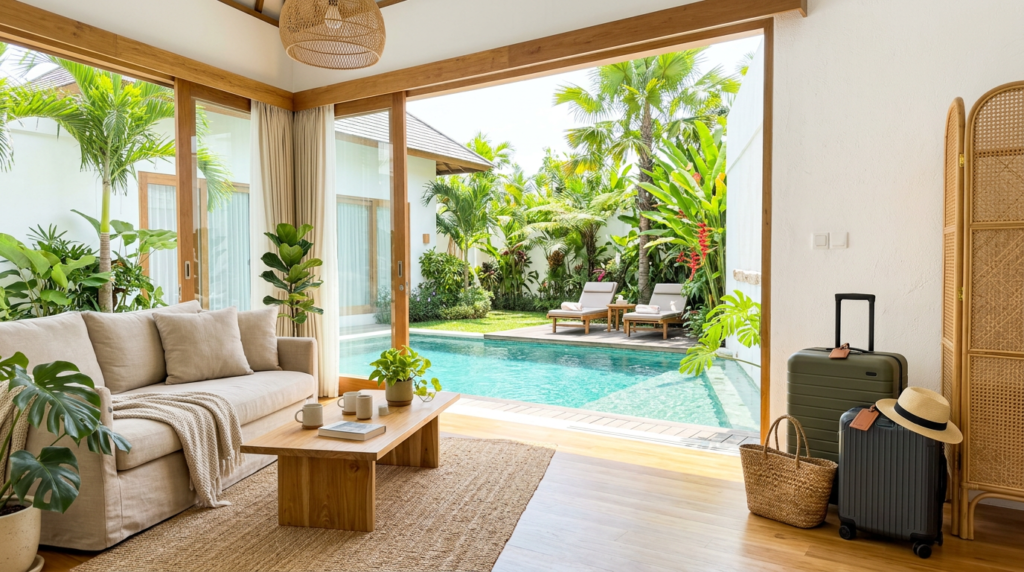
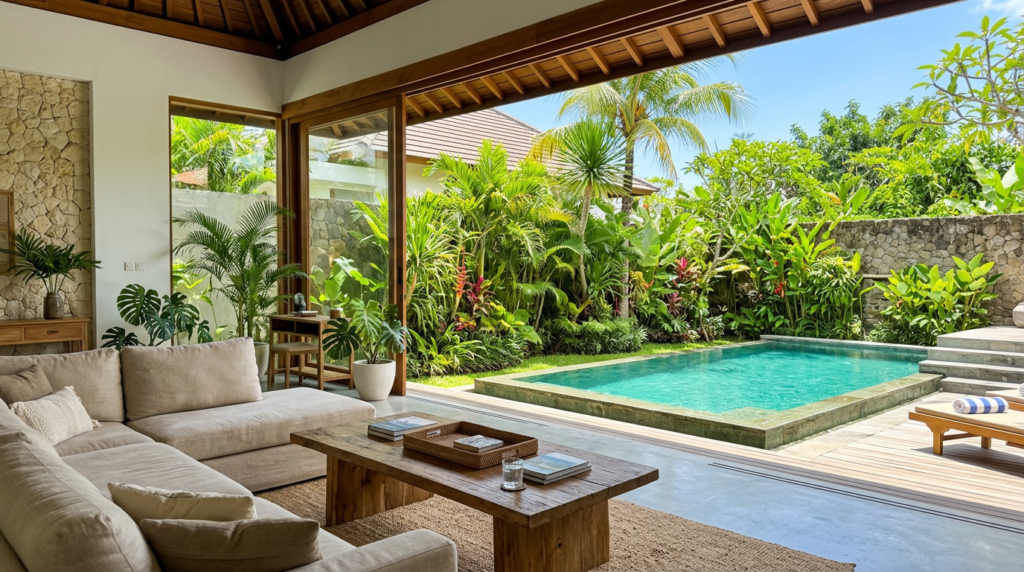
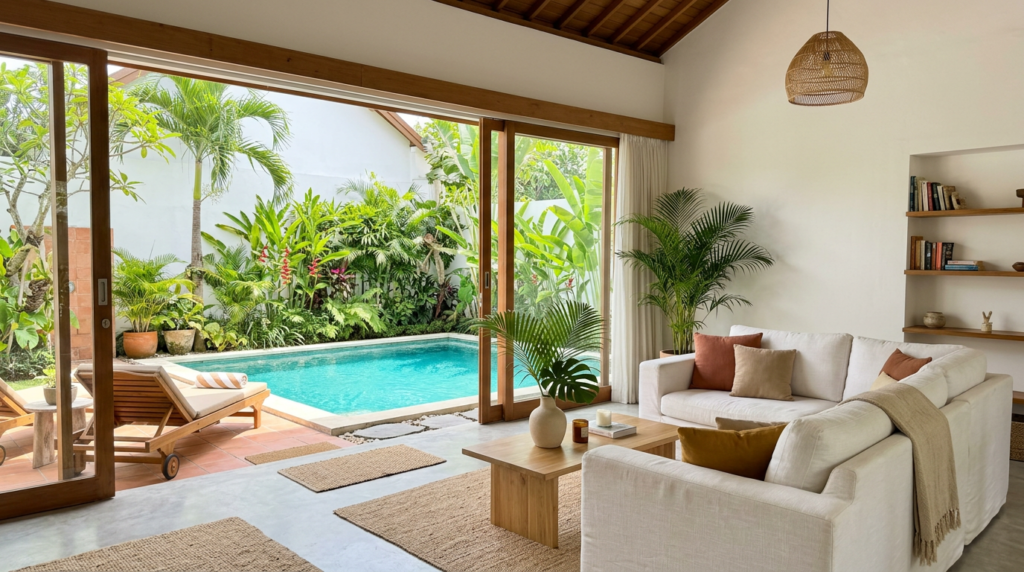
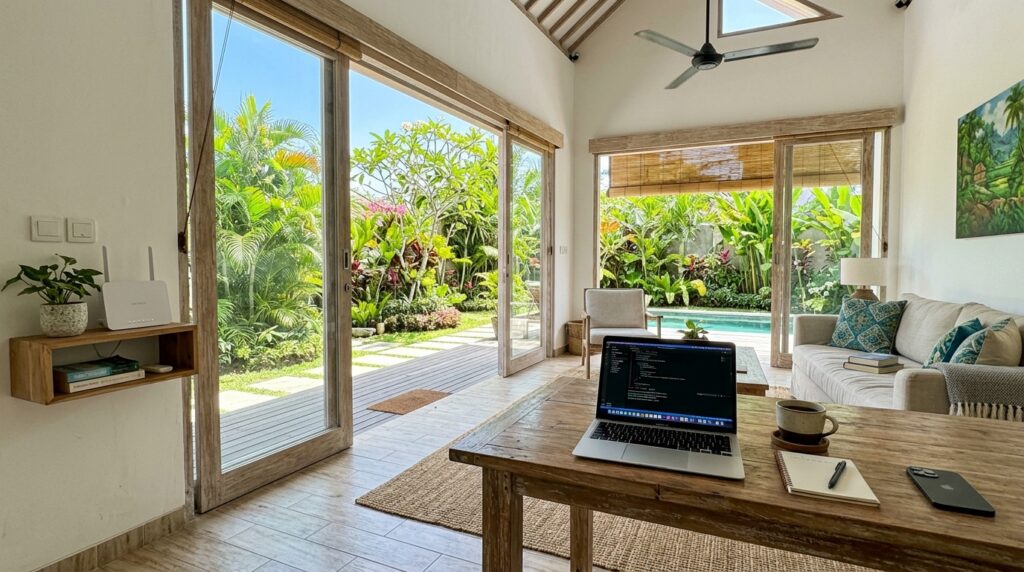
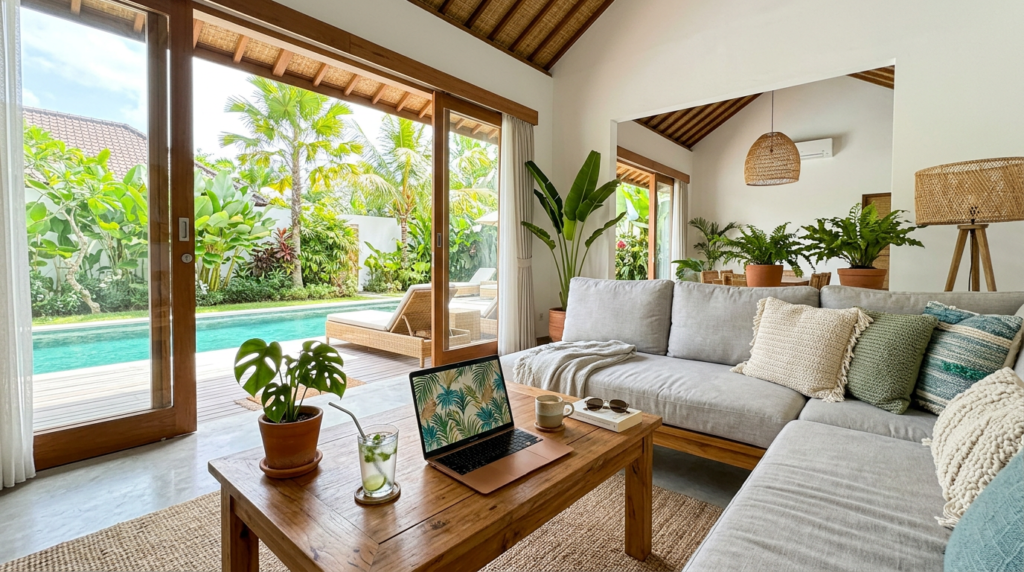
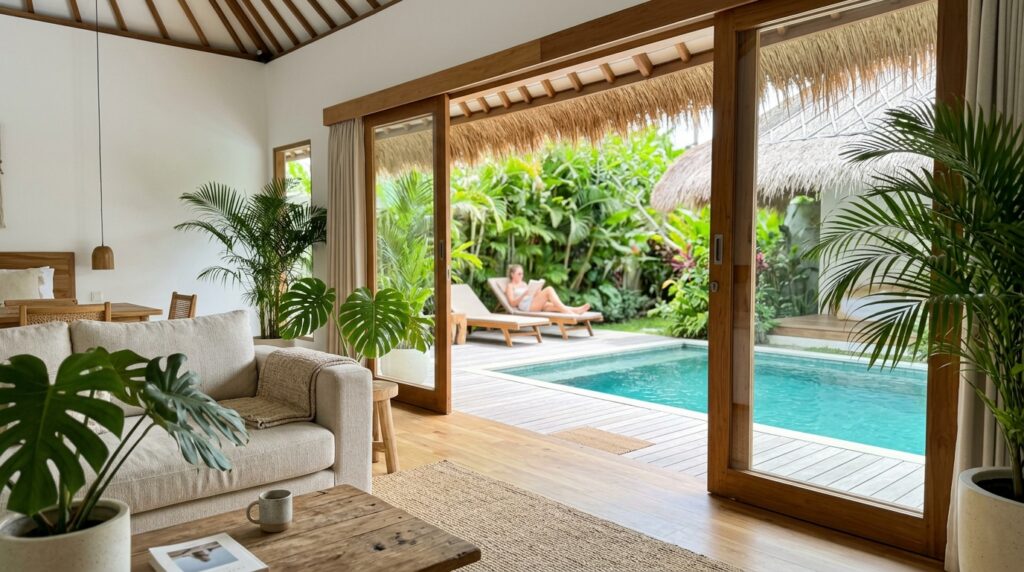
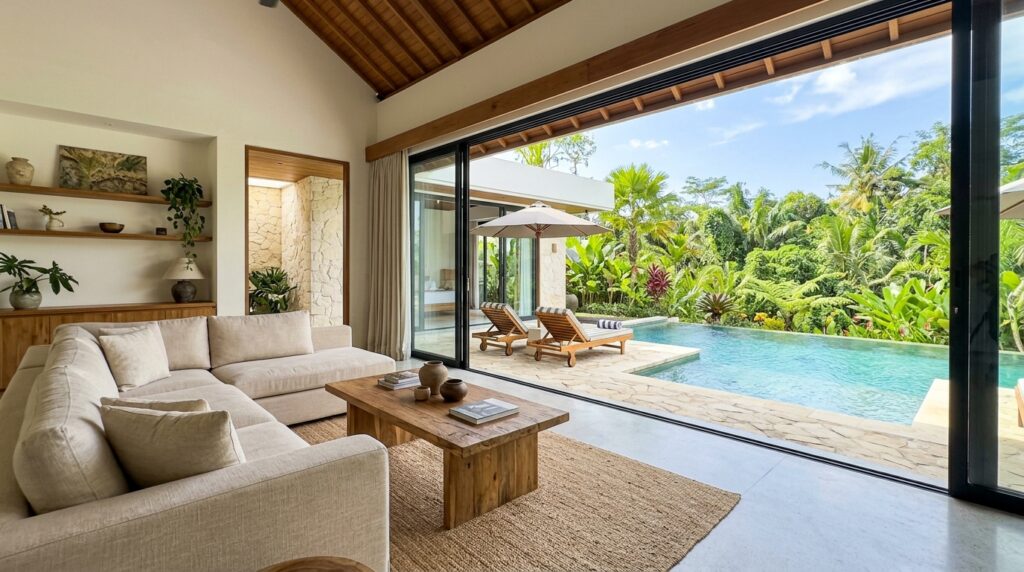
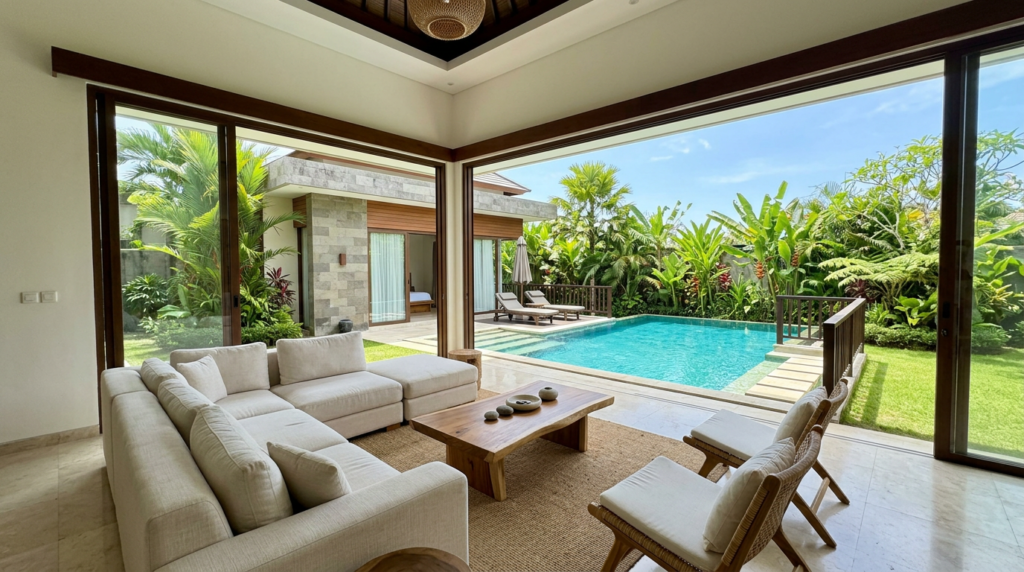
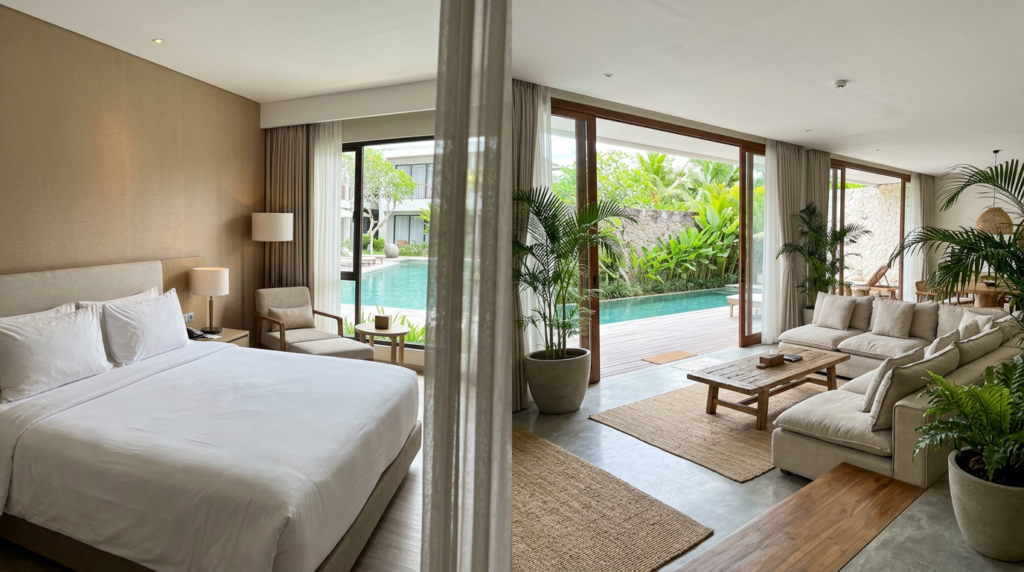
A villa is basically your own private house. In Kuta, that often means multiple bedrooms, a shared indoor living area for your group, and a big part of the appeal is the outdoor space. Many villas also come with a private pool, plus the feeling that you can come and go without worrying about disturbing other guests.
That privacy and extra space show up in daily comfort. You can plan your day more freely, spend time together without squeezing into one room, and control things like meals and downtime in a way that feels more like “living” than “checking in.”
A hotel is a service-based building
A hotel is a commercial property built around hospitality services. You book a private room or suite, then rely on the hotel’s staff and on-site facilities. You may have access to features like restaurants, shared pools, gyms, and other amenities that are designed for many guests at once.
So even if your room is private, the overall atmosphere is still communal. Shared corridors, lobby areas, and common facilities naturally change the vibe, especially if you’re the type of traveler who wants quiet, uninterrupted time.
The real differences are privacy, space, and service
Here’s the key connection to how you’ll feel in Kuta: villas usually win on privacy and space, while hotels often win on convenience and bundled services. Hotel privacy typically exists per room, but the rest of the experience is influenced by shared spaces and a more scheduled service flow.
For villas, the privacy advantage often comes with dedicated outdoor areas and more “room to breathe.” For hotels, the advantage is that you don’t have to think about as many logistical details day to day. The next step is knowing which trade-off fits your trip best, especially based on scenario and how long you’ll stay.
When villas usually win (and when hotels don’t)
Imagine this in Kuta: a family of four is deciding whether to book one villa with a pool or split into two hotel rooms for a week. The “right” choice won’t be about which one sounds nicer, it will be about how your days and costs line up.
Family and group stays
For families and groups, the villa advantage is practical, not just aesthetic. What they wanted was one place to hang out together, eat without constant restaurant trips, and have everyone share common space without squeezing into separate rooms.
They chose a villa, and the day-to-day changed in simple ways. The group naturally stays together in the living area, the private pool becomes a flexible activity you can use early or late, and having a kitchen makes meals and snacks easier to manage. Here the group size logic kicks in, because sharing one property often spreads the total cost more evenly.
Longer trips and value over time
On longer stays, the decision shifts from “what’s the nightly rate” to “what’s the real total value.” What travelers expected was that daily life should get easier the longer they stay, with fewer added expenses and less friction.
When they rent a villa for weeks or months, the long-stay value often appears because rental agreements can be more cost-effective than paying nightly hotel rates, and daily spending can drop when self-catering becomes part of the routine. At the same time, the villa flexibility matters because you can shape your schedule around your own pace instead of a more fixed hotel rhythm.
Short stays and convenience-first travelers
If your trip is short, convenience can outweigh space. What they wanted on a weekend getaway was fewer logistics and more predictable comfort, especially when they don’t plan to spend much time in the accommodation.
That’s why some travelers still prefer a hotel for short stays. Hotels tend to feel easier because meals and services are bundled, shared facilities can be ready on demand, and you’re not thinking about day-to-day upkeep the way you might with a villa. In these cases, hotels win on convenience and predictability, while villas still shine more when you actually “use” the extra space and privacy.
In the end, better depends on fit, not a universal ranking. Once you see how scenarios and stay length change the equation, you can stop second-guessing and move to comparing choices step-by-step.
How to compare villa vs hotel in Kuta
Still stuck wondering which one makes more sense for your Kuta stay?
1) List your non-negotiables
Start with what you truly need, not what sounds nice in a photo. Decide what matters most: privacy, space, a private pool, a kitchen, or a certain level of on-site help. If you’re traveling with kids or a group, prioritize comfort that helps everyone function day to day.
Write these down before you look at listings. This prevents you from comparing mismatched options and feeling like you’re “almost there” but still unsure.
2) Confirm what’s included vs add-on
Next, read the fine print and ask what you actually get. For villas, confirm practical inclusions like housekeeping timing, security approach, pool maintenance, and whether a staff team is included or optional. Some villas can include staff services that feel more hotel-like, but you need to confirm what’s included versus what costs extra.
At the same time, think about day-to-day routines. Hotels usually run on a more predictable service flow, while villas tend to give you more control over your schedule. If you expect constant responsiveness like room service, clarify how support works so you’re not disappointed.
3) Map location and plan transport
Now place both options on a map relative to the places you’ll use most. Kuta has busy tourist spots, but villas are often in slightly quieter areas. That can be a win, as long as your transport plan is realistic for your daily schedule.
Check how you’ll get to beach time, meals, and nightlife. Then consider whether the “quiet” location helps your trip or creates more commuting than you want.
4) Calculate per-person value honestly
Finally, do the cost comparison for the whole group, not just per room. Hotels are typically priced per room per night, while villas are priced for the whole property, often making group sharing more cost-effective. Compare total accommodation cost, then factor in lifestyle savings like self-catering when a kitchen is available.
When you calculate per-person value, use the full stay cost and be strict about inclusions. If two listings look similar but one includes more staff support or maintenance coverage, the “cheaper” option may not be the better deal.
If you want to compare options faster based on your group and stay length, explore villa stays matched to Kuta needs on Baliexpertvillas.com
Even with a solid comparison, some common misconceptions can still trip people up. Next, let’s talk about what to watch out for before you book.
What to watch out for when choosing
Villas are always more expensive than hotels
Most people assume the word villa automatically means higher cost. The confusion usually comes from comparing a hotel’s per-room price to a villa’s total price without adjusting for how many people share it.
In reality, group sharing can make villas cost-effective, especially for longer stays where long-term rental rates can beat nightly hotel pricing. If you skip the total-cost math, you may overpay or dismiss a better fit.
Are villas always remote and inconvenient?
Here’s the catch: some villas feel “away from it all,” but that doesn’t mean they’re automatically far from everything. Many villas in Kuta are simply in quieter pockets, so the real question is whether your daily plans require frequent travel.
If you don’t check location on a map and plan transport realistically, you might think you chose privacy, but you end up spending energy commuting every day.
Villas mean zero service
Don’t let this worry decide your booking. A villa often includes essentials like housekeeping, security, and ongoing maintenance, such as pool upkeep. Some villas also provide staffed support that can feel closer to a hotel, but the level varies a lot.
If you assume service will work like room service 24/7, you’ll likely get frustrated. The safe move is confirming what’s included versus what’s add-on before you arrive.
Hotels are always safer than villas
Safety isn’t automatically tied to the word hotel. Hotels can have strong security processes, but reputable villas commonly use controlled access through gates and compound setups, plus practical measures like safes for valuables.
The mistake is treating “safer” as guaranteed. You still need to verify the approach to security and trust the quality of the provider.
Villas are boring and antisocial
Some travelers expect a lively lobby or shared activities, and they assume a villa will kill the fun. In truth, the experience is just different. A villa is private, so social time mostly happens inside your group or outside at Kuta’s attractions.
If you want spontaneous mingling with other guests, a hotel’s shared facilities may feel easier. For people who value calm and together-time, a villa can feel more enjoyable, not less.
Pool size and noise can ruin the plan
This is the expert-level trap: two listings can both mention a “private pool,” but one might be a small plunge pool while the other is genuinely spacious. Photos can hide the day-to-day reality, so you need to align expectations with what you’ll actually use.
Another hidden issue is noise, especially from neighboring properties or construction. Even if everything else looks perfect, noise can break the relaxation you booked the villa for.
Once you’ve corrected these assumptions, the final step is choosing based on your specific Kuta trip. Next, let’s connect all of this into a practical way to pick the right stay.
How to pick the right stay for your Kuta trip
“Choose based on fit, not on hype.”
Match your stay to your priorities
Start with your travel style. If you want privacy and space, especially for families or groups sharing one home base, a villa usually fits better. If you prefer convenience and predictable amenities with less day-to-day planning, a hotel is often the easier call for short stays.
This isn’t about being “right.” It’s about matching what you’ll actually use every day.
Do the total-cost per-person math
Then do the cost check the way it should be done: compare the total accommodation cost for your whole group. Hotels are priced per room per night, while villas are priced for the property, which can make group sharing more cost-effective. Don’t forget long stays either, because villa long-term rates can become more valuable over time.
Verify inclusions and extra fees
Confirm what’s included, not just what’s advertised. For villas, verify housekeeping, security approach, pool maintenance, and whether staff services are included or add-on options. Also clarify any extra charges that might show up later.
If your expectation is “always-on service,” make sure that matches how support actually works.
Confirm location and transport reality
Check the map for both options and think about your daily routes. A villa in a quieter area can be a win, as long as you’re comfortable with how you’ll reach beach time, meals, and nightlife. For hotels, look at how shared facilities and location convenience support your schedule.
Trust fit, not a one-size rule
When you choose based on fit, the rest of the trip usually clicks into place. The goal is simple: you want an accommodation setup that supports your routine, your group, and your budget without unpleasant surprises.
Ready to apply this to your exact stay in Kuta? Let the team at Baliexpertvillas.com help you match the right villa to your plans