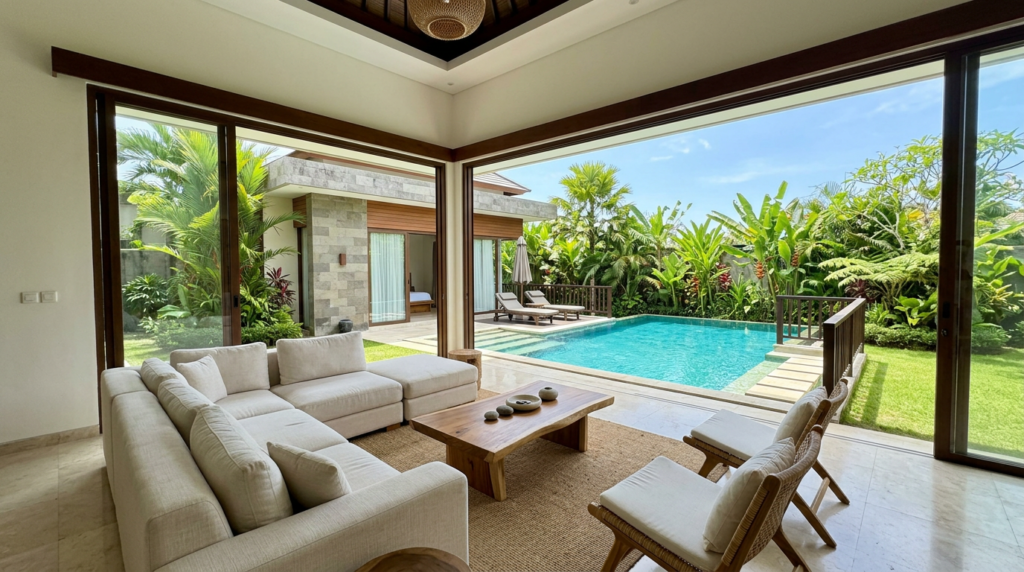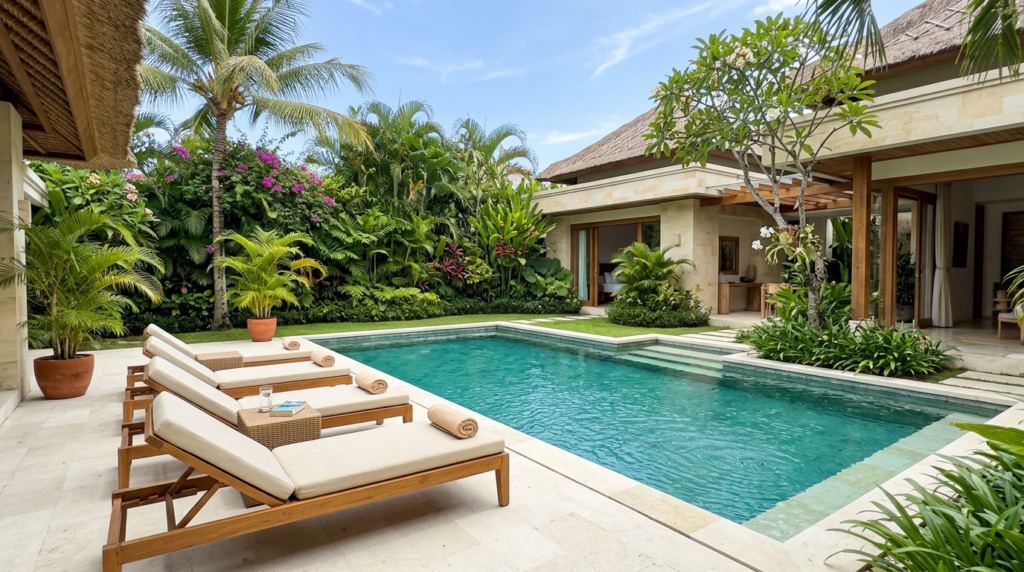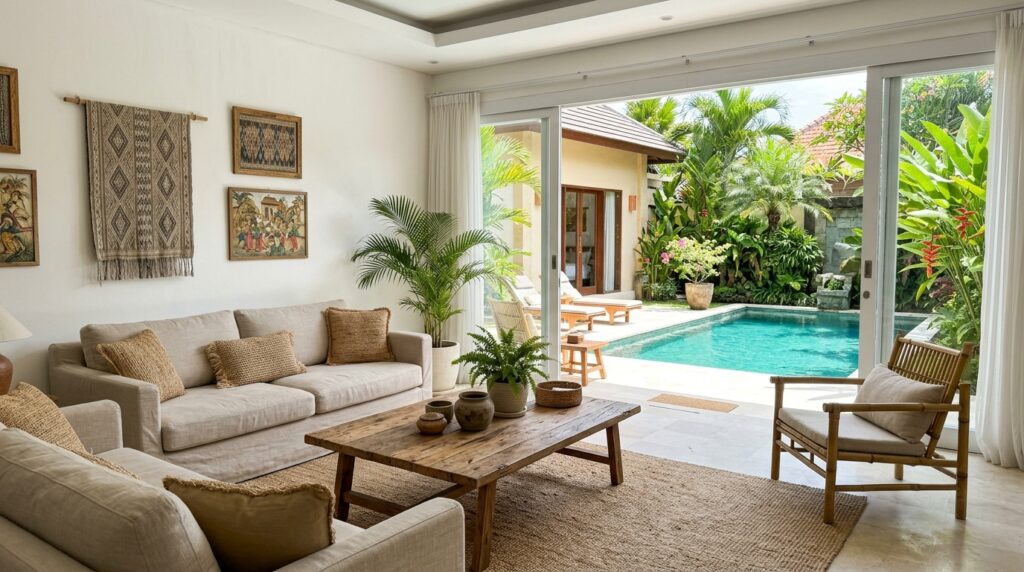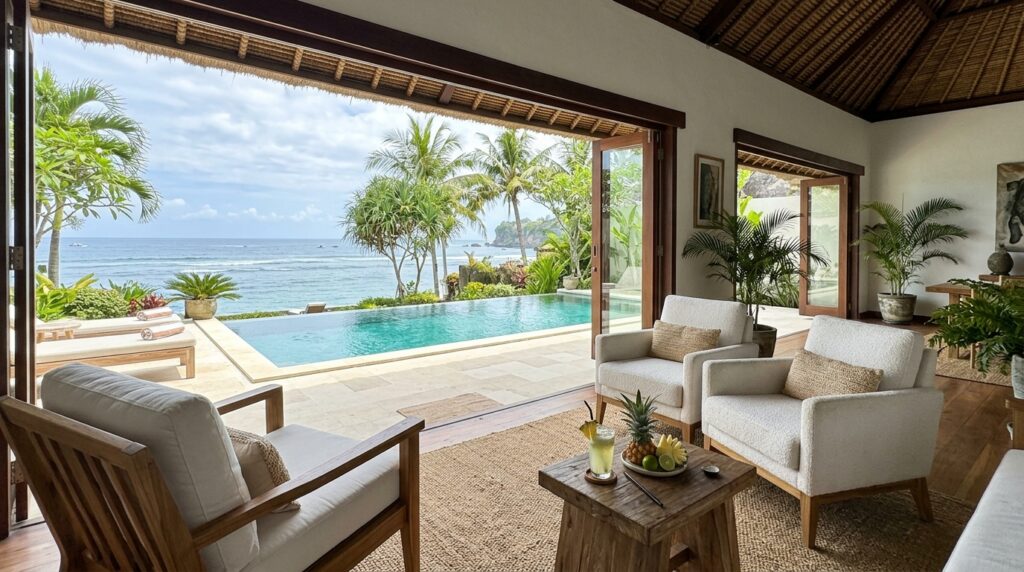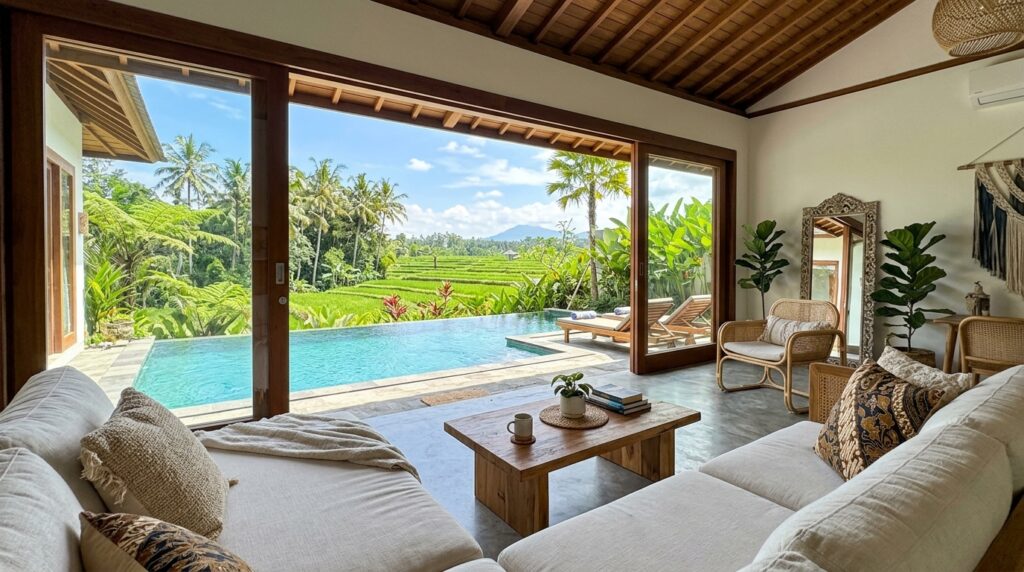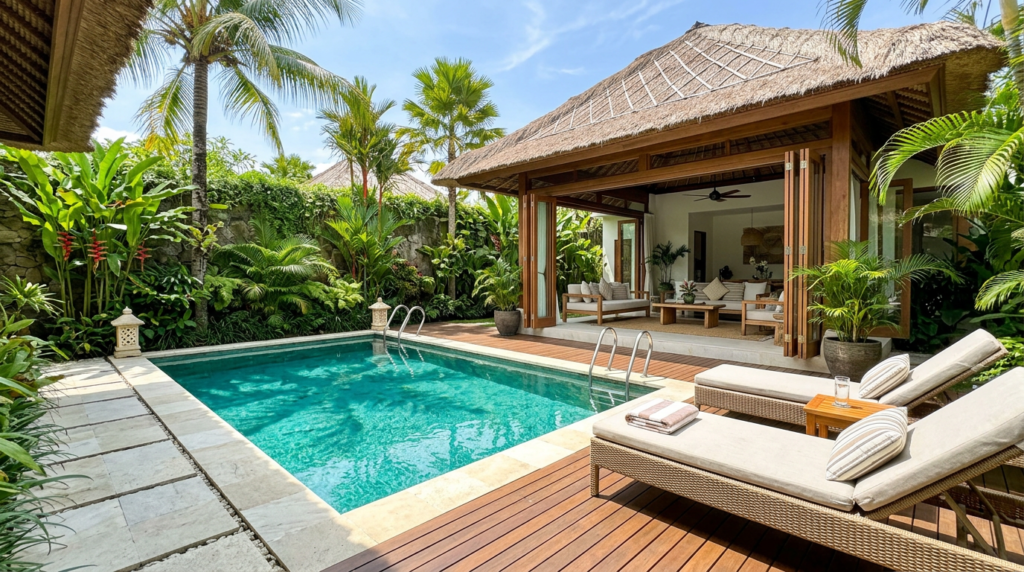
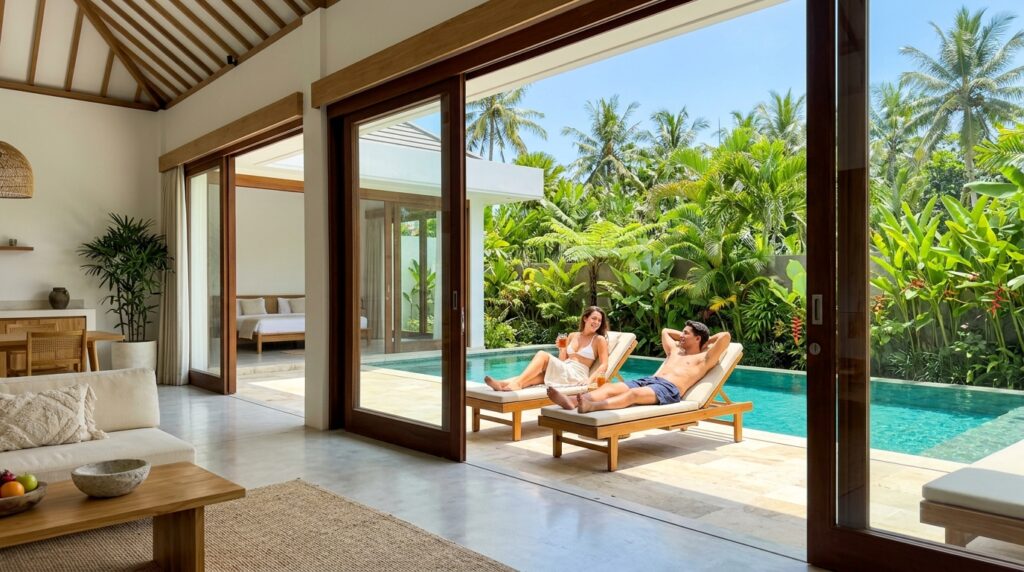
Imagine this: you land in Umalas, drop your bags, and suddenly you have two very real choices for where you’ll spend your days, a villa or a hotel. The difference is not just about the bed. It changes your routine, your privacy level, and even how easy it feels to manage meals and downtime.
In simple terms, a villa is usually a self-contained space. You often get multiple bedrooms, a living area, and a private outdoor setup that can include a pool and a kitchen. That means your group can move at its own pace, without constantly working around other guests. A hotel, on the other hand, typically means shared facilities and a more standardized setup, with services handled centrally by the property.
In Umalas, this trade-off feels especially noticeable because the area is known for a quieter, more residential vibe. If you’re looking to unwind, that “own space” feeling often becomes the main reason people pick villas. If you want convenience and predictable operations, hotels tend to feel smoother, especially for shorter trips.
So, is renting a villa better than staying in a hotel in Umalas? The honest answer is: it depends on your priorities. Think about privacy, group size, and how long you’ll stay. Also consider how much effort you want to put into daily coordination, and whether you’ll actually use villa features like a kitchen or private pool.
Next, we’ll define what “villa” and “hotel” really mean in Umalas, then break down who benefits most, where hotels are the smarter fit, and how to compare costs and avoid common booking mistakes.
If you’re unsure which setup fits your group best, discuss it with the team at Baliexpertvillas.com before you lock in dates.
Villa vs hotel: the simple definitions that matter
Villa
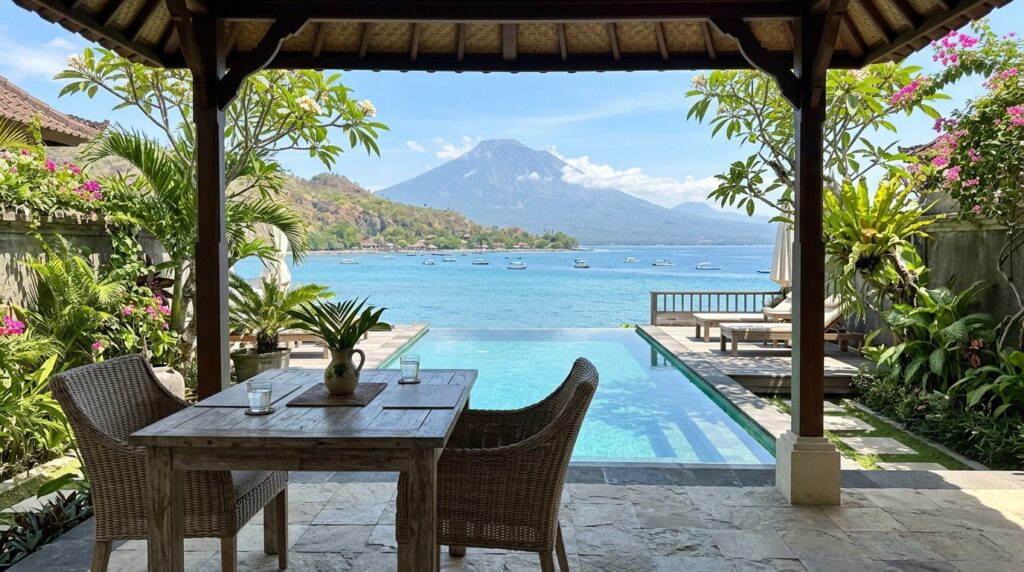
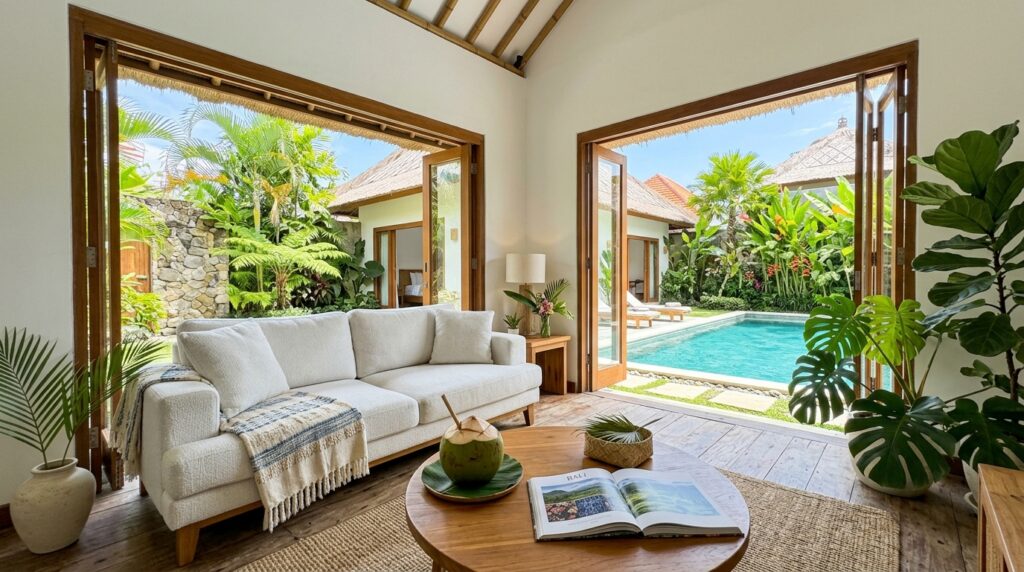
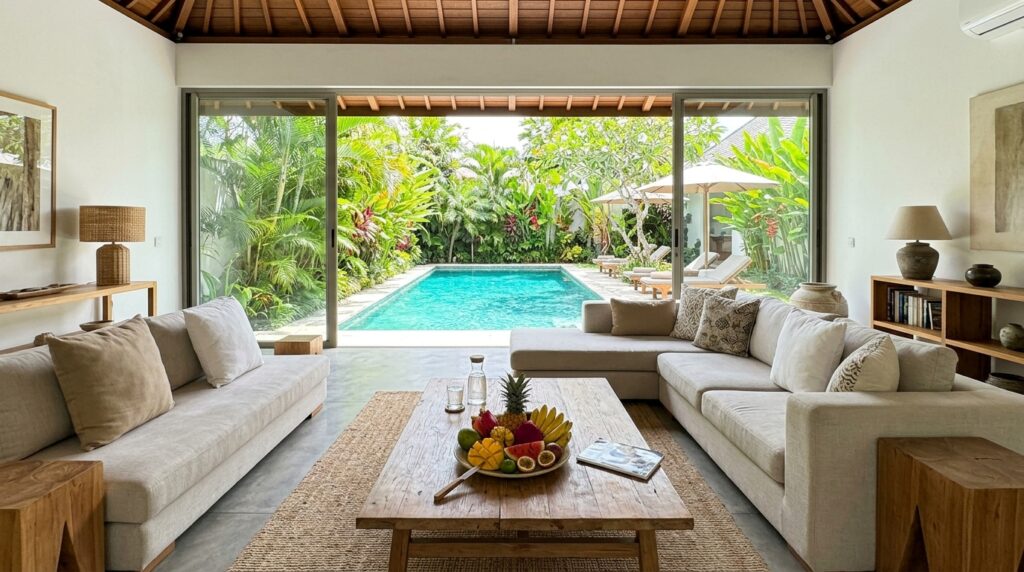
If your accommodation is a villa, you’re usually renting a self-contained place meant for your group. It commonly includes multiple bedrooms, a living area, and space outside, and many villas also offer a kitchen and a private pool.
One key nuance: “private” is about exclusivity of your space, but it doesn’t always mean total isolation from neighbors or sightlines. That’s why the specific setup matters when you picture your stay.
Hotel
A hotel stay usually means your room sits inside a bigger property with shared facilities. Think reception, common areas, and on-site dining, with service run through centralized operations rather than a team focused only on your villa.
This can feel smoother for logistics, but it also means you’re more dependent on the property’s schedule and what other guests are doing around you.
Umalas
Umalas is known for a quieter, more residential feel compared to the most hectic tourist strips nearby. That context makes the villa-vs-hotel choice feel more “real,” because privacy and downtime can become a bigger part of how you judge the trip.
Still, Umalas isn’t one identical experience everywhere, so location details can change how noisy or convenient a stay really feels.
Privacy
Privacy is the everyday experience of not having to adjust to other guests. Villas usually score higher because your living areas and often your pool are exclusive to your group, while hotels tend to involve shared communal spaces.
The common confusion is assuming “private villa” guarantees you will never see or hear anyone nearby. In real life, sightlines and pool orientation can surprise you.
Flexibility
Flexibility is how easily you can shape your day. In a villa, flexible routines often come from your own indoor and outdoor space, plus the fact that you can use your kitchen when it fits your timing.
Hotels can be flexible too, but the experience is usually guided by centralized schedules and shared amenities.
Shared amenities
Shared amenities are facilities you use with other guests, like common pools, dining areas, and reception spaces. This is a defining difference: hotels typically offer more “variety on-site,” but it comes with the trade-off of being around other travelers.
If you’re booking for quiet downtime, shared spaces can be the exact part that changes your mood day to day.
Kitchen and self-catering
A kitchen in a villa gives you options to self-cater, including breakfast, snacks, or casual dinners. That can be a real advantage for families, dietary preferences, or anyone who hates squeezing meals into fixed dining times.
Just remember: self-catering may mean doing the grocery legwork unless you arrange help like a private chef.
Personalized service
Personalized service is when support feels oriented around your specific group. Many villas rely on a villa manager and housekeeping, and some properties can arrange extra help like a chef, butler, or nanny.
Hotels also offer service, but it’s usually standardized across many guests rather than tailored to one private space.
With these terms clear, you can judge the next big factor properly: privacy, which is exactly where many people get surprised.
Private villa means fully isolated
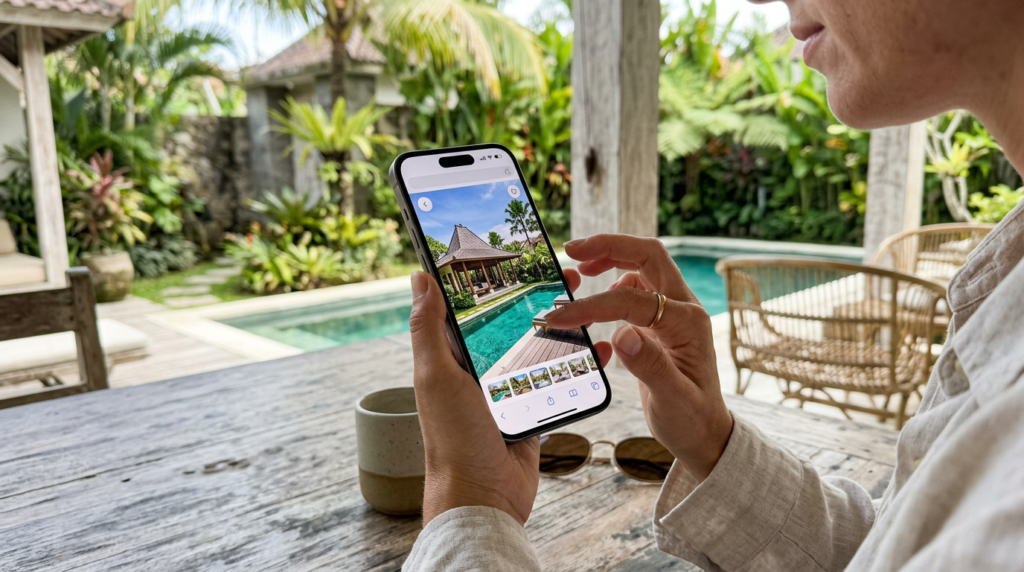
Most people assume a private villa means zero neighbors and zero distractions, but that’s rarely guaranteed. Privacy can depend on sightlines, neighboring properties, and even how the pool is positioned, so photos may make the space look more secluded than it feels in real life.
That’s why recent reviews matter. Look for mentions of noise, construction, or nearby visibility to confirm what your “private” day-to-day will actually feel like. The good news is simple: validate privacy through practical checks, then you’ll enjoy the villa’s exclusivity without unpleasant surprises.
With privacy clarified, the next natural question is what makes villas feel better day after day for groups and families.
Imagine this: you and your family arrive in Umalas with two kids, a grandparent, and a plan to relax. One option is booking three separate hotel rooms. The other is staying in one villa with shared living space, private outdoor time, and room for everyone to breathe.
In the villa, mornings feel calmer because you are not coordinating around a shared lobby, shared dining, or whatever is happening in common areas. Each person can have their own quiet moment in separate bedrooms, while the group can still gather in one place without crowding. That “home base” feeling matters when you want the trip to feel easy, not logistical.
By contrast, hotels can work well, but the reality is shared space. You tend to move in and out of common areas like you would at a busy property, so downtime can feel interrupted. In a villa, the space itself supports your routine, from lazy breakfasts to a relaxed afternoon by the pool.
Privacy that cuts crowding
One of the biggest practical advantages is that your space is more exclusive. Private grounds and a private pool setup usually mean fewer distractions, less noise from other guests, and more uninterrupted “switch-off” time. Even small things like not having to share pool areas can change how your day feels.
Space that makes family life smoother
A villa’s layout typically gives everyone enough room to spread out. You can separate sleep from downtime, and you can keep the group moving through the day without everyone being in the same place at the same time. That makes it easier for families to keep rhythms for kids and adults.
Personalized service from your villa team
Most villas rely on dedicated support like a villa manager and housekeeping, so requests often feel oriented to your group’s needs. Depending on the property, extra help may also be available, such as a chef, butler, or nanny arranged for your stay. The key difference is that support is usually focused on your private space rather than a rotating flow of hotel guests.
Once you feel how a villa supports the day-to-day, it gets even clearer why the kitchen becomes such a “hidden” advantage. Next, we’ll look at how having more control over meals can make your vacation easier and more flexible.
The kitchen advantage (and how it changes your budget)
Meal control is the quiet superpower of a villa, because a built-in kitchen lets you eat on your own timing. When kids are hungry or someone’s schedule slips, you are not trapped waiting for hotel dining hours.
There’s also a budget angle, but it works through mechanisms, not miracles. Self-catering can reduce how often you pay for every meal out, and a BBQ setup can make casual dinners feel effortless and special. The trade-off is real though: groceries take effort, and if you want a chef, you may need to coordinate that service. Either way, the next difference you feel is how the villa team supports your day, not just your room.
Service you can feel, not just book
“Good support shouldn’t feel like a generic system.” In a villa setup, requests often route through your villa manager and housekeeping, so help feels focused on your group and your schedule.
Hotels usually deliver service through centralized departments and more standardized procedures. That can be fast, but it is less flexible around your specific routine. As a result, a villa can adapt around your group, while a hotel stays efficient by following set processes.
When hotels win in Umalas
Are villas always the best choice, no matter what your trip looks like? Not quite. In Umalas, hotels can be the smarter move when convenience and minimal coordination matter more than maximum privacy.
If you’re on a short break, hotels often feel easier because everything runs on a predictable, centralized setup. You get standardized operations and on-site options without needing to manage meal timing or daily logistics yourself.
The short-stay test: 1-3 nights
Use length of stay as your quick filter. For 1 to 3 nights, hotel routines usually outweigh villa perks, because you’ll spend less time enjoying a kitchen, settling into spacious living areas, or using private downtime.
Once your stay gets longer, the villa advantages build up day by day. That’s the point where the “better fit” becomes obvious, especially for families who want an easier daily rhythm.
Next, it gets practical: you’ll compare value and costs in a way that avoids surprises and matches how you’ll actually live during the trip.
1. Count the coordination tasks first
Staying in a hotel is usually about fewer moving parts, especially for a short visit. Break down what you’ll handle each day, like meals, simple requests, and daily logistics, and notice how much of that is already managed on-site.
2. Compare how often you’ll use villa features
For 1 to 3 nights, many travelers don’t use the full “villa lifestyle” enough to justify the switch. If you’ll spend most of your time out and about, the space and in-villa setup may matter less than you expect.
As the stay gets longer, the villa features start paying off because you get more time to enjoy the private downtime, living areas, and the kitchen routine.
3. Decide based on friction tolerance
Ask yourself how much “effort” you enjoy on vacation. If you prefer everything easy and centralized, hotels often feel better because you’re not coordinating daily rhythms.
Once you match the length-of-stay logic, the next step is a fair cost comparison that reflects how you’ll actually live during the trip.
Cost comparison: how to decide without surprises
Compare per-person value
A common trap is comparing only nightly rates. Instead, compare the total landed cost per person per night, then factor in how many people you’re splitting the stay with.
For groups, villas often feel more valuable because one private space can replace multiple hotel rooms, changing the per-person math even when the nightly sticker looks higher.
Don’t forget hidden fees and deposits
Hotel bills often come with added taxes and service, while villas may involve cleaning fees and refundable security deposits. These details don’t change the experience, but they absolutely change the final number.
If you ignore the fee structure differences, you can end up feeling “surprised” at checkout when you were actually trying to budget.
Include savings from in-villa meals
The villa kitchen can shift your spending in a simple way: you’re not forced to eat out every day at fixed schedules. When you can self-cater, casual meals cost less and feel easier.
A villa setup can also reduce friction for a simple BBQ dinner, so you don’t have to choose between “convenient” and “special.”
A practical value formula for your trip
Compute your per-person cost, then compare it to the other option. Your quick method is: (total villa cost and relevant fees ÷ number of guests) versus (room cost plus hotel fees ÷ guests), then adjust for how often you’ll use the kitchen.
Now you’re ready for the next safeguard: verify the listing details so privacy, service, and transport realities match what you booked.
Want help matching your group size and needs to the right villa setup? Explore options via Baliexpertvillas.com’s villa services to make the comparison easier.
A practical value formula for your trip
Not sure which option is really “worth it”? Use this quick checklist to compare per-person value without getting fooled by the nightly rate.
- Compute villa per-person cost = (villa total + fees) ÷ guests
- Compute hotel per-person cost = (room cost + hotel fees) ÷ guests
- Include taxes/service charges on the hotel side
- Include cleaning/security deposit patterns on the villa side
- Adjust for how often you’ll self-cater from the kitchen
- Factor transport feasibility based on your Umalas micro-location
If your per-person value is close, choose based on which day-to-day experience you want more. Next, we’ll do the final safety layer by checking listing details before you book, especially privacy, service, and transport realities.
What to check before you book
Verify inclusions and staff roles
The fastest way to avoid disappointment is to confirm what’s actually included, not just what sounds nice in photos. Look for who covers day-to-day support, such as a villa manager and housekeeping, and whether optional help like a chef, butler, or nanny is available.
Also check how breakfast or requests work in practice. If the listing feels vague, ask yourself whether you’ll want heavy coordination once you’re already on holiday.
Validate privacy reality
Privacy is where listings can oversell and guests can get surprised. Even if it’s called a private villa, your real experience depends on sightlines, neighboring properties, and how the pool is oriented.
Scan recent reviews for mentions of noise, construction, or nearby visibility. That’s the best way to confirm the “quiet bubble” you’re picturing is actually there.
Check transport feasibility first
In Umalas, the area name alone can hide big differences. Before you book, think about micro-location, because steep roads, limited sidewalks, and traffic can turn a “nearby” plan into a daily transport need.
If it doesn’t feel walkable, plan early for a scooter or a private driver. This one step prevents the most common regret trigger: choosing based on photos, then realizing you need rides every day.
Next, it’s helpful to zoom in on what happens when your “Umalas” choice isn’t the same quiet experience for everyone, and how that affects your daily routine.
Location in Umalas isn’t one experience
Imagine this: you book a villa because the listing sounds close to the attractions you want to hit every day. Then you discover the real issue is daily travel, driven by steep roads, limited sidewalks, and traffic.
What went wrong is simple: you trusted the broader “Umalas” label instead of checking the micro-location reality. For next time, use practical validation from recent reviews about walkability and noise, and plan your transport early with a scooter or a private driver if the area isn’t truly walkable.
Once you treat Umalas like many small neighborhoods instead of one, the stay starts to feel predictable, which makes the final check on security and reliability that much more important.
Is security automatically better in hotels?
Not automatically. A hotel can have solid procedures and on-site staff, but a well-run villa may also include practical security steps. The real difference is whether the listing makes those measures clear and whether you can confirm them through details and recent reviews.
Before booking, look for mention of gated access and whether there are safes where relevant. If a property sounds vague, assume you’ll need to rely more on your own precautions.
What should I look for in villa security?
Focus on the basics: how access is controlled, what the property provides for valuables, and what kind of on-site presence exists. Many reputable villas use security practices that can feel similar in spirit to hotels, even if the setup is different.
Also check responsiveness. When staff and management are professional, issues are more likely to be handled quickly, which is part of reliability, too.
How do I judge reliability before arrival?
Reliability is less about promises and more about consistency. Look for reviews that mention whether staff showed up for housekeeping and requests, and whether day-to-day support worked smoothly.
When you see that pattern, your stay usually feels easier because the villa or hotel runs like it should. Even with good checks, many regrets come from predictable misconceptions, so the next section helps you spot those quickly.
Common mistakes that push people toward the wrong stay
Villas are always more expensive
That assumption ignores per-person value for groups. When you split one villa across more people, the cost picture can flip fast, especially when you use the kitchen to handle meals.
The result is often wasted budget or a less comfortable trip because people default to multiple hotel rooms instead of space that fits everyone.
Hotels have better service
It’s logical to think hotel staff must be “more reliable” because service is visible and standardized. But villa support can feel more tailored when you have a dedicated villa manager and housekeeping focused on your private space.
If you book based only on the word “hotel,” you might end up with the wrong service style for how you actually want your days to run.
Private villa means total isolation
“Private” is about exclusivity of your space, not a guarantee of zero sightlines or zero nearby noise. Pool orientation, neighboring properties, and construction can change what privacy feels like day to day.
Skipping privacy checks often leads to disappointment, even when the villa still looks great in photos.
Villas are only for long stays
Short trips can still work in a villa, but the advantage is weaker if you’ll be out most of the day. Hotels often win for 1–3 nights because logistics are handled on-site with minimal coordination.
If you assume villa automatically beats hotel for every timeline, you may choose based on vibes rather than fit.
Hotel suites match villa space
A suite can be roomy, but it usually doesn’t replicate a villa’s home-style layout with separate bedrooms, living space, and private outdoor areas. The experience is different, especially for families who want separation of routines.
That mismatch can leave groups feeling less comfortable than they expected.
All villas are managed the same
Management quality varies a lot. A professionally managed villa tends to be more responsive and consistent, while a poorly run one can struggle with maintenance and day-to-day support.
When you assume “villa is villa,” you can get unexpected gaps in reliability.
Ignoring micro-location in Umalas
Booking “in Umalas” without checking the exact area can backfire when walkability is limited by steep roads and lack of sidewalks. Then you realize you need daily transport, not occasional rides.
That can turn a relaxing plan into a constant logistics loop.
Once you avoid these mistakes, picking the right option gets much easier because you’re matching the stay to how you actually want to live it.
So which should you choose in Umalas?
Pick a villa if you want privacy, space, personalized support, and kitchen flexibility. Choose a hotel if convenience, predictable on-site dining, and low coordination are your top priorities for the trip.
Keep your decision grounded in reality by verifying what’s included, double-checking privacy expectations, and planning for transport feasibility based on the micro-location in Umalas. These checks prevent the common booking letdowns that come from guessing instead of confirming.
Once your stay matches your pace, Umalas tends to feel a lot more enjoyable, fast.
Ready to make the choice with clarity? Baliexpertvillas.com siap membantu Anda menyusun strategi yang tepat – hubungi kami untuk konsultasi gratis.