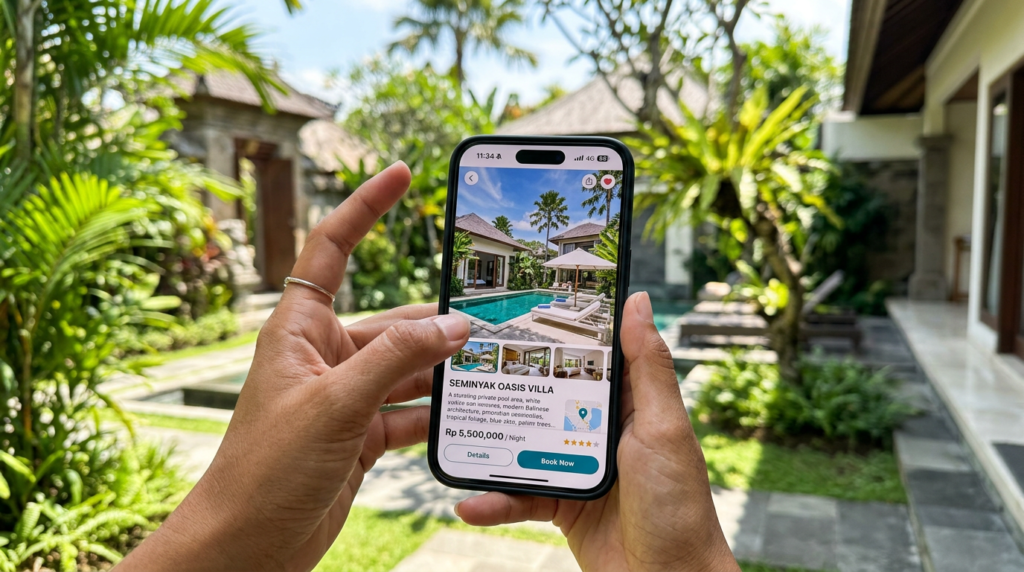
Picture this: you’re scrolling through Seminyak villas, and one listing looks perfect. The photos are gorgeous, the price feels like a win, and you start thinking, “This must be it.” Then you realize you don’t actually know how to judge whether it’s legitimate, whether the villa is truly as shown, or whether the payment request is safe.
That uncertainty is exactly why this article exists. In Seminyak, villa rentals can look easy from the outside, but the market can include fake listings, outdated photos, hidden fees, and payment tricks that are designed to move your money before you can verify anything. Even the label “Seminyak” can be misleading because it’s broad, and distance or access can vary a lot within the area.
So instead of hoping you picked the right listing, you’ll follow a repeatable process. You’ll turn “safe booking” into four practical pillars: verify legitimacy and location, match amenities and costs, communicate clearly, and pay securely with written confirmation. Each pillar tackles a different risk, so you’re not relying on luck.
Over the next sections, the workflow will be clear and step-by-step: research, verify, communicate, confirm terms, pay securely, and get written confirmation. Once you see that flow, you’ll also understand why Seminyak villas need extra care compared to more standardized hotel bookings, and what safety checks you must not skip.
If you want to compare options faster, explore Seminyak villas that match your priorities with fewer surprises at Baliexpertvillas.com.
Booking a villa in Seminyak feels like a sure thing, until something goes wrong and you realize the “easy” part was the mistake.
Hotels vs villas: less standardization
Hotels usually follow tighter standards, so you can predict what you’ll get when you check in. Villas are different. They can vary a lot from one property to another, and the rental market is less standardized, which is where safety risks creep in.
That variability creates a trust gap that scammers can exploit with fake listings or stolen photos. It also makes it easier for hidden fees and contract traps to slip through, because the pricing and inclusions aren’t always presented consistently. The result can be money loss, arrival surprises, and extra stress you never planned for.
Seminyak vs exact address: location confusion
“Seminyak” is a useful starting point, but it’s not a precise promise. Two villas inside the same umbrella area can feel completely different once you’re there, especially for noise, access, and real travel time.
This mismatch often leads to inconvenience, not just disappointment. If you assume Seminyak means close to everything, you might book the wrong kind of location, only to find it’s farther than expected, louder than advertised, or harder to reach conveniently.
Once you see these two contrasts, the rest becomes easier. Next, we’ll translate “safe booking” into clear, practical meaning, so you know exactly what to verify before you pay.
What Safe Booking Actually Means
Legitimacy
Legitimacy means the villa is being run by a real operator you can verify. In Bali, a key signal is business registration such as NIB, plus responsiveness and professional details when you ask questions.
A common confusion is relying on the “Seminyak” label or a pretty website alone. Scammers can still use believable wording, so verification needs to happen before any money moves.
Accuracy
Accuracy means what’s shown in the listing matches the villa you’ll actually get. That includes the real layout, the true size and condition of key areas, and whether the pool, bedrooms, and surroundings fit what the photos imply.
Many disappointment stories come from outdated images or selective angles, so matching the current reality matters for more than looks. It’s about preventing arrival surprises and wasted expectations.
Transparency
Transparency is clear pricing and clear inclusions. You should be able to get a detailed cost breakdown, including any cleaning fees, deposits, and other charges, without vague surprises later.
Hidden fees and “contract traps” thrive when the total price is unclear. Even if something sounds all-inclusive, you still need to confirm what “included” actually covers.
Secure payment
Secure payment means you’re using a method with fraud protection and traceability. Safer options typically involve credit card or a protected payment gateway.
Direct wire transfers to untraceable accounts are a major red flag because scammers can’t easily be held accountable if something goes wrong.
Written confirmation
Written confirmation is your paper trail. After booking, you should receive an email or written message that confirms your dates, total cost, what’s included, and the cancellation policy.
This prevents messy disputes later, especially when details change or when expectations were never clearly documented.
With these pillars in mind, the next section will show how they appear during the real booking flow, step by step.
How the Booking Process Works in Real Life
Choose your booking route
“The route you book through decides how much protection you get.” Start by picking how you’ll book: major platforms, a local villa agency, or directly with the owner.
Major platforms usually offer more structured processes and disputes handling, while direct bookings rely heavily on your own due diligence. Local agencies can be helpful because they often vet properties, but you still need to confirm legitimacy and terms.
Shortlist and research
Once you have a shortlist, your job is to reduce guesswork before you interact with anyone. Read reviews for recurring issues like cleanliness, staff responsiveness, and whether the villa matches the listing.
Risks often start here when the photos look amazing but the reviews hint at mismatches, outdated conditions, or problems that aren’t obvious from the listing photos.
Verify before paying
Before sending any money, verify the basics that scams depend on. Confirm the exact location and surrounding area, and check whether the photo set looks authentic rather than “too perfect.”
This step applies the accuracy and legitimacy pillars by catching fake listings and phantom villas early, which helps avoid money loss and arrival surprises.
Message the host like a detective
Ask direct questions that force clarity: what’s included, how check-in works, who manages the property day to day, and when staff are available. If they dodge simple details, that’s information you shouldn’t ignore.
This is how the communication and transparency idea shows up in real life. Vague answers often lead to hidden fees or contract misunderstandings later.
Review policies and costs
Now focus on the fine print that turns a good deal into a bad one. Look for a clear cancellation policy and an itemized breakdown of costs, including any cleaning fees or deposits.
Many travelers get stuck when “total price” isn’t truly total. If the terms are unclear or the inclusions are fuzzy, you’re exposing yourself to extra costs and disputes.
Pay securely and get confirmation
Finally, pay in a way that keeps you protected and creates a traceable record. Prefer credit card or fraud-protected payment methods, and avoid untraceable transfers requested under “special deals.”
Then secure written confirmation that includes your dates, total cost, what’s included, and the cancellation policy. That documentation is what keeps issues from turning into arguments.
With that flow in mind, the next section gives you the exact checklist to run before you book or pay.
Your Step-by-Step Safety Checklist
That sinking feeling usually starts after you pay, not before. So run this in the right order: verify first, match expectations, then lock terms in writing.
Think of it as risk control for legitimacy, accuracy, transparency, and secure payment.
Verify the Listing and Location Before You Commit
Start by verifying the exact address, not just “Seminyak.” Use maps and street views to understand the surroundings, access, and practical travel reality, because the area label can mislead about distance, noise, and convenience.
Next, request a reality check on photos. If anything feels suspicious, use reverse image search to look for reused or mismatched images, and ask for recent photos of bedrooms, bathrooms, and the pool.
This step protects you from fake listings and outdated conditions, which are two of the biggest causes of arrival disappointment and financial loss.
Confirm Amenities, Staff, and Hidden Costs
Then move from “does it look right” to “does it work right.” Ask about Wi–Fi reliability, air conditioning in every bedroom, hot water, and basic kitchen functionality if you plan to use it even a little.
Don’t skip the people side. Confirm staff availability and what their day-to-day responsibilities are, especially for housekeeping and any services like cooking or shopping support.
Finally, request an itemized cost breakdown. Clarify cleaning fees, deposits, and any extra charges so “total price” is truly total, and so you don’t get surprised by hidden fees or contract traps.
Use Secure Payment and Written Confirmation
Only pay when you’re confident the booking is real and the terms are clear. Prefer credit card or a fraud-protected payment gateway, and avoid untraceable payments like wire transfers to accounts that don’t clearly match the operator.
Before you’re done, get written confirmation by email or a written message. It should include your dates, total cost, what’s included, and the cancellation policy in clear terms.
With that documentation, you’re far less likely to end up stuck in disputes over unclear inclusions or last-minute changes.
Even with a checklist, people still get caught by patterns that feel harmless at the time, which is why the next section covers the common mistakes that make bookings risky.
Verify the Listing and Location Before You Commit
Most people assume “Seminyak” tells them exactly where they’ll be, but it really just tells you the broad area.
Start by verifying the exact address using maps and street view so you can judge neighborhood character, road access, and how convenient it will be day-to-day. This reduces the risk of booking a place that feels “close” on a map but is actually inconvenient due to access or location mismatches.
Then double-check the photos. If you suspect they might be reused or outdated, run a reverse image search to detect stolen images or phantom listings. When you’re asking questions, request recent photos so you can confirm current condition, especially for bedrooms, bathrooms, and the pool.
These checks are scam prevention in practice because fake listings often rely on stolen photos and vague location language. Once the location and images look real, the next risk is that the amenities and price might not match what you thought you were paying for.
Air conditioning and hot water basics
If you wake up sweaty or you have to wait forever for showers, the villa stops feeling luxurious fast. Ask which bedrooms have air conditioning and whether it’s consistently working, not just “available.”
For hot water, confirm it’s reliable for multiple guests. Good hosts answer clearly, and they don’t leave you guessing how the system works when everyone is using it at once.
Wi–Fi and power expectations
Remote work plans or even just streaming in the evening can fall apart when Wi–Fi is slow or drops. Ask how reliable the connection is and whether it covers the whole villa, not just one corner.
Also ask about power expectations. Bali can have outages, so a smart question is whether there’s backup power or a way the villa handles interruptions.
Kitchen and day-to-day comfort
Even if you won’t cook every day, you still need basics that make the stay smooth. Check that the kitchen has functional essentials like a usable fridge and basic utensils or cookware.
If the villa is staffed, confirm the housekeeping schedule and what staff are responsible for each day. This reduces the chance of “we thought you had daily cleaning” confusion.
Itemized cost breakdown and inclusions
Hidden fees usually appear when the listing price isn’t truly a total. Ask for an itemized breakdown so you can see cleaning fees, deposits, and any taxes or service charges if applicable.
Be ready to budget with a contingency mindset, because not every cost shows up perfectly in the first quote. When the inclusions are clear, you avoid contract traps and surprise add-ons.
Prefer protected payment methods
“Pay like you expect accountability.” Choose payment methods with fraud protection, such as credit cards or a protected payment gateway if available.
Before you press pay, double-check that you’re paying the actual operator for the villa, not a random account someone emailed to you last minute.
Avoid untraceable transfers
Be cautious with wire transfers or payments to personal or unrelated accounts. If the money isn’t traceable, you lose leverage when something goes wrong, which increases fraud risk.
When a “great deal” depends on an unusual payment method, treat it as a red flag and pause the booking.
Get a written booking email
Request written confirmation before any final payment. The message should clearly include your dates, total cost, what’s included, and the key terms you agreed to.
Good confirmation prevents confusion because it becomes your reference if anything is disputed later.
Double-check cancellation terms
Read the cancellation policy in full, especially the parts that deal with changes and unforeseen events. A helpful policy often covers situations beyond your control in a clear way.
This “fine print” habit reduces contract traps because it forces clarity before you commit.
Even with a checklist, certain unsafe myths still slip through, so the next section tackles the most common mistakes that make bookings risky.
Common Mistakes That Make Bookings Risky
“Everything looks legit online”
It’s easy to trust a polished listing when the photos and wording look professional. But fake listings and phantom villas often start by using stolen images and vague details.
Fix it by verifying the address, checking photo authenticity with reverse image search, and asking for recent photos before you pay.
Seminyak means close to everywhere
“Seminyak” can sound like a location promise, but it’s really a broad label. One villa can be convenient, while another feels far away due to access, road conditions, or noise.
Verify the exact address in maps and street view so you avoid inconvenience, not just disappointment.
Photos are always current
Great photos do not guarantee the villa still looks that way today. Outdated condition, shaded pools, and mismatched room setups can turn expectations into a hassle.
Request recent photos of bedrooms, bathrooms, and the pool to reduce arrival surprises.
All-inclusive means everything is covered
Many travelers assume “all-inclusive” covers every cost. In reality, hidden fees, deposits, and extra charges can still appear if inclusions are not clearly stated.
Ask for an itemized cost breakdown and confirm what’s included in writing so you prevent contract traps.
Platform chat is enough
Messaging can feel safe, but it doesn’t always lock details down. If the critical terms aren’t documented, you can get stuck when issues come up.
Use the written confirmation approach: dates, total cost, inclusions, and cancellation policy must be in email or written form.
Private pool guarantees privacy
A “private pool” usually means it’s for your villa guests, not that no one can see or access the area. Layout and surrounding buildings decide real privacy, and photos may hide that.
During verification, check the surroundings around the pool area so privacy matches the promise.
Unusually cheap deals are just bargains
A deal that seems too good often signals a risk: payment requests that don’t match expectations or listings that don’t reflect the current property. Scammers rely on urgency to push decisions.
If price or terms feel inconsistent, pause and re-run the checklist before paying.
These mistakes are avoidable when you stick to the checklist and use a few expert habits before you book.
Quick Expert Habits That Reduce Stress
Imagine a family booking a Seminyak villa for a quiet holiday, then realizing the real problems are road access, noise, and unreliable power.
That’s the moment you understand why experts don’t obsess over hero photos. They ask smarter questions early, so the stay feels calm instead of chaotic.
Ask about practical travel time, not distance
Distance on a map can lie. Road access, traffic, and real travel time decide how tiring it feels to get to beaches, restaurants, or rides back to the villa.
Ask something like, “What’s the usual travel time to the places we’ll visit at evening rush?” It’s a simple question that prevents inconvenience from the start.
Look for review patterns, not just stars
Star ratings are a quick snapshot, but patterns tell the truth. Read reviews for repeated themes like cleanliness issues, Wi–Fi cutting out, or staff not responding when help is needed.
Instead of only checking the average score, note how often the same problem comes up. That helps you avoid mismatches before you book.
Verify neighbors and surrounding noise
A villa can be “private” on paper and still feel noisy because of nearby activity, road sounds, or surrounding buildings. This is where stress shows up fast if you only judge from interior photos.
Ask, “What kind of noise should we expect at night, and what affects it?” Then verify the surroundings during your listing checks.
Question power backup and pool safety
Power interruptions can happen, and you want to know how the villa handles them. Experts ask about backup expectations so evenings don’t turn into frustration.
If you’re traveling with kids, pool safety matters too. Ask what safety features are in place, because real safety is about the setup, not the marketing words.
When you combine these expert habits with the checklist, you stop guessing and start booking with confidence. The next section ties everything together so you feel ready before you finalize.
Turn Villa Booking Into a Safe, Confident Process
Safe villa booking is not luck, it’s a system. You started by understanding why Seminyak villas need extra care, then you locked in the meaning of “safe” as legitimacy, accuracy, transparency, and secure payment with written confirmation.
From there, the process becomes simple in your head: verify the exact address, sanity-check photos, request an itemized cost breakdown and cancellation terms in writing, then choose a payment method you can trace. When those pieces are in place, you’re less likely to face hidden fees, arrival surprises, or disputes over what was promised.
Before you finalize, pause for a last check. Confirm the dates, total cost, inclusions, payment method, and that written confirmation is actually documented. If anything feels vague or pressured, re-check the details before you commit.
If you want clarity before you pay, talk with Baliexpertvillas.com and confirm your checklist details with their team.
Once you do that, you’ll spend less time worrying and more time actually enjoying Seminyak.