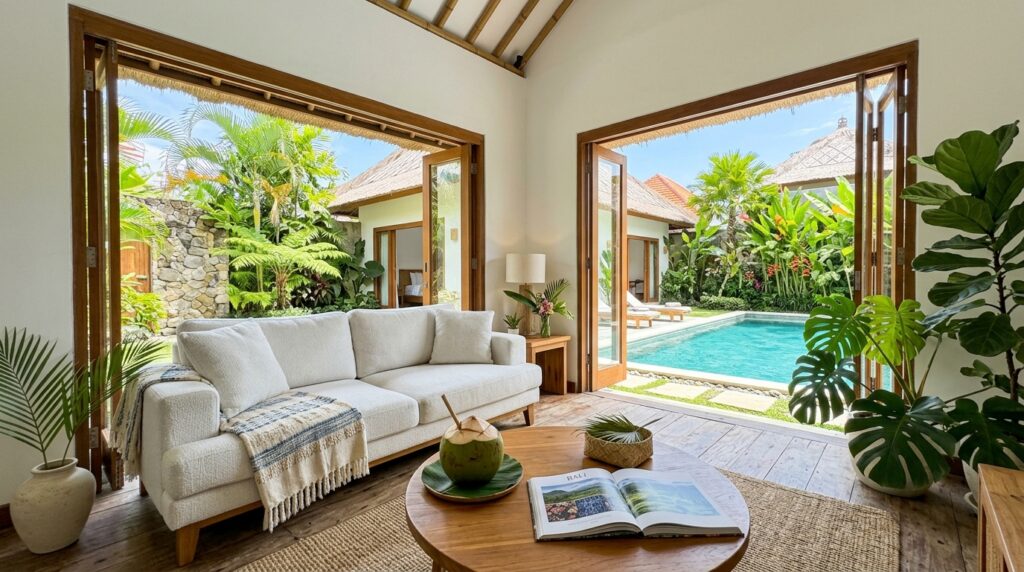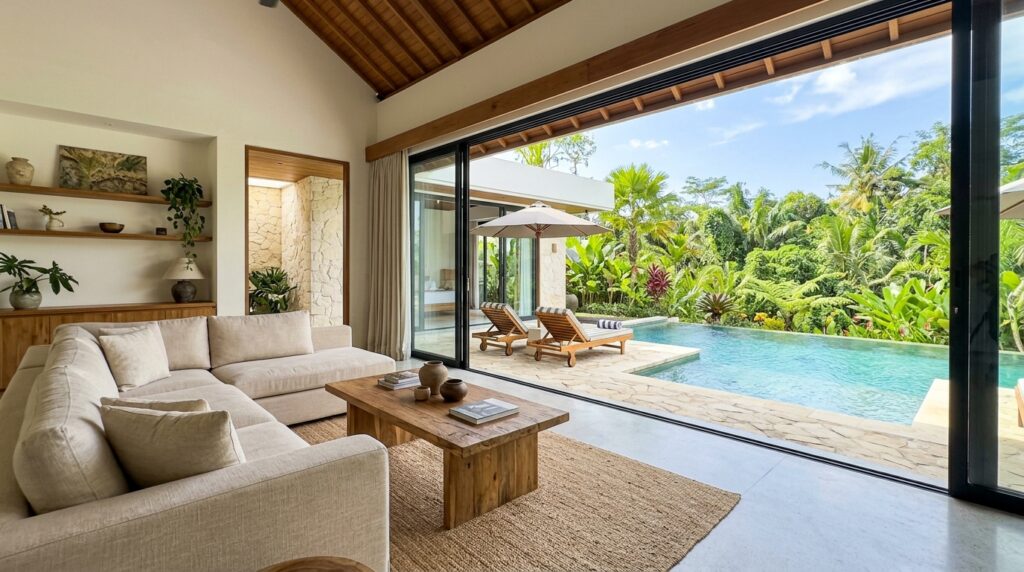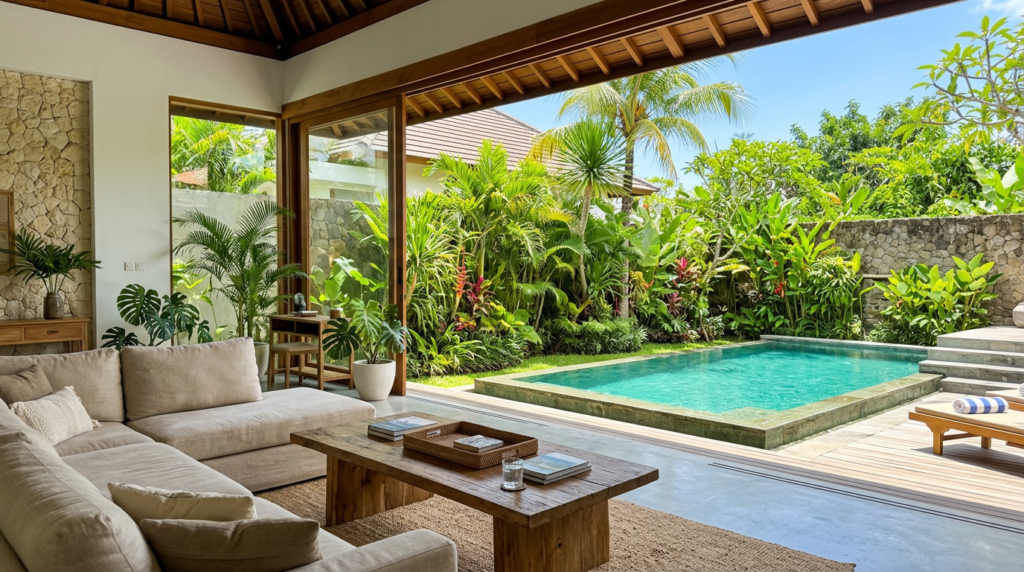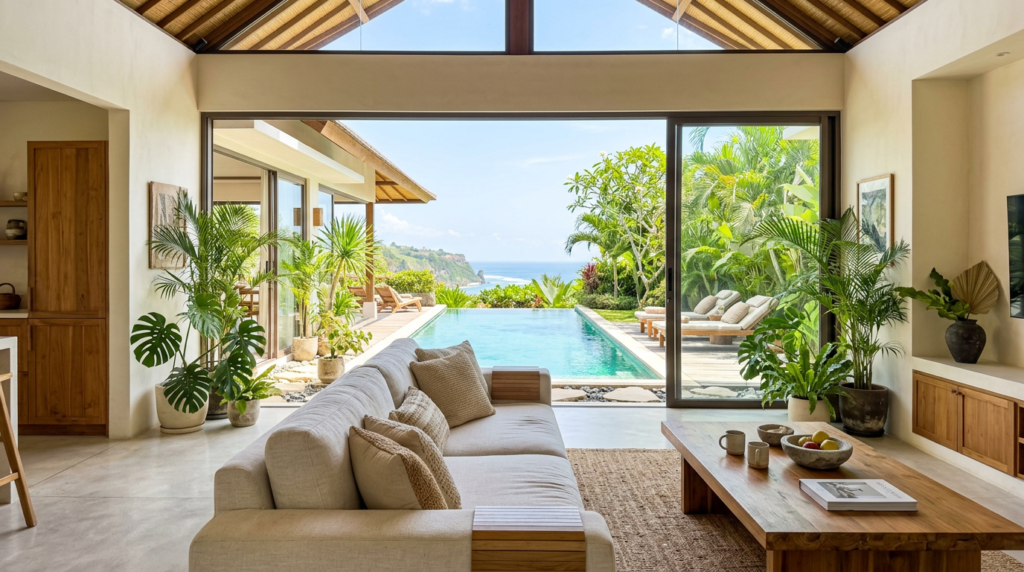

Picture this: you land in Bali after a long flight, your phone is buzzing, and you just want one thing, a place where you can finally breathe. Now you’re choosing between a private villa and a hotel room. If your top priority is privacy and that quiet “we’re off-duty” feeling, a villa can feel instantly right. If you want convenience and zero friction, a hotel setup can make everything simpler from the first hour.
Here’s the key difference in plain terms. A villa is rented as your own space, usually for one group at a time, so the experience leans toward exclusive use, more room to spread out, and flexibility in how your days run. A hotel is built as a structured, staffed system, where you’re booking a room inside a bigger property with shared guest areas and standardized services.
A villa often feels like “your own space,” even when staff are helping in the background. A hotel feels like “a system,” because the service rhythm is organized for many guests at once. That difference matters because you’re not just choosing where to sleep. You’re choosing the kind of day-to-day experience you’ll get in Bali.
In this article, we’ll start by clarifying what each option really means. Then we’ll talk about when villas tend to win, when hotels are the better call, and how to decide quickly without second-guessing. After that, we’ll cover the booking mistakes that usually create disappointment. For now, the goal is simple: understand what you’re actually choosing, villa versus hotel, so the rest of the comparison lands in the right place.
If you want to compare villa and hotel options more clearly, explore more real Bali villa examples on Baliexpertvillas.com and see how the experience can differ.
Villa vs hotel: what you’re actually choosing
How privacy and space change your day
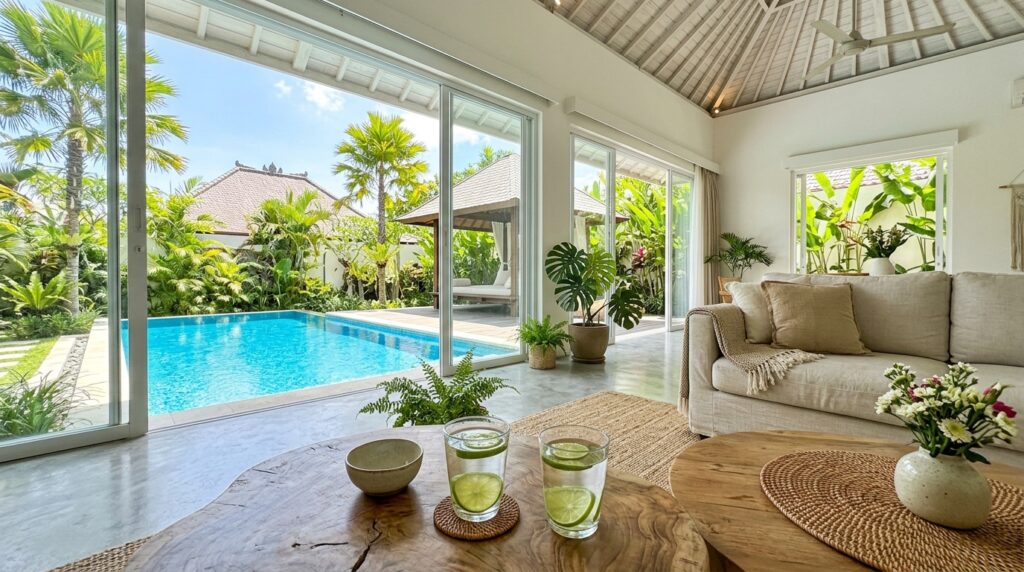
If you’re tired from travel, the last thing you want is to feel like you’re sharing your downtime with strangers. In a villa, the space is usually exclusive to your group, so your pool, living areas, and general atmosphere feel like “your own.” That kind of setup naturally supports slower mornings and more relaxed evenings, because you are not moving through shared guest areas all day.
A hotel is built differently. You’re in a commercial property where guests share communal zones, routines, and contact points. You might still love your room, but the overall feel is more structured and social, since your day flows alongside other travelers in lobbies, dining areas, and shared facilities.
Service style: who helps you and when
Sometimes what you really crave is control, not just comfort. Villas tend to lean into personalization, with staff focused on your group’s needs, whether that’s housekeeping support, pool and garden care, and in some cases a villa manager who coordinates things for you. When the service is tied closely to one party, it often feels more flexible and less “scheduled.”
Hotels usually run on standardization. You’re served through a more formal setup like reception and concierge, plus multiple departments working in parallel for many guests. That can be great when you want quick, predictable help, because the property system is designed to handle common requests efficiently.
Amenities and shared space vs private living
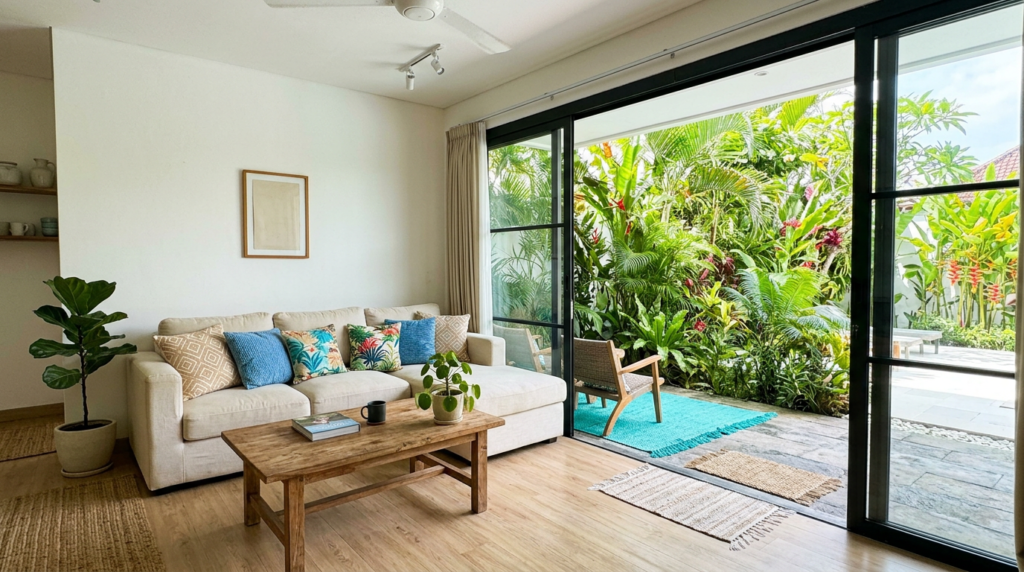
Here’s the trade-off that’s easy to miss in photos. Villas often focus on private living, which means you may get a home-like layout with spaces like kitchens and living areas that make your stay feel more lived-in. When you have that “inside the home” feeling, daily routines become simpler for families, groups, and longer stays.
Hotels often shine through on-site amenities and shared experiences, including fuller resort-style offerings and convenience built into one location. Even if you’re not using everything, the infrastructure is there, which can reduce the amount of planning you have to do during your stay.
So, when people say one option is “better,” they’re usually describing this everyday fit. Once you understand how privacy, service style, and space work in real life, it’s easier to see why villas often win for the kind of Bali trip many travelers want.
Next, we’ll dig into the situations where villas tend to outperform, and why that’s especially true for certain traveler profiles.
Why villas often win for the Bali experience
For a group or longer stay, a villa often wins.
Imagine this: two families arrive in Bali, split between adults who want quiet mornings and kids who need space to move. In a villa, you can wake up slowly, swim when you feel like it, and hang out together without squeezing into one shared hotel lobby rhythm. Meals are handled with a kitchen that actually works for real life, or with a chef arranged for you, so you spend less energy “figuring out dinner.” That private setup changes the mood of the whole trip from day one.
What makes villas cost-effective for groups
Villas can look pricier per night, but the value flips when you share bedrooms and living space. Add in home-like comforts such as kitchens and living areas, and you often reduce the day-to-day costs and time spent on food decisions. For groups, that per-person math gets much friendlier, especially when you’re staying more than a couple of nights.
So the real question isn’t “Are villas cheaper?” It’s “Does the way you travel make villas efficient?” When your plans naturally fit a private setup, the nightly rate becomes just one piece of the total picture.
A quick market snapshot: villas vs hotels
There’s also a demand signal worth noting. Market trends highlight examples where villa occupancy has reached around 75%, while hotels averaged about 53–60%. That’s useful as an example market signal, not a promise that every villa or hotel will perform the same for every traveler.
Still, it supports a pattern: many people increasingly want privacy, space, and longer-stay flexibility, which villas are built to deliver.
Why flexibility matters more than you think
Once you’re in Bali, your “schedule” usually becomes less about clocks and more about how you feel that day. Villas make that easier because your routine is less tied to hotel-style structures, like fixed meal timing or shared-lounge rules. When you’re balancing sightseeing, rest, and family needs, that flexibility can be the difference between a trip that feels smooth and one that feels busy.
Villas aren’t a magic answer for everyone, though. Hotels can be the smarter move when convenience, short stays, and turnkey service are what you value most, so next we’ll look at the cases where hotel wins really make sense.
If you want help matching your villa setup to how you actually travel, the team at Baliexpertvillas.com can help you map out the right plan for your stay.
When a hotel is the smarter Bali choice
Are you traveling so short on time that you need things to run on autopilot?
Short stay convenience and fewer planning steps
In that situation, a hotel can be the smarter fit. Hotels are built as structured, staffed setups, so you usually get quick help through reception and concierge-style support. If you want an easy arrival, predictable routines, and less daily decision-making, the hotel model matches that lifestyle.
Hotels also make it simpler to eat and unwind without extra planning. With on-site dining and more “everything in one place” infrastructure, you spend less effort coordinating meals, staff, or timing around a private property.
More amenities and professional management on tap
Hotels often shine when you care about having a broader menu of amenities and more consistent operations. Professional management and efficient cost management can help hotels keep performance stable, because the operation is designed to run as a system for many guests.
There’s also a market-side reason demand could shift in the future. Regulations on short-term rentals could push more short-stay demand toward hotels, even though it’s not something you should treat as guaranteed. The practical takeaway for travelers is that hotels are often the “turnkey” choice when convenience and lower logistical risk matter most.
Ultimately, the best pick depends on your trip details, and next we’ll use a quick decision method so you can choose based on reality, not assumptions.
How to decide for your trip in 10 minutes
Step 1: Start with group size
Picture your group right now. Are you traveling as a couple, or do you have friends or family who will share bedrooms?
As a rule of thumb from market guidance, villas often become more cost-effective when you have a group of 3 or more, because you can split the space. Hotels can still be great, especially for solo travelers or smaller groups who mainly need a clean, convenient base.
Step 2: Decide your stay length
Think about how long you’ll actually be in Bali, not just the number of nights you booked.
Short stays tend to favor hotels because the convenience and structure reduce planning and day-to-day decisions. For longer stays, villas often feel more practical because home-like comfort, flexibility, and the “live there” experience start paying off. If you’re there for weeks, the villa style tends to match how people settle into routines.
Step 3: Choose your ideal day rhythm
Ask yourself what mornings look like for you when you’re on holiday. Do you want a slow start, or do you prefer a tight, efficient schedule?
Villas lean toward a privacy and flexibility rhythm. That means you’re not tied to hotel schedules or shared guest-area rules, and you can shape the day around your group. Hotels lean toward structure, which can feel easier when you want everything “on time” and handled in a predictable way.
Step 4: Plan meals realistically
Before you pick accommodation, be honest about how you’ll eat on most days.
Villas give you options, like using the kitchen, arranging a private chef, or ordering food while still staying in your space. Hotels make it simpler when you prefer on-site dining and minimal coordination. If cooking or ordering in is part of your vacation vibe, a villa usually fits better.
Step 5: Handle logistics and location needs
Now zoom out to the practical stuff. Where will you spend time during the day, and how easy does it need to be to move around?
If your trip involves frequent outings, hotels can reduce friction because you get a more standardized service setup. If you don’t mind coordinating transport and daily needs, a villa can work beautifully, especially when it’s set up for flexible living rather than just a place to sleep.
Step 6: Consider a split stay
If you’re torn, don’t force a single choice for the whole trip. Many travelers handle this with a split stay.
The expert-level approach is straightforward: use a hotel first for convenience after you arrive, then switch to a villa for deeper immersion, privacy, and longer-stay comfort. It lets you recover quickly from travel without sacrificing the relaxed villa lifestyle later.
Once you’ve walked through these steps, your decision becomes much clearer. Next, the goal is to avoid the common booking mistakes that derail expectations, so your stay matches what you actually wanted.
What to watch out for when booking
“Villa is always more expensive than a hotel”
It’s tempting to compare only the nightly rate, especially when you’re tired and trying to decide fast. But villas can become better value when you’re splitting bedrooms and sharing the living space, and when a kitchen or chef reduces how much you spend on meals.
Hotels can also add costs beyond the headline price, with market data noting that hotels commonly add around 15–21% in taxes and service charges. The smart move is to compare the total stay cost and verify what’s included for both options.
Do hotels always feel safer and better?
Not necessarily. Hotels often have visible security and a structured front-of-house setup, but villas can be just as secure when they have clear measures like gates, security staff, and in-villa safeguards for valuables.
The difference is that with villas you must confirm details instead of assuming. Ask what the security setup is and how communication works if something urgent comes up.
Villas are always isolated and inconvenient
This one usually comes from photos that show a secluded, postcard view. Some villas are tucked away for maximum quiet, but many are located in popular areas just off main roads, close enough to reach dining and daily needs.
Before you dismiss a villa, check how you’ll actually move around your day. If transport and nearby essentials are easy, “isolation” may be less of an issue than you think.
Meal time will be a hassle
It can feel risky to book a villa if you imagine cooking every meal from scratch. In reality, villas often provide a working kitchen, and it’s also common to arrange a chef or use convenient delivery options.
The real trap is not the villa concept, it’s under-planning your food routine. Decide early whether you want self-catering, chef days, or mostly eating out, so the stay matches your expectations.
Your villa isn’t a 24/7 front desk
Hotels are designed for instant help, and that can set your expectations. Villas may have staff, but they do not always function like a continuous reception desk, especially for late requests.
Set the tone early by pre-communicating what you need. Also pay attention to villa specifics like open-air living layouts, because photos can hide real-world factors like rain, humidity, or insect activity, especially if you’re traveling with kids.
So the takeaway is simple: compare total costs, confirm safety and communication, and treat villa details like open-air design and maintenance as part of the decision. With that in mind, the next section helps you lock in the kind of stay that actually fits your trip.
Next steps: lock in the stay you’ll love
“Make the choice that matches your trip, not your assumptions.”
Match the stay type to your travel style
Start with how you want your days to feel. Villas usually fit travelers who care about privacy, flexibility, and value for groups or longer stays. Hotels often fit travelers who want convenience, structure, and turnkey ease.
Compare total cost, not just the rate
Don’t stop at the headline price. Market data notes that hotels commonly add around 15–21% in taxes and service charges, so confirm what’s included and what add-ons you’ll pay for anyway.
Confirm essentials before you book
Check the basics that protect your comfort. For villas, confirm security features and how communication works. Also pay attention to villa specifics like open-air layouts that might behave differently than the photos.
Plan meals the way you’ll actually eat
Decide your real meal routine, then pick the option that supports it. If you want a kitchen, chef days, or easier ordering-in, villas make sense. If you prefer on-site dining with minimal coordination, a hotel is usually smoother.
If you’re unsure, consider a split stay
If you can’t choose confidently, use the hybrid approach. Book a hotel first for convenience after arriving, then switch to a villa for a more immersive, private rhythm later.
With this checklist, your accommodation choice becomes much easier to get right, and you can spend the rest of your trip enjoying Bali with a lot less second-guessing.
Want a clearer match between your needs and the right Bali stay plan? Tim Baliexpertvillas.com siap membantu Anda menyusun strategi yang tepat – hubungi kami untuk konsultasi gratis.